









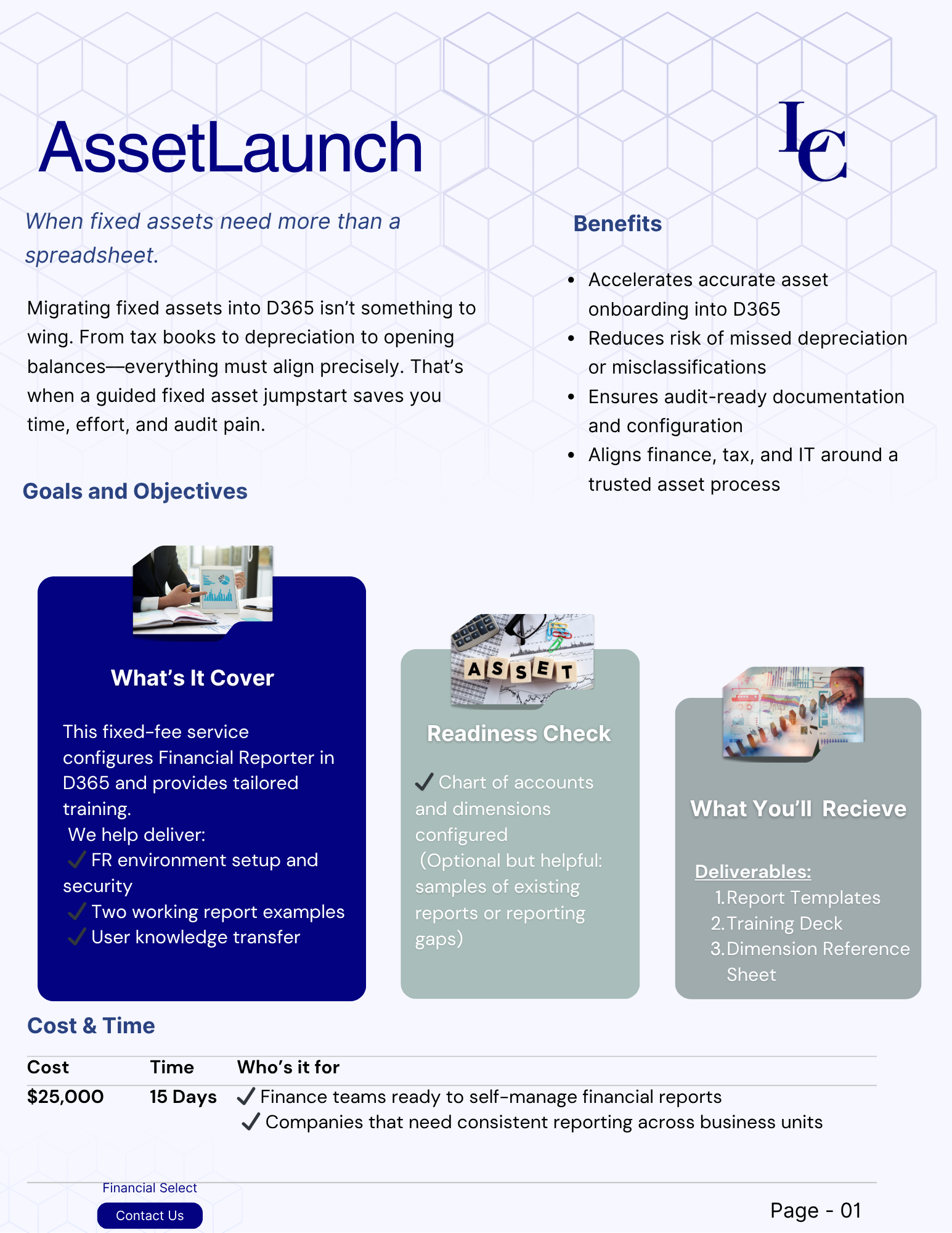
Reviews and corrects ledger-to-subledger alignment in D365 by fixing posting configurations, inventory profiles, reconciliation logic, GL mapping, and critical reporting procedures.
Moving from Reactive to Proactive Finance with AI in NetSuite
Posted on: November 10, 2026 | By: Jackson Morris | NetSuite
Many finance teams spend most of the month looking backward. Errors turn up during reconciliation, close tasks are tracked in spreadsheets, and cash forecasts are rebuilt by hand whenever leadership asks for an update. By the time an issue is spotted, it has often already affected reporting or delayed the close.
NetSuite is addressing this with AI-powered financial management tools built directly into the platform. Exception Management, Intelligent Close Manager, Cash 360, and AI transaction matching help finance teams automate routine work, find problems earlier, and make decisions with more current information.

Catching Errors Early with Exception Management
Exception Management uses AI to learn an organization’s normal transaction patterns. It then flags activity that falls outside those patterns. Examples include an incorrect amount, a transaction posted to the wrong account, a change to vendor information, or an expected transaction that never arrived. The system reviews new and edited transactions every hour, so issues surface during the month instead of at period end.
NetSuite 2026.1 added payment risk detection. This feature flags changes to key vendor fields that happen close to a payment, which gives teams an early warning about potential fraud before funds leave the business. Each customer’s models are trained only on its own data, and accountants still decide whether a correction is needed.
Availability depends on having enough transaction history for the models to learn from, so not every account can use the feature right away. For teams that want better visibility now, risk-focused saved searches offer a practical starting point.
Keeping the Close on Track with Intelligent Close Manager
The month-end close often depends on status meetings and checklists that are outdated as soon as they are shared. Intelligent Close Manager gives accounting teams a single dashboard view of open tasks, their estimated financial impact, and AI-detected exceptions. That view covers A/R, A/P, and general accounting.
From the dashboard, users can go directly to the record that needs attention, monitor overall progress, and lock transaction types and periods once work is complete. AI-generated insights also summarize trends in receivables, payables, and overall performance. This is one of the more practical AI use cases for controllers, because it points them to problems before those problems slow the close.
Later updates added the ability to assign close tasks to employees, set due dates, and track status. As a result, controllers get clearer ownership and fewer surprises in the final days of the period.
Improving Cash Visibility with Cash 360
A cash forecast is only useful when leaders trust the numbers. Cash 360 brings cash position, a near-term forecast, and A/R and A/P aging into one dashboard. It applies historical payment patterns to open receivables and payables, so the forecast reflects how customers and vendors actually behave.
Recent enhancements also let forecasts account for sales orders with billing schedules. Expected cash now reflects billing dates and payment terms rather than order dates alone. Pairing this view with a well-managed payables process gives finance leaders a fuller picture of what is coming in and going out.
Reconciling Faster with AI Transaction Matching
Bank reconciliation is a common bottleneck, because rule-based matching struggles with inconsistent bank descriptions. NetSuite now uses generative AI to pull more structured detail from bank data, which improves automatic matching.
When rules cannot find a clear match, an AI assistant suggests likely matches with a confidence score. It also learns from past matching decisions. The NetSuite 2026.2 release went further. It recommends a single likely GL transaction when several options remain, and it adds Matched By and Submitted By details to reconciliation logs. Faster matching shortens the close, while the added audit detail supports stronger controls.
Preparing for a Proactive Finance Function
These tools work best on a solid foundation. Clean vendor and customer records, a consistent chart of accounts, and standardized close procedures all improve the accuracy of AI suggestions. As we covered in Preparing Your NetSuite Data, data quality often separates a useful AI feature from a confusing one.
Organizations should also define who reviews AI-flagged items and how those decisions are documented. AI can surface the right questions, but people remain responsible for the answers. NetSuite is moving toward even more automation, including the Autonomous Close workspace introduced at SuiteWorld 2026, so building these habits now will make future adoption easier.
Next Steps
Moving from reactive to proactive finance starts with understanding which tools fit your current processes and data. As an Oracle NetSuite Alliance Partner, Logan Consulting helps CFOs, controllers, and accounting teams evaluate, configure, and optimize NetSuite’s AI-powered financial management capabilities. Contact Logan Consulting today to learn how these tools can shorten your close and improve visibility across your finance operations.