









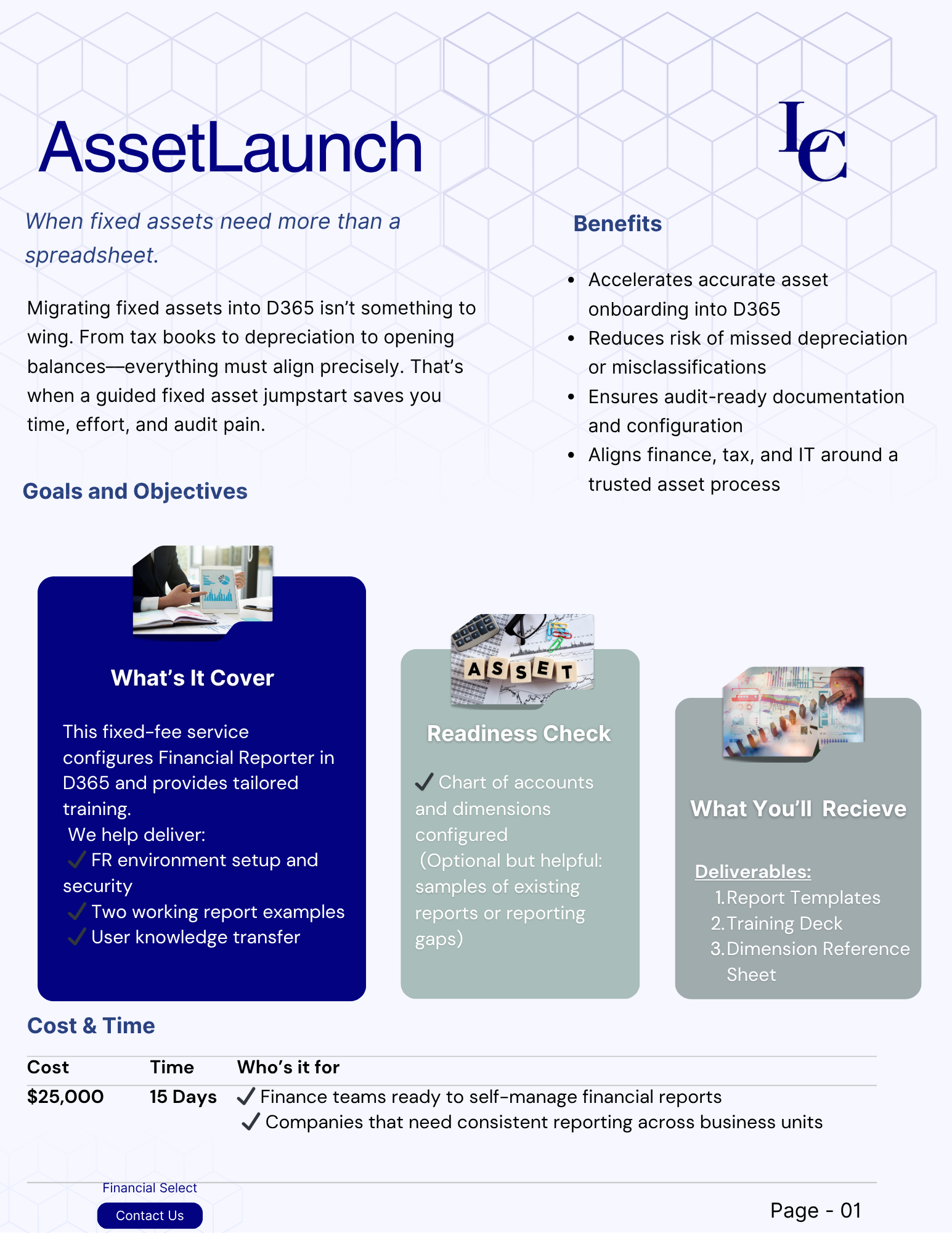
Reviews and corrects ledger-to-subledger alignment in D365 by fixing posting configurations, inventory profiles, reconciliation logic, GL mapping, and critical reporting procedures.
A Practical AI Readiness Guide for NetSuite Administrators
Posted on: October 13, 2026 | By: Jackson Morris | NetSuite
Most NetSuite administrators already know where their account’s weak spots are: item records with half-empty fields, vendors no one has paid in years, and custom fields only the original developer understood. People work around these gaps because they know the history. AI does not. It reads your data and configuration exactly as they exist and draws conclusions from them.
That matters now that the NetSuite Next rollout has begun bringing conversational AI and agentic workflows into everyday work. The five-part data fitness checklist below gives administrators a practical starting point, and every step improves reporting and controls today, whether or not AI is turned on.

1. Audit Data Density
Data density comes down to a simple question: how often are the fields that matter actually filled in? A customer without payment terms, an item without a category, or a vendor without a default expense account leaves gaps an AI tool has to guess around. Guesses lead to inconsistent answers, and inconsistent answers erode trust quickly.
Start with the record types your teams rely on most, then build saved searches that measure how many records have each key field populated. Focus on the fields that drive reporting and decisions rather than every field on the form. Closing those gaps, and making critical fields mandatory going forward, is one of the most direct ways of preparing for agentic workflows.
2. Inactivate Stale Records
Every NetSuite account collects records that no longer reflect the business: discontinued items, former employees, one-time customers, duplicate vendors, and accounts that stopped being used years ago. People skip past them out of habit. AI tools do not know to skip them, so stale records can surface in searches, analysis, and recommendations as if they were current.
Inactivating these records preserves their history while removing them from daily lists and lookups. This matters because tools like Ask Oracle are built to find records from a name, ID, or a few keywords, and fewer near-duplicates means fewer wrong matches. Set a recurring review cadence so cleanup becomes routine rather than a one-time project.
3. Add Clear Context to Records and Automations
A custom field labeled “Flag 2” or a workflow called “Test Copy 3” tells a person very little, and it tells an AI model even less. As NetSuite opens up to external AI assistants through the AI Connector Service, the names, descriptions, and help text inside your account become part of how those tools interpret your data.
Give every custom field, custom record, saved search, workflow, and script a clear name and a short description of its purpose and owner, and retire automations that no longer run. Oracle’s tooling can teach AI models how NetSuite works in general, but only your team can explain how your business uses it. Speakers at SuiteConnect Chicago 2026 made the same point: AI is only as effective as the structure behind the data.
4. Attribute GL Activity
One of the most useful things AI can do for finance teams is explain why a number changed. That only works when general ledger activity carries enough attribution to trace it. Journal entries posted without a department, class, or location, or with memos that just say “adjustment,” leave nothing to analyze beyond the amount itself.
Review which segments are required on journal entries and other transaction forms, and limit how often activity lands in unassigned or catch-all buckets. Encourage memos that state the reason for an entry, not just its type. Consistent attribution strengthens month-end reporting and audit readiness now, and it gives AI-generated variance explanations something real to work from.
5. Track Manual Intervention in Automated Processes
Automation rarely runs perfectly. Integrations fail, matching rules miss, and approval workflows get overridden. When people quietly fix these exceptions by hand, the fixes disappear, and the organization loses sight of where its automation actually struggles.
Make manual intervention visible by capturing who changed what and why, whether through system notes, a dedicated override field, or a simple exception log, then review the patterns monthly. NetSuite is moving in this direction too, with reconciliation log enhancements that show whether a match came from a user or the system. High override rates flag processes to fix before handing them to an agent, while low rates point to strong automation candidates.
Next Steps
AI readiness in NetSuite is less about a single project and more about steady administrative habits: measuring data density, retiring stale records, documenting customizations, attributing GL activity, and making manual work visible. As an Oracle NetSuite Alliance Partner, Logan Consulting helps administrators and finance teams assess data fitness, clean up their environments, and build a practical roadmap for NetSuite’s AI capabilities. Contact Logan Consulting today to start your NetSuite AI readiness assessment.