



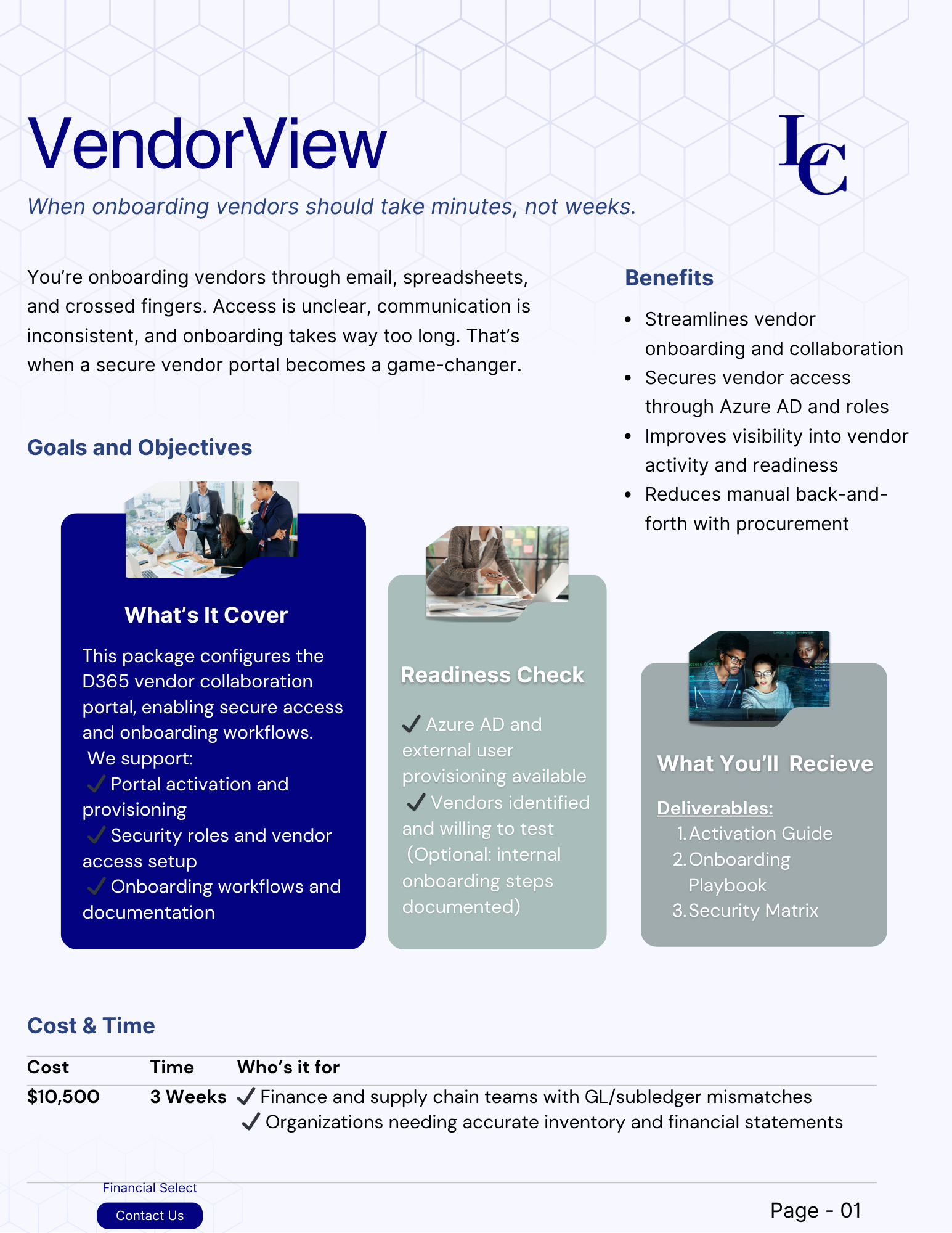


Reviews and corrects ledger-to-subledger alignment in D365 by fixing posting configurations, inventory profiles, reconciliation logic, GL mapping, and critical reporting procedures.
NetSuite Supply Allocation: Balancing Demand and Inventory
Posted on: October 6, 2026 | By: Jackson Morris | NetSuite
When inventory is limited, deciding which orders receive available stock becomes one of the most important calls an operations team makes. Without clear rules, inventory is often committed on a first-come, first-served basis. That can tie up stock on orders that are not due for weeks while urgent or high-priority orders wait for the next shipment.
NetSuite Supply Allocation helps organizations take control of that decision. In this blog, we walk through the fundamentals of Supply Allocation in NetSuite, including what it is, how it works, and where it fits within the broader supply chain and fulfillment process. We also review a simple end-to-end process flow, from demand and inventory availability through allocation and fulfillment, to connect the functionality to real-world business scenarios.

What Is Supply Allocation in NetSuite?
Supply Allocation is part of NetSuite’s Advanced Inventory Management capabilities and matches demand to supply. Demand includes sales orders, transfer orders, and work orders. Supply includes inventory already on hand as well as future inventory, such as open purchase orders, transfer orders, work orders, and inbound shipments.
Traditional inventory commitment focuses mainly on what is in the warehouse today. Supply Allocation also considers when incoming supply is expected to arrive and when each order actually needs it. This gives planners a more realistic view of what can be promised and when, and it lets businesses define the rules for who gets inventory instead of leaving it to order entry sequence.
How Supply Allocation Works
Supply Allocation is driven by allocation strategies. A strategy tells NetSuite how to commit supply to an order line, such as whether to allocate stock as soon as it becomes available or as close as possible to the date the order requires it. Strategies can allow partial allocation or require the full quantity before anything is committed, and they can include or exclude future inventory.
Each strategy also defines how firm the allocation is. A reserved allocation commits inventory but still allows the system to reallocate it if priorities change. A firm allocation locks the commitment so the system will not move that inventory to another order.
NetSuite recalculates allocations automatically as orders are created, changed, or deleted, and businesses can also run allocations on a schedule or manually. Default strategies can be set by order type and at the item level, so different products can follow different rules.
A Simple End-to-End Process Flow
The process begins with demand. A sales order is entered with a required date and an allocation strategy, either selected on the line or applied by default.
Next, NetSuite evaluates availability by reviewing on-hand inventory and incoming supply. Based on the strategy, it allocates supply to the order line and calculates an expected availability date.
When supply is delayed or demand changes, exceptions come into play. NetSuite flags orders at risk of shipping late and can recommend reallocations, showing which orders could give up inventory and how each change would affect delivery timing. Planners review and approve these recommendations rather than reshuffling inventory by hand.
Finally, allocated inventory moves into fulfillment, where it is picked, packed, and shipped. Because commitments were based on clear rules, warehouse teams work from a more reliable picture of what should ship and in what order.
Where Supply Allocation Fits in the Supply Chain
Supply Allocation sits between planning and execution. Demand planning helps determine when to buy or build, while Supply Allocation decides how available and incoming supply is distributed across open orders. Together, they connect purchasing, production, customer service, and the warehouse around a shared view of inventory.
This is especially valuable for distributors, importers, and manufacturers managing constrained or long-lead-time supply. Organizations evaluating NetSuite for distribution often find that allocation rules are central to protecting key accounts and setting accurate delivery expectations.
Best Practices for Getting Started
Start with a small number of strategies that reflect real business priorities. Many organizations can begin with one or two and add more only when there is a clear need.
Accurate data is just as important. Expected receipt dates on purchase orders, required dates on sales orders, and customer or order priorities all drive allocation results, so these fields need consistent ownership. Teams should also build a routine for reviewing allocation exceptions so delays are addressed before they reach the customer.
Finally, stay current with platform updates. Recent NetSuite releases have extended availability calculations to kit items based on the supply of each component, which may benefit organizations that sell bundled products.
Next Steps
Supply Allocation gives organizations a structured way to balance limited inventory against competing demand, helping protect priority customers and set realistic delivery dates. As an Oracle NetSuite Alliance Partner, Logan Consulting helps distributors and manufacturers design allocation strategies, configure Supply Allocation, and align it with purchasing and fulfillment processes. If you’d like to see how Supply Allocation could support your operations, contact Logan Consulting today to start building a more reliable fulfillment process.
 ERP Rescue for NetSuite Implementations: Getting Back on Track
 Extending Your Functionality with the NetSuite SuiteApp Marketplace
 All-In on Insights: Saved Searches for Order Delays and Inventory Management for NetSuite
 From Dock to Delivery: Connecting Warehouse, Production, and Analytics in NetSuite