







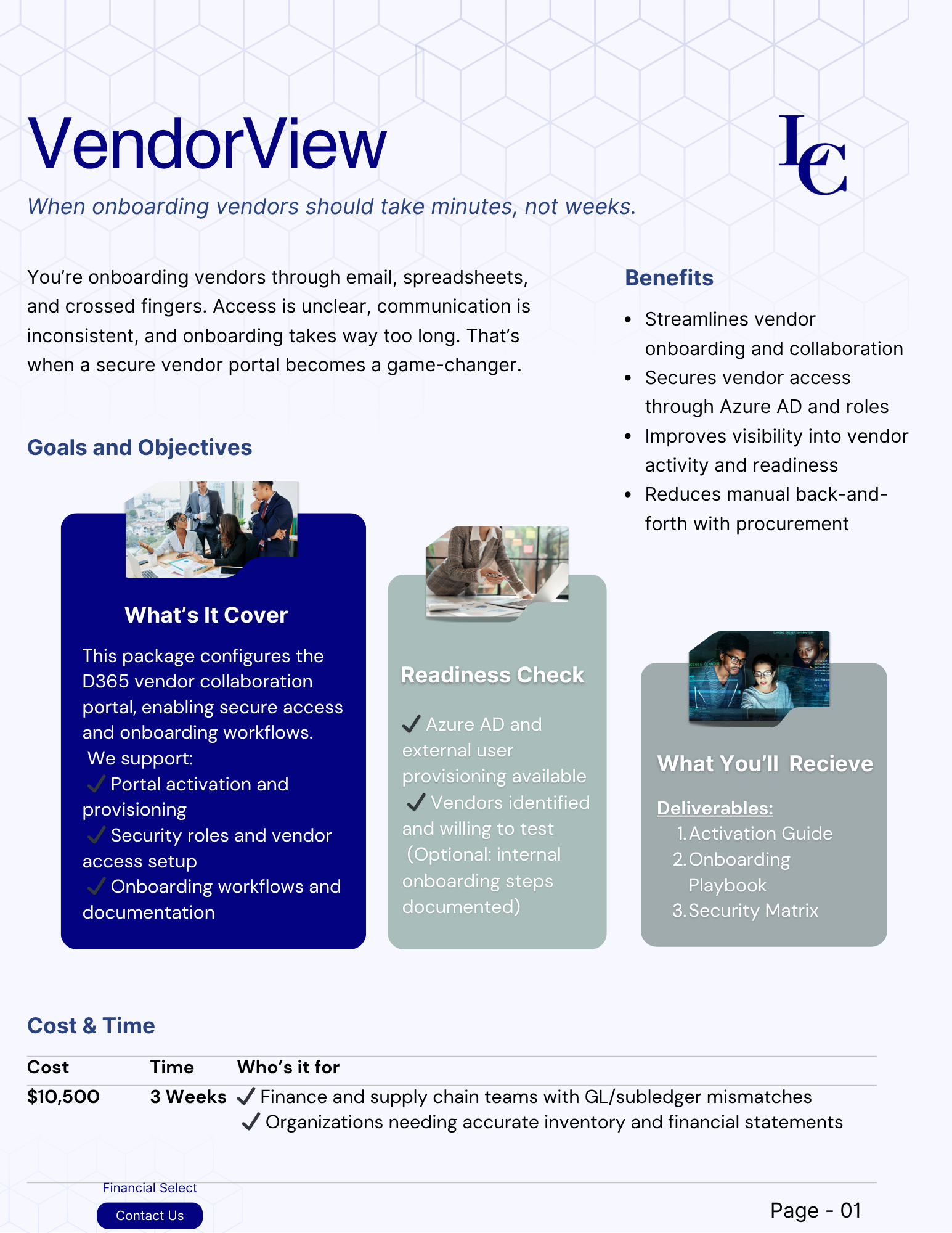


Reviews and corrects ledger-to-subledger alignment in D365 by fixing posting configurations, inventory profiles, reconciliation logic, GL mapping, and critical reporting procedures.
Preparing Your NetSuite Data for Agentic Workflows
Posted on: August 6, 2026 | By: Jackson Morris | NetSuite
AI agents are moving from demos to daily operations, and ERP is where much of that work will happen. NetSuite has introduced a wave of agentic capabilities that can match bank transactions, manage the financial close, and answer planning questions in plain English. The appeal is obvious: less manual busy work and faster answers. The catch is that agents are only as reliable as the data they act on. An agent working against duplicate vendor records or an overgrown chart of accounts will automate mistakes at the same speed it automates everything else. Before your organization hands real work to agents, your NetSuite data needs to be ready for them.

What Agentic Workflows Mean in NetSuite
Traditional automation follows fixed rules: a workflow fires when a condition is met and does exactly what it was configured to do. Agentic workflows are different. An agent interprets a goal, reads the relevant records, and takes or recommends actions based on what it finds in your data.
NetSuite is building toward this quickly. At its recent SuiteConnect events, Oracle announced a series of AI innovations spanning the close, reconciliations, reporting, and pricing, including an Intelligent Close Manager and EPM agents that respond to natural language questions. These tools lean on your records, segments, and transaction history to decide what to do, which is exactly why data preparation matters more now than it did in the rules-based era.
Start with Master Data
Master data is the first place agents get confused. Duplicate customers, vendors that were never marked inactive, and inconsistent item naming all create ambiguity that a human works around instinctively and an agent does not.
A practical cleanup focuses on a few areas: deduplicate customer and vendor records, standardize item records and units of measure, and establish a clear owner for creating new entities. The goal is a single, trustworthy version of each record, so that when an agent matches a transaction to a vendor, there is only one right answer to find.
Standardize Your Chart of Accounts and Segments
Agentic features that support the close and planning depend heavily on how your general ledger is structured. A chart of accounts with redundant accounts and inconsistent use of classes, departments, and locations gives an agent a distorted picture of the business. Tools like AI-powered bank transaction matching, which pulls transaction details from bank activity and matches them to general ledger records, perform best when historical postings follow consistent patterns the model can learn from.
Tighten Roles, Permissions, and Governance
NetSuite’s agents respect the platform’s role and permission framework, which means your access model is now also your AI governance model. If roles have accumulated broad permissions over years of quick fixes, agents inherit the same overreach. Audit who can see and change what, remove unused custom roles, and document approval hierarchies. This matters even more if you plan to connect external AI assistants: Oracle’s expanded AI Connector Service, built on the Model Context Protocol, allows outside AI models to work with NetSuite data, making well-defined permissions a prerequisite rather than a nice-to-have.
Build a Phased Adoption Plan
Agent adoption should not be a big bang. Start with low-risk, easy-to-verify use cases such as bank matching or close task management, then expand into planning agents, pricing monitoring, and custom workflows as confidence and data quality improve. Along the way, track auto-match rates, close cycle times, and exception volumes so you can tell whether agents are helping and where data issues are still holding them back.
Next Steps
Agentic workflows can meaningfully reduce manual effort in NetSuite, but only for organizations whose data, segments, and processes are ready to support them. Logan Consulting helps finance and operations teams assess NetSuite data quality, standardize processes, and build a practical roadmap for adopting NetSuite’s AI capabilities. If your organization is preparing to put AI agents to work, contact Logan Consulting today to build a data foundation your agents can trust.