



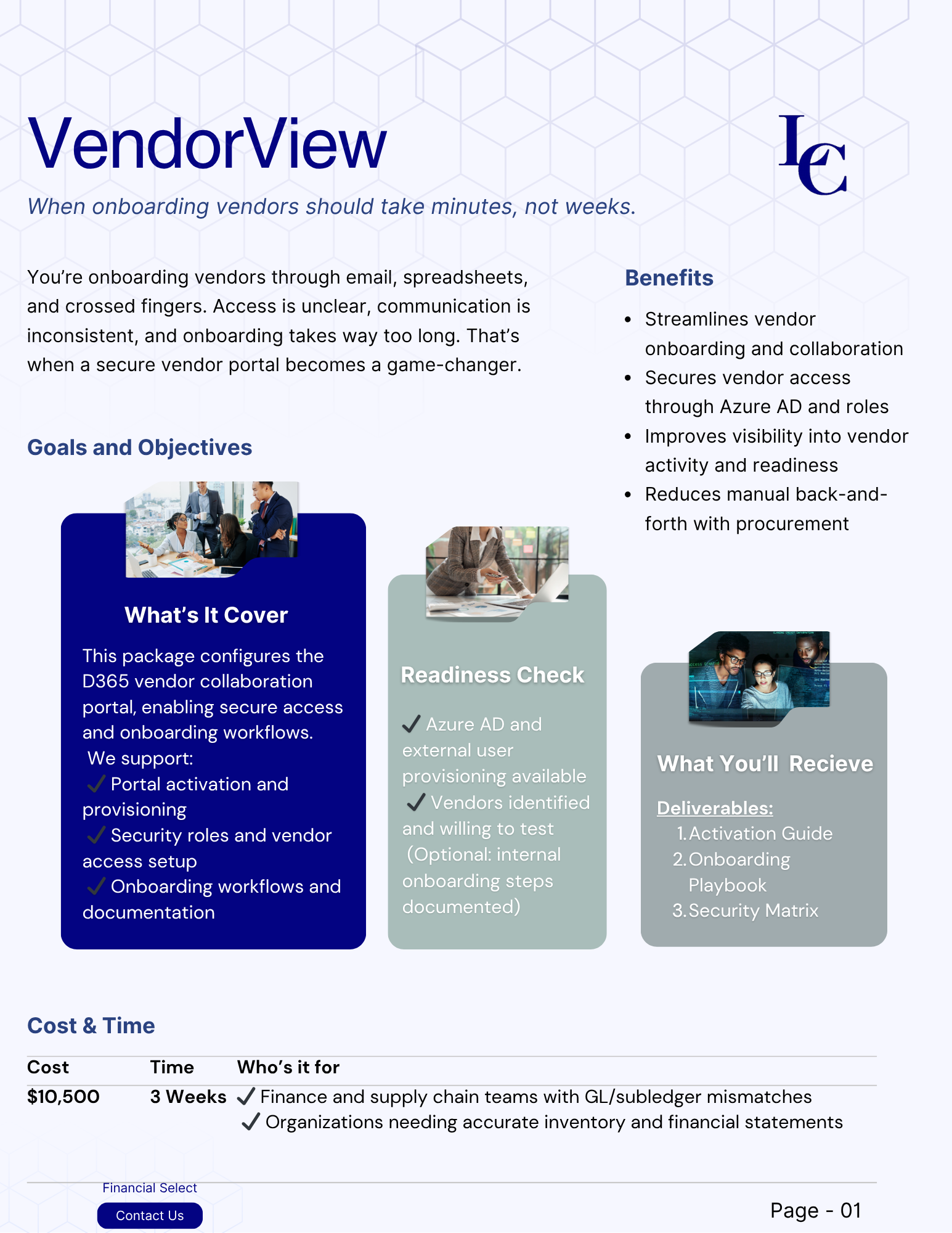


Reviews and corrects ledger-to-subledger alignment in D365 by fixing posting configurations, inventory profiles, reconciliation logic, GL mapping, and critical reporting procedures.
Acumatica WMS and Advanced Warehouse Management: Smarter Fulfillment for Growing Businesses
Posted on: November 10, 2026 | By: Jackson Morris | Acumatica
Many growing distributors and manufacturers still run their warehouses on paper pick tickets, spreadsheets, and the knowledge of a few key employees. That approach can work at lower volumes, but it becomes harder to sustain as item counts rise and customers expect fast, accurate shipments. Errors in receiving, picking, and counting lead to returns, write-offs, and wasted labor.
Acumatica’s Warehouse Management System (WMS) addresses these challenges by connecting warehouse activity directly to the ERP. With advanced warehouse capabilities, including new features in the 2026 R2 release, organizations can bring more structure and accuracy to every step from receiving to shipping.

What is Acumatica WMS?
Acumatica WMS is the native warehouse management application within Acumatica Distribution Edition. It manages the physical movement of inventory, including receiving, put away, transfers, picking, packing, shipping, and physical counts. Warehouse staff complete these tasks on mobile devices and barcode scanners instead of paper documents.
Because WMS runs on the same platform as inventory, sales orders, purchasing, and financials, every scan updates the system in real time. Finance teams see accurate inventory values, customer service sees current availability, and purchasing works from reliable stock levels. Acumatica has continued to expand these tools in its recent product releases.
Advanced Warehouse Capabilities
Beyond basic transactions, Acumatica supports more sophisticated fulfillment methods. Teams can pick orders one at a time, group them into waves, or combine several orders into a batch pick. Paperless pick queues let supervisors set priorities and assign work, while pickers receive tasks directly on their devices.
Acumatica’s 2026 R2 release adds planning tools that mirror the physical layout of the warehouse. Organizations define handling units, such as pallets, cases, and single items, and group storage locations into zones like bulk storage or case picking areas. Picking strategies then link each handling unit to the right zone, so the system splits a shipment’s pick across the correct areas automatically.
The release also lets supervisors reassign a pick list that is already in progress. A new picker can continue where the previous one stopped without repeating completed work. This helps keep orders moving through shift changes and staffing gaps.
Key Benefits
The most immediate benefit is accuracy. Barcode validation during receiving, put away, and picking reduces mis-picks and miscounts. As a result, organizations spend less on returns and inventory adjustments. Lot, serial, and expiration date checks also support traceability requirements.
Productivity improves as well. Directed workflows reduce time spent searching for items, and structured picking methods cut unnecessary travel across the warehouse floor. Supervisors can balance workloads and respond to priority orders without printing new lists.
Leaders also gain better visibility. Role-based dashboards show open orders, fill rates, shipping status, and employee productivity. This gives operations and finance leaders reliable data for planning and decision-making.
Industry-Specific Benefits
Wholesale distributors benefit from faster order turnaround and more accurate shipments, especially at high order volumes. Pallet, case, and each-level picking is particularly useful for distributors that sell the same product in different quantities to different customers.
Manufacturers use WMS to receive raw materials, stage components for production, and ship finished goods. Since WMS works alongside Acumatica’s manufacturing and inventory applications, material movements stay aligned with production records.
Retail and ecommerce businesses can pair WMS with Acumatica’s commerce integrations. This allows them to manage fulfillment for multiple sales channels from a single system.
Best Practices for Getting Started
Successful WMS projects begin with process, not software. Before configuring Acumatica, organizations should document how goods move through the warehouse today and where errors or delays occur. This review often uncovers layout and workflow improvements worth making before automation.
Clean data is just as important. Accurate item records, units of measure, and location setups are required for features like zones and picking strategies to work correctly. Teams should also plan for scanners and label printers, and invest in training so warehouse staff are comfortable with mobile workflows.
For current customers, advanced warehouse functionality may come with an upgrade. Organizations still using the Classic UI should plan their upgrade path now, since 2026 R2 moves all customers to the modern interface.
Preparing for the Future
Warehouse management continues to evolve alongside Acumatica’s broader platform. The 2026 R2 release also introduces embedded AI capabilities and improved analytics. These tools give organizations new ways to monitor performance and identify issues earlier.
Organizations that build a strong WMS foundation today will be better prepared to adopt these tools as they mature. Structured processes, clean data, and accurate real-time transactions are what make automation and analytics useful.
Next Steps
Acumatica WMS and its advanced warehouse capabilities help organizations improve accuracy, increase productivity, and gain real-time visibility into fulfillment. Logan Consulting helps distributors and manufacturers assess warehouse processes, configure Acumatica WMS, and optimize fulfillment workflows for long-term growth. Contact Logan Consulting today to learn how a better-connected warehouse can support your business goals.
 NetSuite Planning and Budgeting Advantages: Elevating Planning and Performance Management
 Preparing Your NetSuite Data for Agentic Workflows
 Stacking the Odds: Saved Searches to Find Risk Before It Finds You in NetSuite
 From Spend to Close: Building a Continuous, AI-Ready Finance Process in NetSuite