







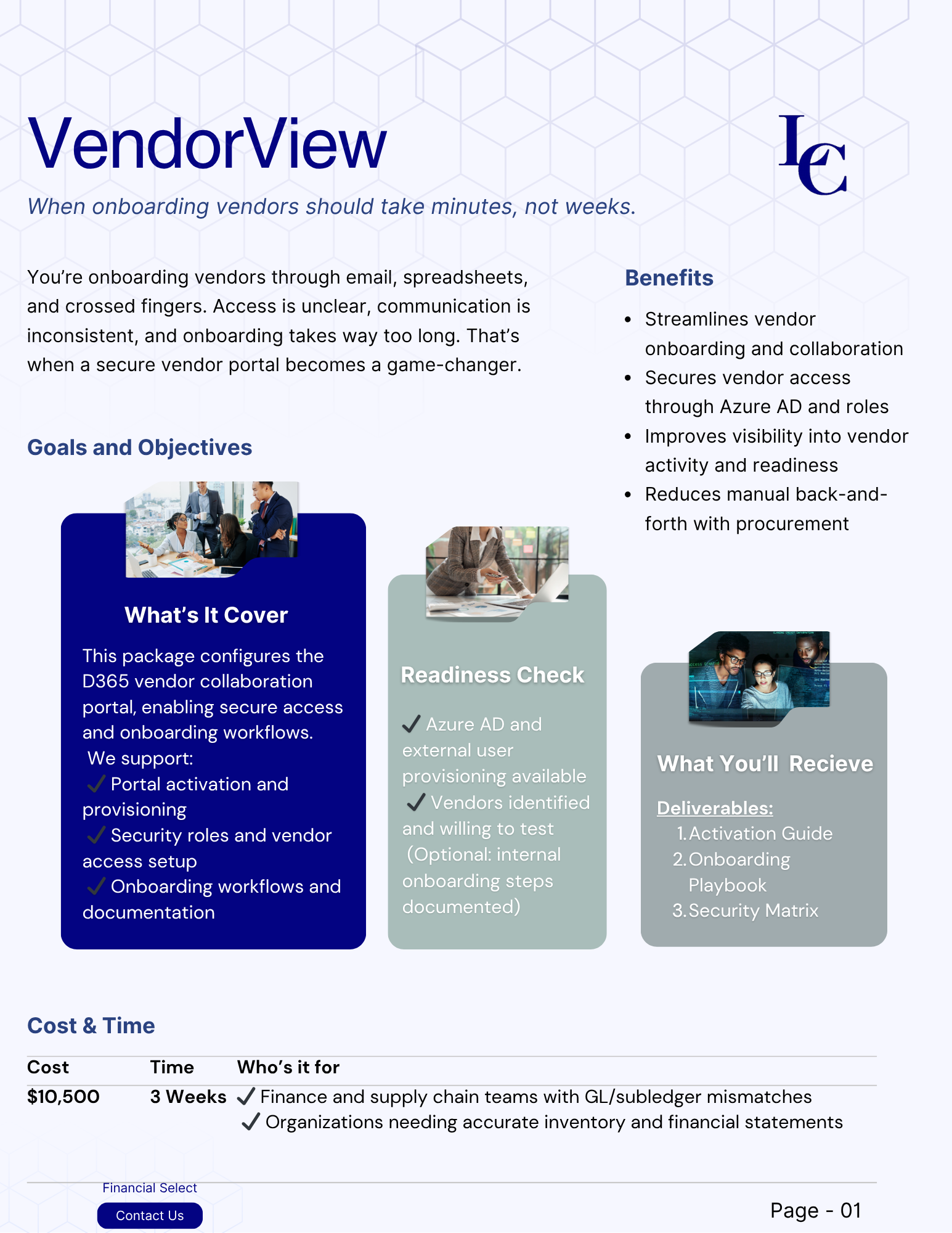


Reviews and corrects ledger-to-subledger alignment in D365 by fixing posting configurations, inventory profiles, reconciliation logic, GL mapping, and critical reporting procedures.
Next-Gen SaaS Growth: Driver-Based Planning and Forecasting in NetSuite
Posted on: November 12, 2026 | By: Jackson Morris | NetSuite
For many SaaS companies, the financial model lives in a web of spreadsheets. Bookings come from one export and headcount from another. Churn assumptions sit in a tab that only one analyst fully understands. Every reforecast means rebuilding links and checking formulas, and as the company grows, that process slows down the decisions finance is supposed to support.
Driver-based planning works differently. Instead of adjusting line items by a percentage, finance teams model the operational factors that actually produce revenue and cost. NetSuite Planning and Budgeting (NSPB) brings this approach into the same environment as NetSuite ERP. In this blog, we will cover how driver-based planning works for subscription businesses, which drivers matter most, and how AI in NSPB supports faster reforecasting.

What is Driver-Based Planning?
Driver-based planning builds forecasts from cause and effect. Revenue is not a single number typed into a cell. It comes from new customers, average contract value, expansion, and churn. Expenses follow the same logic: hosting costs track usage, support costs track customer count, and sales commissions track bookings.
When a driver changes, every number that depends on it updates automatically. Finance teams spend less time maintaining formulas and more time discussing which assumptions are realistic. Leaders also get a clear explanation of why the plan moved, not just a list of revised totals.
Subscription revenue is built on recurring, measurable activity, so SaaS businesses are well suited to models that connect operations to financial results.
The Drivers That Shape SaaS Growth
Most SaaS models come back to a small set of drivers:
- Headcount and capacity: hiring plans by department, ramp time for new sales reps, and the support and engineering capacity needed for a growing customer base
- Customer acquisition cost (CAC): sales and marketing spend compared to new customers won
- Churn and retention: lost customers and downgrades that offset new bookings
- Expansion: upsells, add-ons, and price changes within the existing customer base
In NSPB, these drivers connect to revenue, operating expenses, and cash projections in one model. Workforce planning can draw on employee data from NetSuite, so salary and hiring assumptions stay tied to the broader plan. Teams already tracking recurring revenue with NetSuite Subscription Metrics can base their assumptions on actual performance history.
Automating the Model with NetSuite Integration
Spreadsheet models often break down because the data feeding them is manual. Someone exports actuals, pastes them in, and reconciles the differences before any analysis can begin.
NSPB stays synchronized with the NetSuite general ledger, so actuals flow into planning templates without manual exports. Approved budgets can also load back into NetSuite for budget-to-actual reporting. For users who prefer familiar tools, Smart View connects NSPB to Excel without the version control problems of emailed files.
This connection also builds trust. When department leaders know the plan starts from the same numbers as the books, they spend less time questioning the baseline and more time improving the forecast.
What-If Scenarios and AI-Powered Forecasting
SaaS leaders regularly face questions a static budget cannot answer. What happens to runway if two engineering hires move up a quarter? How much does a one-point improvement in churn change annual recurring revenue? What if CAC rises in a new market?
Scenario modeling in NSPB lets finance teams adjust drivers and compare versions side by side. Instead of rebuilding a model for each question, teams can test several paths and present the tradeoffs clearly.
AI adds another layer. NSPB uses machine learning to generate predictive forecasts from historical data, which teams can compare against their own plans. With the 2026.1 release, NetSuite enhanced its multivariate AI forecasting to show which drivers influence each forecast. That transparency lets finance teams check AI projections before relying on them.
Building Long-Term Value Through Better Planning
For SaaS companies, planning quality affects more than the annual budget. Boards and investors look closely at growth efficiency, retention, and the logic behind forecasts. A model built on clear drivers supports investor-ready financial visibility because it is easier to explain, defend, and update.
Getting there takes more than software. Start with a focused set of drivers tied to real decisions. Agree on metric definitions across finance, sales, and customer success, and assign an owner to each assumption. Then review the model regularly so it reflects how the business actually runs.
Organizations that treat planning as an ongoing process can reforecast with precision, shift resources sooner, and keep growth tied to sound unit economics.
Next Steps
Driver-based planning gives SaaS finance teams a clear view of how operational decisions shape growth, and NetSuite Planning and Budgeting connects that model directly to the data in NetSuite. As an Oracle NetSuite Alliance Partner, Logan Consulting helps SaaS finance leaders design driver-based models, integrate NSPB with NetSuite, and adopt AI forecasting with confidence. Contact Logan Consulting today to build a plan that scales with your business.