






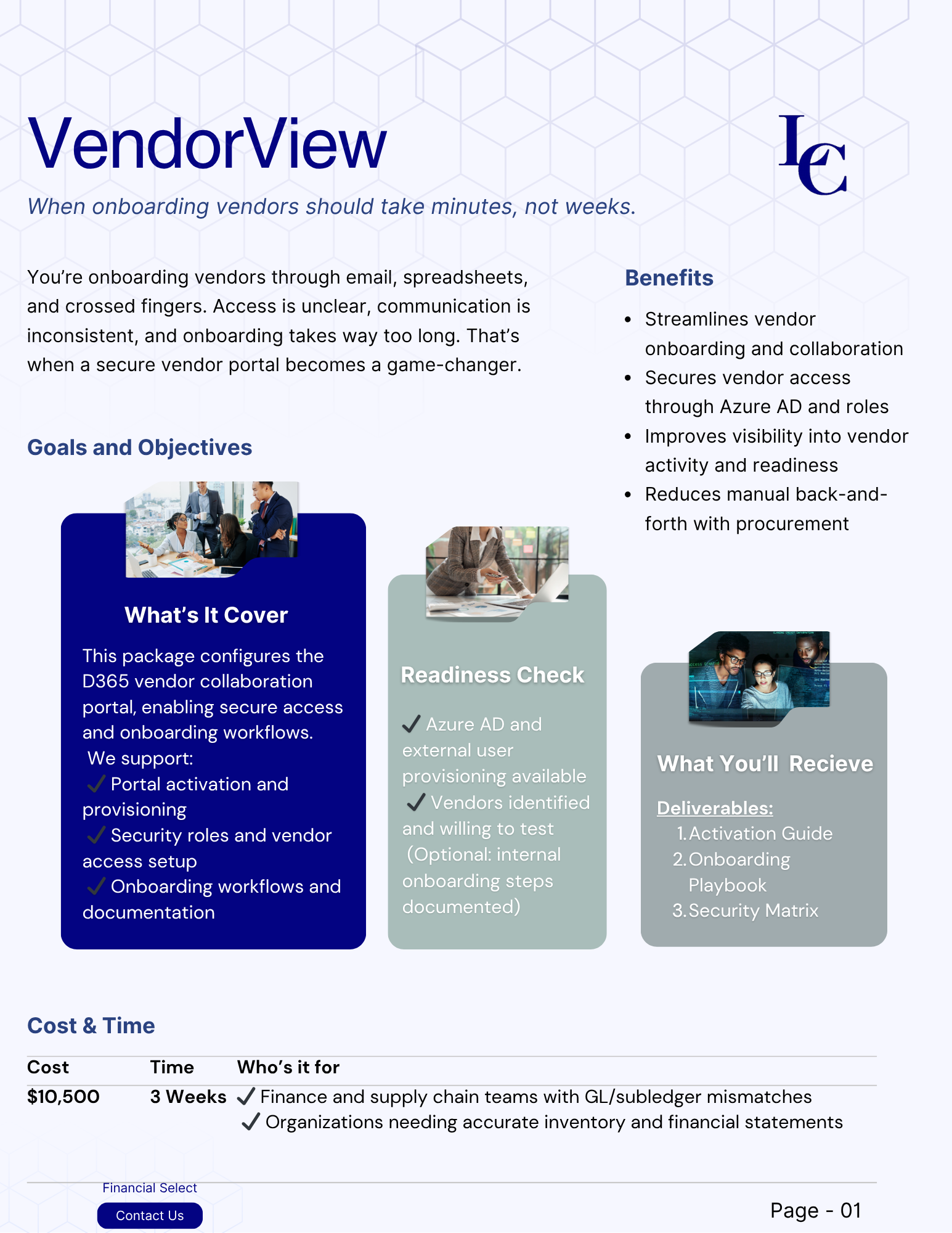


Reviews and corrects ledger-to-subledger alignment in D365 by fixing posting configurations, inventory profiles, reconciliation logic, GL mapping, and critical reporting procedures.
How AI in NetSuite Helps Startups Build Investor-Ready Financial Visibility
Posted on: November 5, 2026 | By: Jackson Morris | NetSuite
For startups, a strong product and a compelling pitch only go so far. Investors and board members want clean financials, realistic cash projections, and proof that leadership understands where the business is headed. When financial data is spread across spreadsheets, bank portals, billing tools, and disconnected apps, building that picture takes time and invites errors.
AI embedded in NetSuite, along with the NetSuite AI Connector Service, gives founders and finance teams a more reliable way to turn scattered data into forward-looking insight. In this blog, we will cover how these capabilities support cash flow planning, reporting, due diligence, and growth from the earliest funding rounds onward.

Why Financial Visibility Matters for Startups
Early-stage companies make high-stakes decisions with limited resources. Hiring plans, product investments, and fundraising timelines all depend on knowing how much cash the business has and how long it will last.
Investors look at the same information. A startup that can quickly explain its burn rate, revenue trends, and runway builds credibility. One that needs weeks to reconcile its numbers raises concerns before the conversation even starts.
Many startups begin with tools built for basic bookkeeping. Those tools work early on, but as transactions, revenue streams, and entities grow, manual consolidation becomes a bottleneck.
Turning Fragmented Data into a Single Source of Truth
NetSuite brings accounting, billing, payables, receivables, and banking data into one unified system. That foundation matters because AI is only as useful as the data behind it. When records are centralized and consistent, AI can analyze them without the gaps and duplicates common in spreadsheet-driven processes.
Startups can also adopt this foundation earlier than before. With NetSuite QuickStart, eligible early-stage U.S. technology startups can use an AI-first financial platform at no cost, with a path to the full NetSuite suite as they scale.
Starting on a unified platform also reduces the disruption of switching systems later, which often happens right when a company is preparing for a major funding round.
Predictive Cash Flow Insights
Cash flow forecasting is one of the most valuable uses of AI for startups. Static spreadsheet models go out of date almost as soon as they are built. NetSuite’s embedded AI can analyze transaction history, open receivables, and upcoming payables to give a more current view of future cash positions.
This helps leaders see their runway more clearly and spot potential shortfalls earlier. If customer payments are arriving later than expected, or expenses are rising faster than planned, finance teams can adjust before the issue becomes urgent.
The NetSuite AI Connector Service takes this further by giving AI assistants access to historical and analytical data stored in NetSuite Analytics Warehouse. That supports broader forecasting and trend analysis across the business.
Board-Ready Reporting with Less Manual Effort
Board meetings and investor updates often require finance teams to pull data, build slides, and write commentary by hand. With the NetSuite AI Connector Service, teams can connect the AI assistant they already use to NetSuite and ask questions in plain language, such as how revenue compares to plan or what drove a spending variance.
Because the connection follows NetSuite’s role-based permissions, users only see the data they are authorized to access. That governance matters for startups that want the speed of AI without losing control of sensitive financial information. Our blog From Prompt to Insight explains how this works in more detail.
The result is reporting that takes hours instead of days, giving founders more time to focus on strategy and the story behind the numbers.
Supporting Due Diligence and Investor Confidence
Due diligence puts a startup’s financial records under close review. Investors may request transaction histories, revenue details, and reconciliations on short timelines.
NetSuite’s audit trails and consistent data structure make these requests easier to handle. AI can help summarize activity, flag anomalies, and answer follow-up questions quickly, reducing the back-and-forth that can slow down a deal.
A steady, well-managed close process helps as well. When books are reconciled throughout the month instead of rushed at quarter-end, startups can respond to diligence requests with confidence. Our blog on building a continuous close covers what that looks like in practice.
Scaling from Seed to Growth Stage
The financial needs of a five-person startup look very different from those of a company preparing for a later funding round. New entities, more complex revenue models, and larger teams all add pressure to finance operations.
Because NetSuite grows with the business, startups do not need to replace their ERP at every new milestone. NetSuite continues to expand its practical AI capabilities, so the automation and insights a team relies on early keep adding value over time.
Setting up clean data, clear processes, and strong governance early creates a growth roadmap that investors can trust.
Next Steps
AI in NetSuite gives startups a practical way to strengthen cash flow planning, simplify reporting, and show financial health at every stage of growth. As an Oracle NetSuite Alliance Partner, Logan Consulting helps startups and growing organizations set up NetSuite with the right processes, data structure, and AI governance from the start. If you are preparing for your next funding round, contact Logan Consulting today to build a financial foundation that supports long-term growth.