


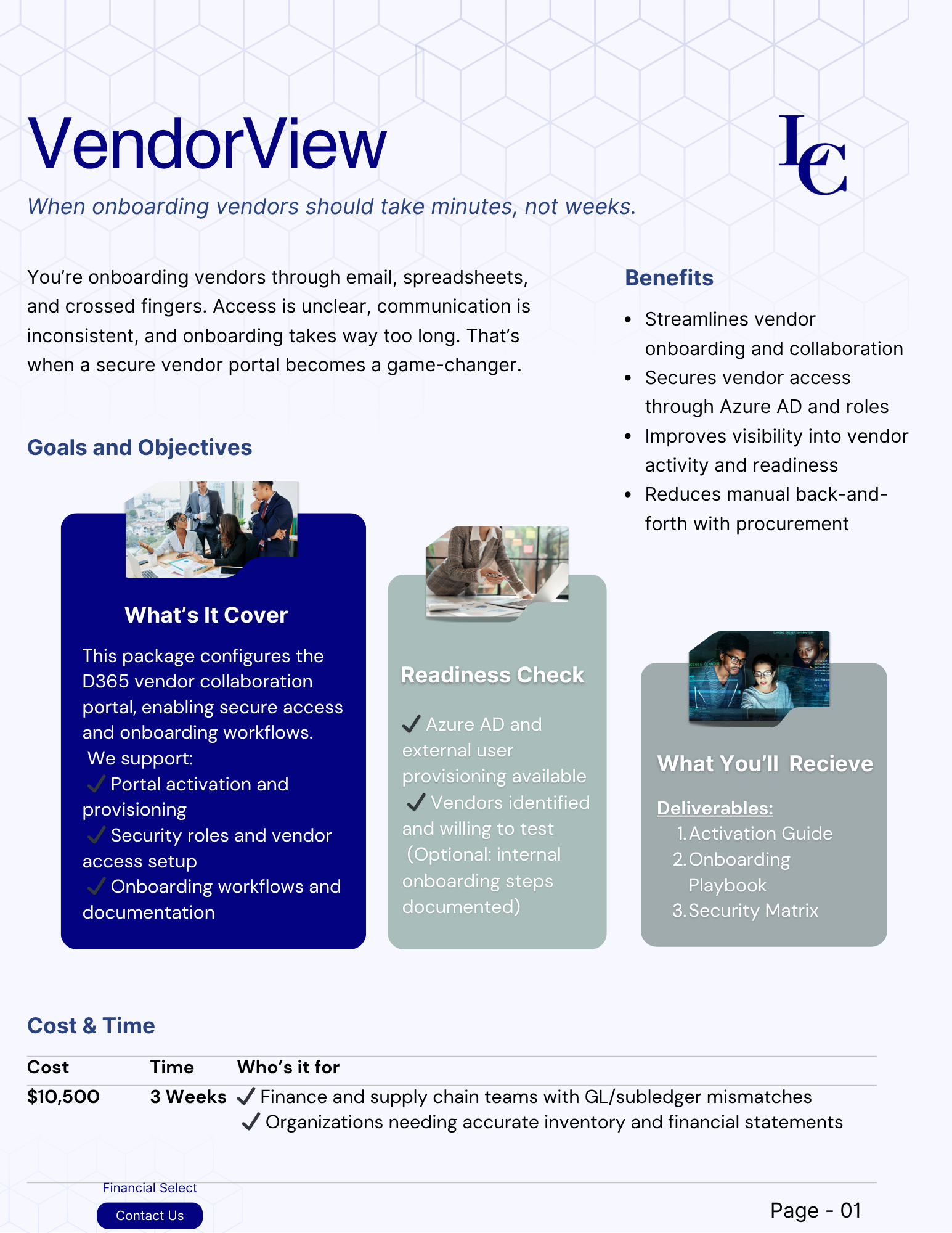


Reviews and corrects ledger-to-subledger alignment in D365 by fixing posting configurations, inventory profiles, reconciliation logic, GL mapping, and critical reporting procedures.
D365 Finance Now Supports Rental Business Models: Here’s What That Means
Posted on: June 16, 2026 | By: Heather Zhu | Microsoft Dynamics AX/365
Microsoft’s Dynamics 365 Finance 2026 release wave 1 introduces financial support for rental-based business models. For organizations that earn revenue by renting out equipment, property, or other assets, this brings rental activity directly into the core financial system rather than relying on workarounds or separate tools. Here is a look at what the capability covers and which businesses are most likely to benefit.
What’s new in 2026 release wave 1
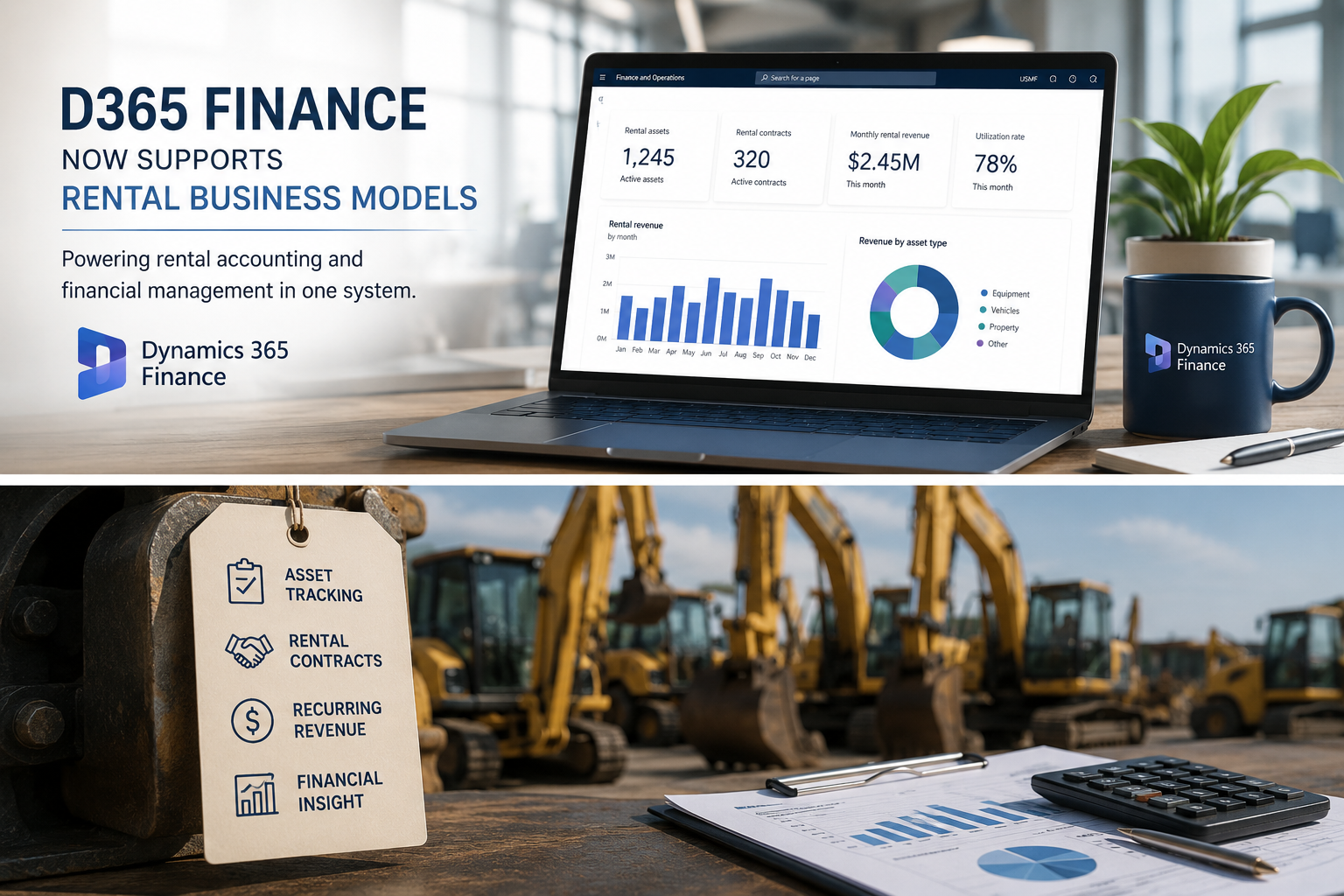
Microsoft describes the update as an expansion of the financial management capabilities in Dynamics 365 Finance to support rental scenarios. The feature is designed to help organizations track, account for, and manage rental assets, revenue, and the related financial processes that come with them. The goal is to give finance teams more control and transparency over business models built around asset-heavy, usage-driven, and recurring revenue.
This sits alongside Microsoft’s broader 2026 investments in Dynamics 365 Finance, which continue to focus on multi-entity capabilities, faster period-end close, and more automation across financial processes.
Who this matters for
Rental support is most relevant for organizations whose revenue depends on putting assets in the hands of customers for a period of time. That includes equipment leasing and rental companies, real estate operators, and other asset-heavy industries where the same asset generates income across multiple rental cycles.
These businesses often deal with financial complexity that standard sales-based accounting does not capture cleanly: tracking an asset’s value over its rental life, recognizing revenue that recurs on a schedule, and tying costs and income back to specific assets. Bringing this into Dynamics 365 Finance means that activity can be managed in the same system that handles the rest of the organization’s financials.
Why bringing rentals into the core system helps
When rental accounting lives outside the main finance system, teams tend to rely on spreadsheets, manual journal entries, or third-party applications that have to be reconciled back to the general ledger. That adds effort at close and creates more room for error.
With rental support built into Dynamics 365 Finance, rental assets and revenue can be tracked and accounted for in one place. For finance teams, that means a clearer view of how rental activity contributes to the financial picture and less reconciliation work to get there.
How this fits into the wider release
The rental capability is one part of the 2026 release wave 1 for Dynamics 365 Finance, which rolls out between April and September 2026. The same wave continues Microsoft’s work on the new financial journals, advanced bank reconciliation, fixed asset enhancements, and other core financial updates. Organizations evaluating the rental feature may want to review the full release plan to see which updates apply to their environment.
Preparing for the change
As with any release wave feature, timelines and final functionality can change before general availability, so it is worth confirming the current status before planning around it. If your organization runs a rental or leasing model, this is a good time to review how you handle rental accounting today and where the new capability could reduce manual effort.
Logan Consulting works with finance teams to assess Dynamics 365 Finance releases and plan how to adopt the features that fit their operations. If you want to talk through what rental support could mean for your environment, reach out to our team.