



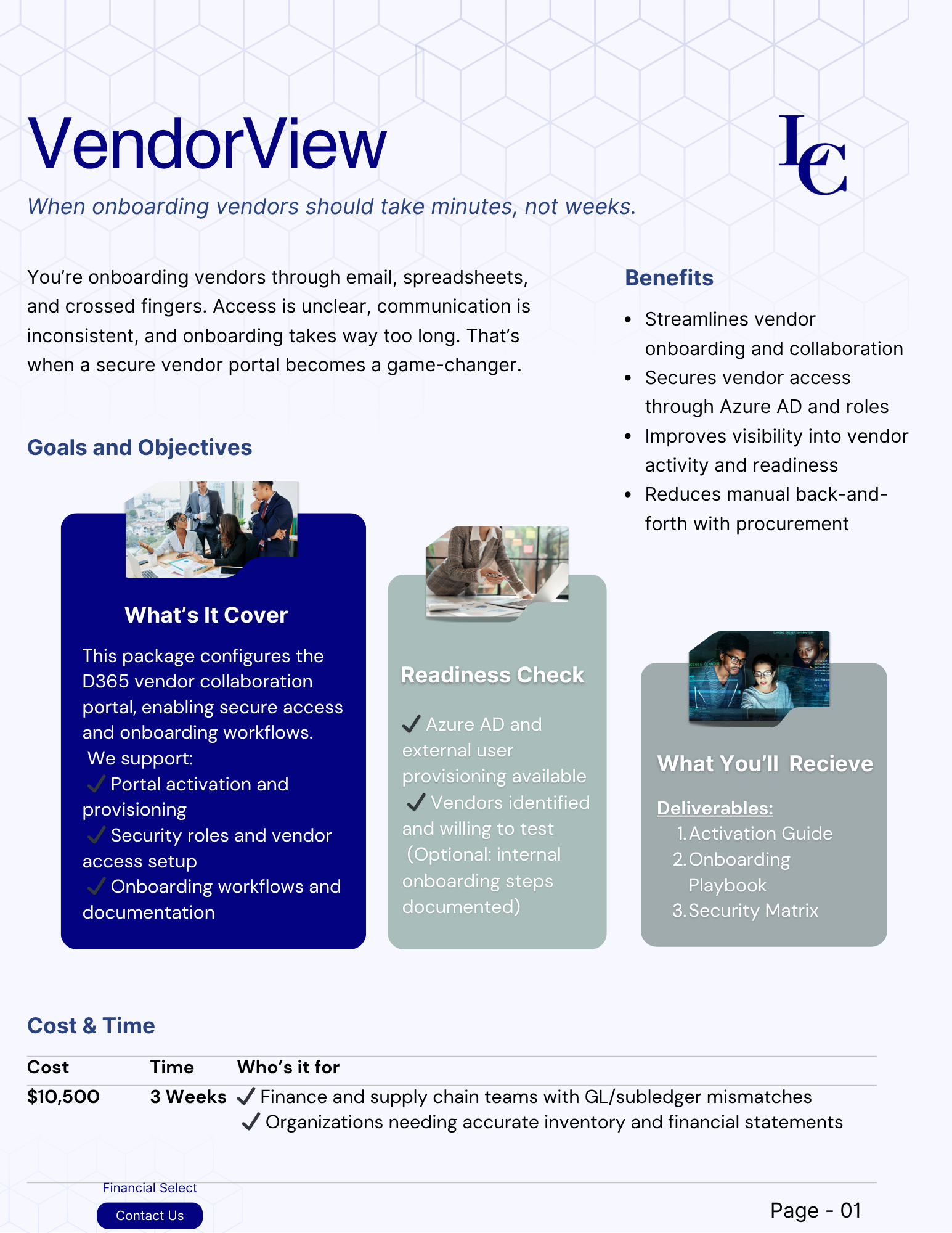


Reviews and corrects ledger-to-subledger alignment in D365 by fixing posting configurations, inventory profiles, reconciliation logic, GL mapping, and critical reporting procedures.
Customer Engagement Reimagined Series Episode 6: Dynamics 365 CRM for Revenue Teams: Smarter Pipelines, Better Forecasts
Posted on: June 16, 2026 | By: Anika Dewjee | Microsoft Dynamics CRM
In Episode 5 of our Customer Engagement Reimagined: Practical Innovation for the Modern CRM series, we explored Omnichannel 2.0: Designing Seamless, Connected Experiences. This month, we turn to a challenge that sits at the heart of every revenue organization: how to make your CRM work for your sellers, rather than the other way around.

The CRM Paradox: Powerful Tool, Reluctant Users
Most revenue teams already know what a well-configured CRM can do. They’ve seen the demos, heard the promises, and invested in the platform. And yet, in organization after organization, CRM adoption remains inconsistent, pipeline data stays stale, and forecast accuracy lags behind expectations.
The root cause is rarely technology. It’s experience design. When CRM feels like a reporting obligation rather than a selling tool, sellers find workarounds. When pipeline updates require manual effort that adds no perceived value to the rep, accuracy suffers. The organizations that close this gap are the ones that reframe the CRM’s role entirely, not as a system of record for management, but as a strategic partner for the seller.
From Data Entry Tool to Revenue Engine
The shift from admin burden to revenue engine is more than a configuration change; it’s a philosophy shift. It requires agreement across sales, revenue operations, and leadership on what “good pipeline hygiene” actually looks like in practice, and a shared commitment to making the CRM give back more than it asks for.
Dynamics 365 Sales, combined with Copilot for Sales and the broader Microsoft ecosystem, is built around this model. Guided selling surfaces the right action at the right moment. AI-driven deal intelligence flags risk before it becomes a missed quarter. And integrated forecasting gives revenue leaders confidence in the numbers without requiring a separate spreadsheet reconciliation cycle every week.
Guided Selling: The CRM That Tells You What to Do Next
One of the most underleveraged capabilities in modern CRM is guided selling. The ability to surface next-best actions based on deal stage, customer signals, and historical win patterns. When configured well, it reduces the cognitive load on sellers, accelerates deal velocity, and ensures consistent execution across the team.
The key is relevance. Guidance that feels generic or out of context gets ignored. Guidance that reflects the specific deal, the specific customer relationship, and the specific stage of the sales motion becomes a trusted input that sellers actually act on.
How to Turn Dynamics 365 Into a Revenue Engine
Here are practical patterns organizations are applying today to make their CRM a true strategic partner for revenue teams:
Guided Selling with Sales Accelerator
Configure the Sales Accelerator in Dynamics 365 to surface prioritized worklists and next-best-action recommendations based on deal stage, engagement signals, and sequence rules, so sellers spend time on the right opportunities, not just the loudest ones.
Lead and Opportunity Scoring
Use predictive scoring models in Dynamics 365 to automatically grade leads and opportunities based on firmographic fit, engagement behavior, and historical win data. Surface high-probability deals to the top of every seller’s queue and stop valuable pipeline from aging unnoticed.
AI-Powered Deal Intelligence
Enable Copilot for Sales to analyze email sentiment, meeting frequency, and stakeholder engagement patterns to flag deals that show signs of risk before they slip. Give managers meaningful coaching moments rooted in real deal signals, not gut feel.
Integrated Forecasting and Pipeline Visibility
Replace spreadsheet-based forecast submissions with the native forecasting module in Dynamics 365. Establish a single source of truth that rolls up automatically from opportunity data, lets managers apply judgment overlays, and tracks forecast accuracy over time to improve the model.
Relationship Intelligence and Stakeholder Mapping
Use relationship analytics and org chart capabilities to map the full buying group on complex deals. Identify relationship gaps, track engagement depth by stakeholder, and ensure sellers are building multi-threaded opportunities rather than single-contact dependencies.
Reducing CRM Friction Through Automation
Eliminate manual data entry wherever possible. Use Copilot to auto-summarize meeting notes and suggest follow-up actions, integrate email and calendar activity directly into the opportunity timeline, and configure automated stage progression rules so sellers aren’t manually advancing deals just closing them.
Conclusion
A CRM that sellers trust and actually use is one that earns its place in the daily workflow. It surfaces the right information, removes friction from routine tasks, and gives both reps and leaders the confidence to make better decisions faster. In Dynamics 365, the foundation for that revenue-first CRM experience is already in place. The organizations that capitalize on it are the ones that stop configuring for compliance and start designing for performance.
Stay tuned for Episode 7, where we’ll continue to explore Practical Innovation for the Modern CRM. If you have any questions or would like to learn more, contact Logan Consulting today to schedule time with our team. We hope to speak with you soon!