



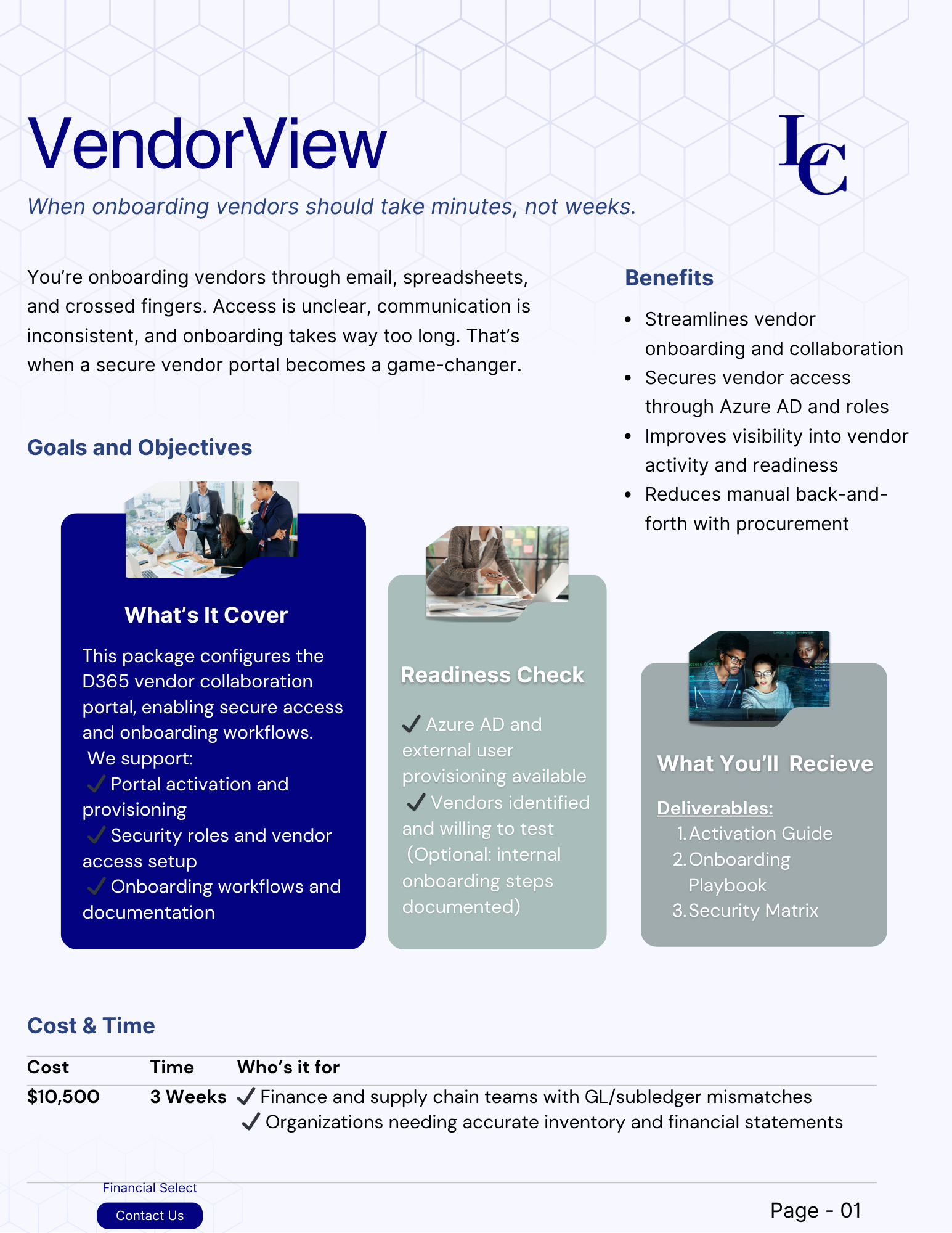


Reviews and corrects ledger-to-subledger alignment in D365 by fixing posting configurations, inventory profiles, reconciliation logic, GL mapping, and critical reporting procedures.
Customer Engagement Reimagined: Omnichannel 2.0: Designing Seamless, Connected Experiences
Posted on: May 15, 2026 | By: Anika Dewjee | Microsoft Dynamics CRM
Customer Engagement Reimagined: A Series
Practical Innovation for the Modern CRM
Episode 5: Omnichannel 2.0: Designing Seamless, Connected Experiences
In Episode 4 of our Customer Engagement Reimagined: Practical Innovation for the Modern CRM series, we explored Personalization That Feels Human, Not Algorithmic. This month, we turn to a challenge every organization is navigating: how to deliver consistent, connected experiences across an ever-expanding set of channels without making customers feel like they’re starting over every time.
Customers Don’t Think in Channels
When a customer starts a conversation in chat, follows up by phone, and then walks into a showroom, they aren’t switching between channels, they’re continuing a single relationship. But for many organizations, those interactions live in separate systems, handled by separate teams, with no shared context. The result is an experience that feels fragmented from the outside, even when each individual touchpoint is well executed. Omnichannel 2.0 isn’t about adding more channels. It’s about connecting the ones you already have so that context travels with the customer.
From Channel Management to Unified Engagement
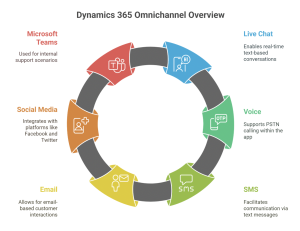
The shift from multichannel to omnichannel is more than a technology upgrade; it’s an operating model change. It requires agreement on what a “conversation” means across chat, voice, social, self-service, and in-person interactions, and a shared system of record that captures the full picture regardless of where engagement happens.
Dynamics 365 CE, combined with the Microsoft Digital Contact Center Platform, is built around this model. Customer interactions across every channel are surfaced in a unified agent experience, with full context visibility, so no customer must repeat themselves and no agent is working blind.
Self-Service as a First-Class Channel
One of the most underleveraged parts of an omnichannel strategy is self-service. When designed well, self-service is a genuine resolution path that customers prefer for routine needs. When designed poorly, it becomes a frustration funnel that drives customers toward higher-cost channels in a worse mood.
The key is continuity. If a customer starts in self-service and needs to escalate, that transition should be seamless; the agent should inherit the full context of what the customer already tried, eliminating repetition and reducing handle time.
How to Build a Unified Engagement Model in Dynamics 365 CE
Here are practical patterns organizations are applying today to deliver omnichannel experiences that feel connected:
Unified Routing Across Channels
- Use Dynamics 365’s unified routing capabilities to ensure work items (whether from chat, voice, email, or social) are intelligently assigned based on agent capacity, skill, and context, not just channel.
Persistent Conversation Context
- Configure customer service journeys so that context captured in one channel is immediately visible in the next. Agents should never ask a customer to re-explain what they already shared in chat or self-service.
Integrated Self-Service with Escalation Paths
- Deploy Power Virtual Agents or Copilot Studio bots with clean escalation handoffs to live agents, passing full conversation transcripts so the transition feels like a continuation.
Social and Messaging Channel Integration
- Connect social and messaging channels directly into the Dynamics 365 omnichannel workspace so agents manage all conversations in one place, with full CRM context alongside each interaction.
In-Person Touchpoint Capture
- Build lightweight post-visit or post-call logging into field service or sales workflows so in-person interactions are reflected in the activity timeline, keeping the full relationship picture current regardless of channel.

Conclusion
A truly connected customer experience doesn’t require customers to adapt to your channel structure; it requires your systems and teams to adapt to how customers engage. In Dynamics 365 CE, the foundation for that unified model is already in place. The organizations that capitalize on it are the ones that stop thinking in channels and start thinking in relationships.
Stay tuned for Episode 6, where we’ll continue to explore Practical Innovation for the Modern CRM. If you have any questions or would like to learn more, please reach out and schedule time with our team. We hope to speak with you soon!