


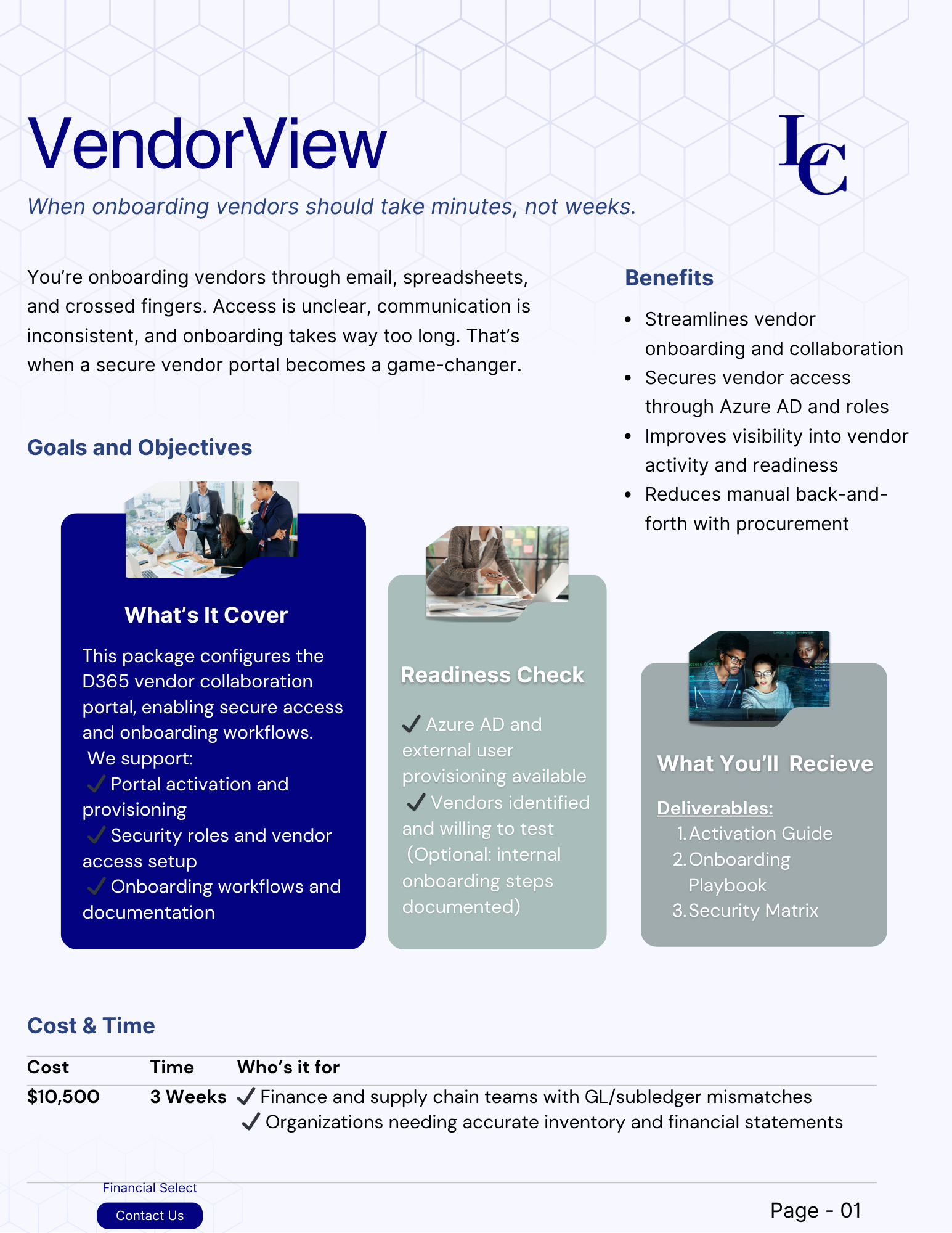


Reviews and corrects ledger-to-subledger alignment in D365 by fixing posting configurations, inventory profiles, reconciliation logic, GL mapping, and critical reporting procedures.
Tokenization and How It Affects Your IT Spend
Posted on: June 25, 2026 | By: Blake Moore | QAD Business Process, QAD Financials|QAD Business Process, QAD Practice News, QAD Manufacturing
The Reality
Artificial intelligence is quickly becoming part of the ERP conversation. Businesses are looking at AI tools to improve reporting, automate workflows, support decision-making, and make daily operations more efficient. But as organizations begin evaluating AI capabilities, there is one detail that often gets overlooked: tokenization.
At first, tokenization can sound like a technical concept that only matters to IT teams. In reality, it can have a direct impact on your technology budget, AI return on investment, and long-term ERP strategy. As more ERP vendors introduce AI-powered tools, understanding how tokenization works is becoming an important part of managing IT spend.

What Is Tokenization?
Every major technology shift in enterprise IT has introduced a new cost unit. Phone systems billed by the minute. Cloud computing billed by compute and storage. SaaS billed by seat. Each model required finance and IT to develop new instincts for forecasting and governance.
AI billed by token is the next version of that shift, and it’s arguably the hardest to model because consumption is driven by behavior, not headcount. You can count users. You cannot easily predict how curious, thorough, or prompt-happy those users will be.
Tokens are the subword units that AI models use to process text. Common English words are typically one token; longer or technical terms get split into several. Both what you send in and what the model returns are metered. In practice, 1,000 tokens covers roughly 750 words of plain English, though technical content, numerical data, and code tend to run higher.
Context windows are the sleeper cost
Most conversations about token costs focus on prompt length. The bigger variable is often context. Modern AI tools, especially agents and assistants embedded in ERP platforms, don’t just respond to a single question in isolation. They carry history: prior messages, retrieved documents, system instructions, background data pulled from connected sources.
Every token of that context is charged on every single exchange. A workflow that appears to ask one question may be sending thousands of tokens of accumulated context each time it runs. Agents that chain multiple calls together, or that retrieve data from several systems before responding, can multiply consumption in ways that aren’t obvious from watching the tool work.
This is the gap between “we ran a pilot and it looked affordable” and “we scaled to three departments and the cost tripled.” The pilot probably had short sessions and limited context. Production use doesn’t.
Questions to Ask Before Expanding AI Usage
Before rolling out AI across the organization, businesses should ask a few key questions:
- How are tokens measured?
- What token volume is included in our current agreement?
- What happens if we exceed our token allocation?
- Are different AI tools or agents priced differently?
- Which departments are most likely to consume the most tokens?
- How will we monitor usage over time?
- Who will be responsible for managing AI-related spend?
These questions can help prevent surprises and give leadership a clearer picture of the real cost of AI adoption.
Managing Token Costs Effectively
Organizations can reduce unnecessary token usage by being intentional about how AI is used. Clear use cases should come before broad adoption. Instead of allowing AI usage to grow without structure, businesses should identify where AI can create measurable value.
For example, AI may be worth the token cost when it helps reduce manual work, improve decision-making, speed up issue resolution, or support higher-value employees. On the other hand, using AI for low-value or repetitive tasks without clear benefits may increase costs without improving business outcomes.
Training also matters. Employees who understand how to write focused prompts and use AI efficiently may consume fewer tokens than users who submit unclear or overly broad requests. Better prompts can lead to better results and more controlled costs.
How ERP Design Impacts AI Costs
Here’s a connection that doesn’t get enough attention: the cleaner your ERP data, the cheaper your AI usage tends to be.
When master data is inconsistent, when records are duplicated, when naming conventions vary across business units, AI tools need more context to produce reliable output. They may require larger data pulls to find what they’re looking for, generate more back-and-forth to clarify ambiguity, or produce responses that users reject and resubmit. Every one of those cycles burns tokens.
Organizations that have invested in data governance, clean master data, and well-structured ERP configurations get more out of AI at lower cost. It’s one of the more concrete ROI arguments for data quality work that doesn’t always have an obvious business case attached to it.
The Bottom Line
The cost of artificial intelligence is increasingly an ERP cost. It belongs in total cost of ownership models, renewal negotiations, and architecture decisions. Organizations that treat it as a separate IT line item may find themselves optimizing in silos, missing the full picture of what AI adoption actually costs at the platform level.
AI can create real value, but only when organizations understand both the capabilities and the cost structure behind them. Businesses that take the time to evaluate token economics, monitor usage, and connect AI investments to clear business outcomes will be better positioned to control costs while gaining value from new technology.
At Logan Consulting, we help clients think practically about ERP modernization, AI readiness, and long-term technology planning. If your organization is evaluating AI tools or trying to understand how new pricing models could affect your IT budget, Logan Consulting can help you assess your current environment and build a strategy that makes sense for your business.