

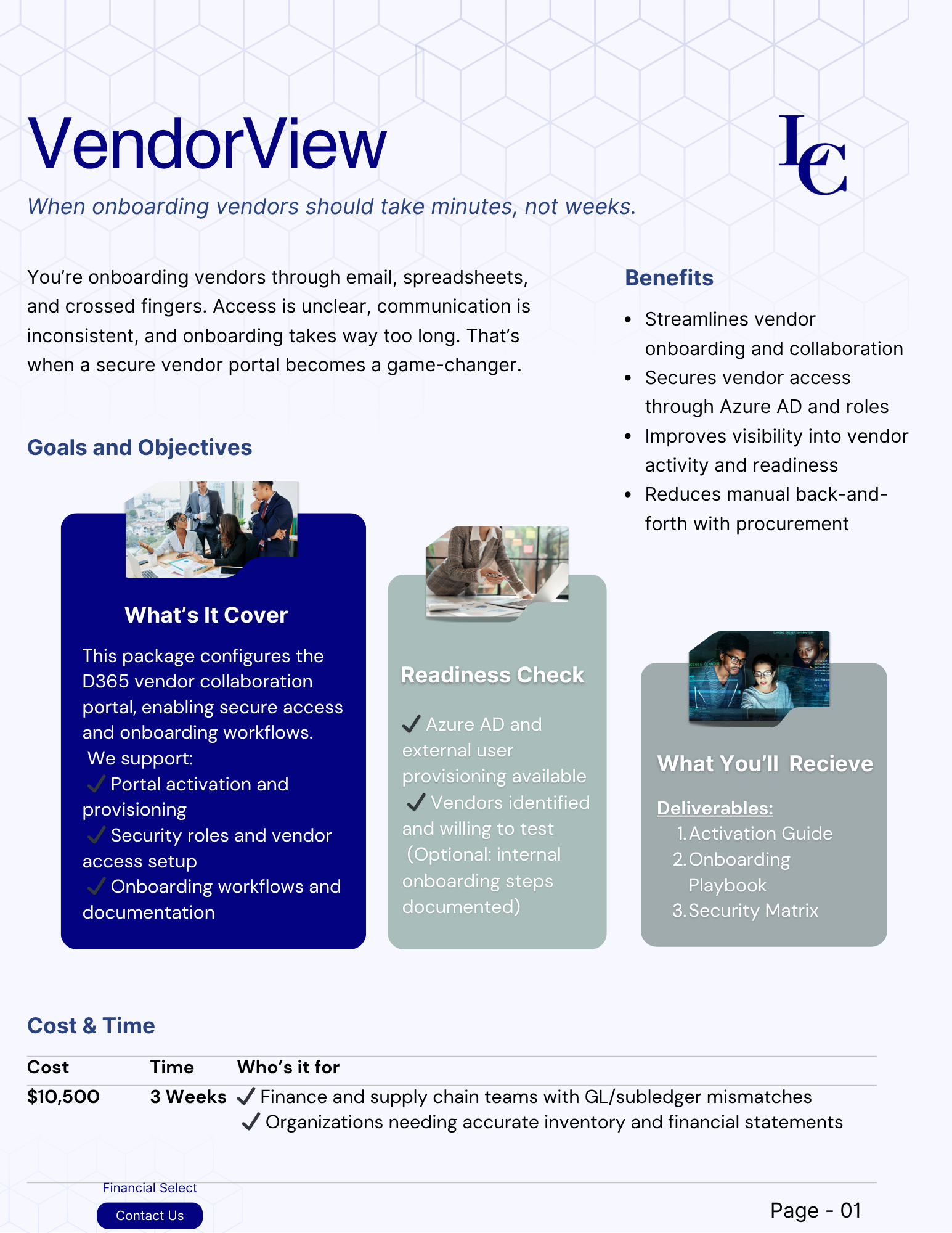


Reviews and corrects ledger-to-subledger alignment in D365 by fixing posting configurations, inventory profiles, reconciliation logic, GL mapping, and critical reporting procedures.
Warehouse Management in 2026: What’s New and How to Prepare Your Operations
Posted on: June 25, 2026 | By: Heather Zhu | Microsoft Dynamics AX/365, Microsoft Dynamics AX/365|Microsoft Dynamics Manufacturing
Warehouse operations have become one of the most critical competitive differentiators in modern supply chains. As customer expectations continue to rise and labor markets remain tight, organizations are under increasing pressure to move inventory faster, improve accuracy, and maximize productivity without significantly increasing costs.
To support these evolving demands, Microsoft continues to enhance the warehouse management capabilities within Dynamics 365 Supply Chain Management. The 2026 Release Wave 1 introduces a series of targeted improvements focused on warehouse execution, inventory movement, labor optimization, and operational visibility.
While these updates may not generate the same attention as artificial intelligence or advanced automation technologies, they address many of the day-to-day challenges warehouse leaders face. From reducing travel time on the warehouse floor to improving inventory placement and streamlining inbound receiving processes, the latest enhancements are designed to help organizations build more efficient and resilient distribution operations.
For warehouse managers, distribution leaders, and supply chain executives, now is the ideal time to evaluate how these new capabilities align with current operational goals and identify opportunities to prepare for adoption.
The Growing Need for Smarter Warehouse Operations
Over the past decade, warehouse management has evolved from a largely transactional function into a strategic driver of business performance. Warehouses are no longer simply storage facilities. They serve as critical hubs that connect procurement, manufacturing, transportation, and customer fulfillment.
At the same time, operational complexity has increased dramatically. Product portfolios have expanded, order volumes have grown, and customers expect faster delivery than ever before. Organizations must manage this complexity while dealing with labor shortages, rising operating costs, and ongoing supply chain disruptions.
These pressures have forced many businesses to reevaluate traditional warehouse processes. Static inventory placement, manual work assignment, and inefficient picking routes can quickly become barriers to growth.
Microsoft’s latest investments in Dynamics 365 Supply Chain Management reflect this reality. Rather than focusing solely on new functionality, the 2026 Wave 1 release concentrates on helping organizations optimize the fundamental processes that drive warehouse performance every day.
Dynamic Item Placement Brings Greater Flexibility to Inventory Storage
One of the most notable enhancements in the release is the introduction of Dynamic Item Placement capabilities.
Many warehouses still rely on fixed slotting strategies that were developed years ago. While these approaches may have been effective when initially implemented, changing customer demand patterns often make them less efficient over time. High-volume products may end up stored in locations that require excessive travel, while valuable warehouse space may not be utilized effectively.
Dynamic Item Placement introduces greater flexibility by helping organizations determine optimal storage locations based on operational conditions and inventory movement patterns. Instead of relying exclusively on static rules, warehouses can make more informed decisions about where products should be stored to improve accessibility and reduce unnecessary movement.
The potential impact extends beyond simply shortening travel distances. Better inventory placement can improve picking productivity, reduce congestion in high-traffic areas, and support more efficient use of warehouse capacity.
For organizations preparing to take advantage of this capability, data quality will be critical. Warehouse leaders should evaluate whether current location structures, inventory dimensions, and movement data accurately reflect real-world operations. The effectiveness of dynamic placement strategies depends heavily on the quality of the underlying warehouse data.
Improving Picking Efficiency Through Spatial Location Intelligence
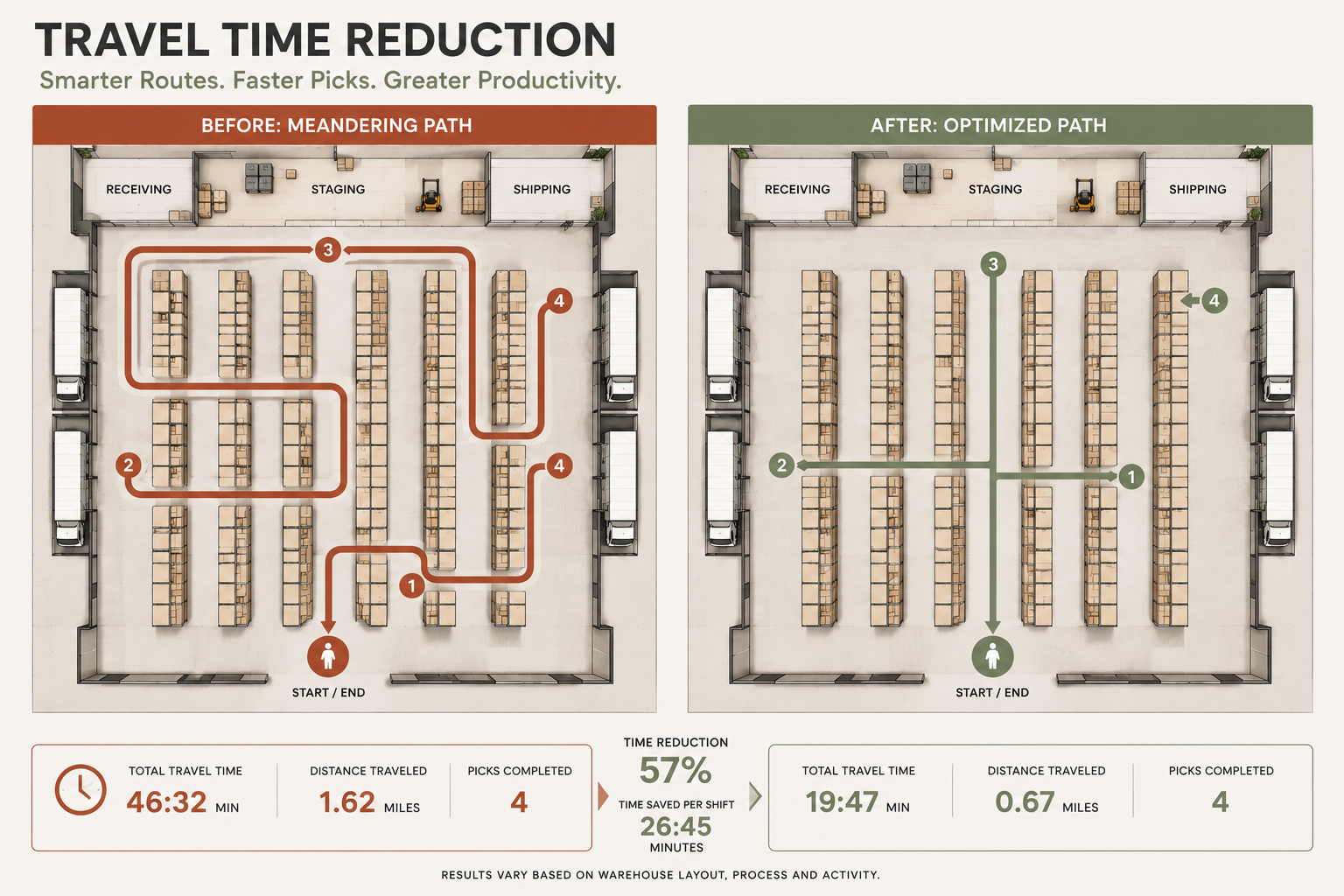
Order picking continues to represent one of the most labor-intensive activities within warehouse operations. In many facilities, a significant portion of a worker’s shift is spent simply traveling between locations rather than physically picking products.
To address this challenge, Microsoft is introducing Spatial Location Intelligence capabilities designed to improve how warehouse workers navigate facilities and execute picking tasks.
The goal is straightforward: reduce travel time while increasing throughput.
Even modest improvements in picker movement can have a meaningful impact on warehouse productivity. When multiplied across hundreds or thousands of daily picks, small reductions in travel distance can translate into substantial labor savings over time.
Organizations that want to maximize the value of this enhancement should begin by examining their current warehouse layouts and picking workflows. Understanding where congestion occurs, identifying inefficient travel paths, and ensuring location data remains accurate will help create a stronger foundation for future optimization efforts.
As labor costs continue to rise, technologies that help employees spend less time walking and more time completing productive work will become increasingly valuable.
Enhanced Traceability Supports Accuracy and Compliance

Inventory accuracy remains a top priority across many industries, particularly for organizations operating in regulated environments.
The 2026 Release Wave 1 includes enhancements to serial number and batch number capture during cluster picking operations, helping businesses improve traceability while reducing manual effort.
This enhancement is particularly important for industries such as food and beverage, pharmaceuticals, life sciences, medical devices, and industrial manufacturing, where accurate product tracking is often required for compliance purposes.
Traceability is no longer simply a regulatory requirement. It has become an essential component of risk management and customer service. When issues arise, organizations need the ability to quickly identify affected inventory, trace product movement, and respond with confidence.
Improving data capture during warehouse execution helps strengthen inventory integrity while reducing the likelihood of shipping errors and manual corrections later in the process.
For many organizations, these improvements also represent an opportunity to evaluate existing scanning procedures and identify areas where manual entry still introduces unnecessary risk.
Streamlining Inbound Operations Through Advanced Shipping Notices
While warehouse productivity often focuses on picking and shipping activities, receiving operations play an equally important role in overall performance.
Delays at receiving docks can create a ripple effect throughout the supply chain. Inventory may not become available when needed, production schedules can be disrupted, and fulfillment teams may struggle to meet customer commitments.
To improve inbound visibility, Microsoft is expanding support for Advanced Shipping Notices within Warehouse-Only Mode for transfer order receiving processes.
By providing earlier visibility into incoming inventory, organizations can better plan receiving activities, allocate labor resources more effectively, and reduce processing delays once shipments arrive.
The value of this enhancement extends beyond the warehouse itself. Improved receiving accuracy contributes to stronger inventory visibility across the enterprise, enabling better planning decisions throughout procurement, manufacturing, and distribution operations.
Organizations preparing for adoption should review current inbound workflows and assess how effectively information is communicated between shipping and receiving teams. The more standardized these processes become, the easier it will be to leverage advanced receiving capabilities in the future.
Expanding Warehouse Automation with Power FX
One of the broader themes across Microsoft’s business applications strategy is the continued expansion of low-code automation capabilities. Warehouse management is no exception.
The introduction of dynamic work classification through Power FX gives organizations greater flexibility to automate operational decisions without relying heavily on custom development.
Warehouse operations often involve countless business rules that determine how work should be assigned, prioritized, or executed. Historically, implementing these rules frequently required extensive customization or manual intervention.
By enabling organizations to configure more sophisticated business logic through Power FX, Microsoft is making it easier to adapt warehouse processes as operational requirements evolve.
This flexibility is particularly valuable for organizations that experience seasonal demand fluctuations, manage diverse product portfolios, or support multiple fulfillment models.
Rather than continuously modifying custom code, businesses can gain greater control over operational workflows through configurable automation.
Connecting Warehouse Execution and Workforce Management
Labor remains one of the largest and most closely monitored expenses within warehouse operations. As organizations seek new ways to improve productivity, the ability to connect warehouse activity with workforce performance data becomes increasingly important.
The 2026 Wave 1 release includes integration capabilities between Dynamics 365 Warehouse Management and external labor management systems, helping organizations create a more complete view of operational performance.
This integration can provide deeper insight into workforce utilization, productivity trends, labor planning, and performance measurement.
For warehouse leaders, better visibility into labor performance creates opportunities to make more informed staffing decisions, identify training needs, and align workforce planning with operational demand.
As supply chains become more data-driven, the integration of warehouse execution and labor management systems will likely become a key component of broader operational excellence initiatives.
Preparing for the Future of Warehouse Management
The warehouse enhancements included in Dynamics 365 Supply Chain Management’s 2026 Release Wave 1 may appear incremental on the surface. However, collectively they represent a continued shift toward more intelligent, adaptive, and data-driven warehouse operations.
Organizations that achieve the greatest value from these capabilities will not necessarily be those with the most advanced facilities or the largest technology budgets. Instead, success will depend on operational readiness.
Warehouse leaders should view this release as an opportunity to assess existing processes, evaluate data quality, and identify inefficiencies that may limit future performance. Investments in clean master data, standardized workflows, and process discipline will create the foundation necessary to fully capitalize on emerging capabilities.
As warehouse operations continue to evolve, the organizations that embrace continuous improvement and technology-driven optimization will be best positioned to meet customer expectations, control costs, and build long-term supply chain resilience.
Looking Ahead
The warehouse is no longer viewed solely as a cost center. It has become a critical driver of customer satisfaction, operational agility, and overall supply chain performance. As organizations face increasing pressure to fulfill orders faster, manage labor more effectively, and maintain accurate inventory visibility, incremental process improvements can deliver significant business value.
The enhancements arriving in Dynamics 365 Supply Chain Management’s 2026 Release Wave 1 reflect a broader shift toward more intelligent and responsive warehouse operations. From optimizing inventory placement and reducing picker travel time to improving traceability and workforce visibility, these capabilities are designed to help organizations make better decisions and execute more efficiently.
For supply chain leaders, the opportunity extends beyond adopting new functionality. The greatest returns will come from using these innovations to reevaluate existing processes, strengthen operational discipline, and build a warehouse environment that can adapt to changing business demands.
Organizations that begin preparing today will be better positioned to capitalize on these advancements and create a more productive, resilient, and scalable warehouse operation for the future.