


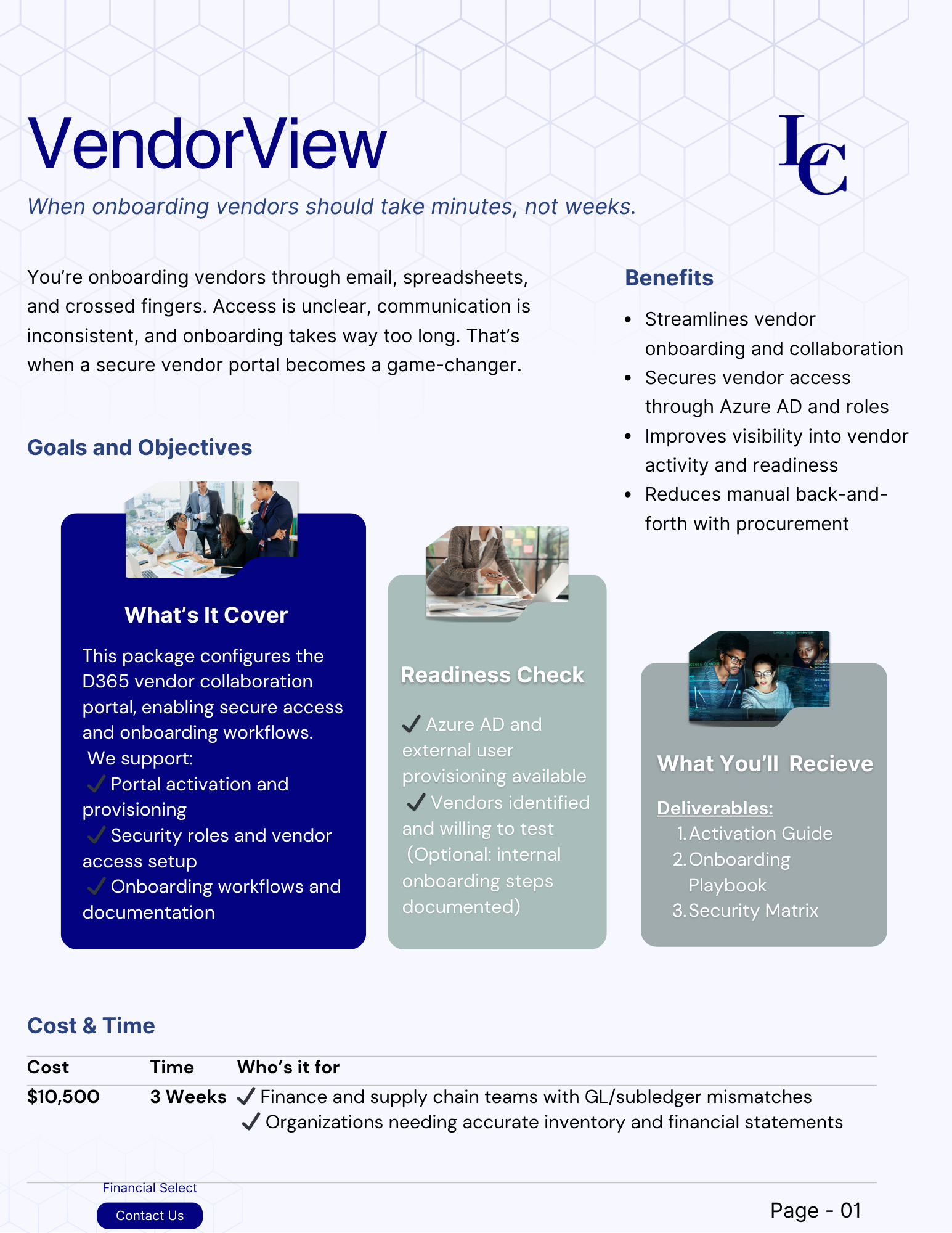


Reviews and corrects ledger-to-subledger alignment in D365 by fixing posting configurations, inventory profiles, reconciliation logic, GL mapping, and critical reporting procedures.
QAD Internal Controls: Meeting Accounting Requirements by Design
Posted on: May 26, 2026 | By: Blake Moore | QAD Financials, QAD Practice News, QAD Manufacturing, QAD Distribution, QAD Financials|QAD Business Process
The Role of Internal Controls in QAD Finance Processes
Strong internal controls are no longer optional. As organizations face increasing regulatory scrutiny, tighter audit requirements, and growing cybersecurity and fraud risks, having effective internal controls embedded into daily operations is essential. The right controls not only protect the business—but also improve accuracy, accountability, and confidence across the organization.
Enterprise resource planning (ERP) systems play a critical role in enforcing internal controls. QAD is designed with built-in safeguards that help organizations maintain compliance while reducing manual effort and risk. Let’s explore why internal controls matter and how QAD supports them.

The Purpose and Benefits of Internal Controls
Internal controls exist to ensure that financial and operational processes are accurate, compliant, and resilient. When implemented effectively, they deliver multiple benefits across the organization.
Financial Reporting Accuracy
Accurate financial data is the foundation of sound decision-making. Internal controls help ensure transactions are recorded correctly, posted to the proper accounts and periods, and supported by appropriate documentation—reducing the risk of misstatements.
Fraud Prevention
By limiting who can perform certain actions and requiring approvals, internal controls reduce opportunities for fraud. Segregation of duties and approval workflows make it difficult for a single individual to initiate and conceal improper activity.
Sarbanes-Oxley (SOX) Compliance
For public companies, SOX compliance requires documented, enforced controls over financial reporting. ERP-based controls are particularly valuable because they are systematic, repeatable, and auditable.
Documentation of Approval Flows
Clear approval paths create transparency and accountability. Internal controls ensure that transactions—such as purchase orders, invoices, and journal entries—are reviewed and authorized before posting.
Audit Compliance
Auditors rely on controls to reduce audit risk. Well-defined system controls simplify audit testing, shorten audit cycles, and reduce reliance on manual explanations and workarounds.
Error Prevention
Controls catch problems before they become costly. Preventing out-of-balance transactions, disallowed account usage, or invalid account combinations minimizes downstream corrections and rework.
Risk Reduction
From operational errors to compliance violations, internal controls reduce exposure to business risk by enforcing consistent, approved processes.
Accountability
When responsibilities and approvals are clearly defined, users understand their roles—and management gains confidence that policies are being followed.
QAD Built-In Internal Controls
QAD ERP includes a wide range of embedded internal controls designed to support compliance, accuracy, and efficiency without relying on external tools or excessive customization.
Segregation of Duties (SoD)
QAD supports segregation of duties through a combination of user security setup and approval workflows. Access can be configured so that no single user has complete control over a transaction lifecycle.
Approval workflows—available for processes such as purchase orders, supplier invoices, and journal entries—add another layer of oversight.
For organizations with more complex requirements, QAD’s Segregation of Duties module actively prevents administrators from granting conflicting access, ensuring SoD rules are enforced at the system level, not just documented in policy.
GL Period Close Controls
QAD allows organizations to close Sales, Purchasing, Inventory, and General Ledger periods independently or together. Once closed, users are prevented from posting transactions into incorrect accounting periods—protecting financial integrity and simplifying period-end close.
GL Account Types
Built-in GL account types enforce transaction-level rules. For example:
- Bank-type accounts cannot be selected on customer or supplier invoices.
- Subledger-controlled accounts are restricted from manual journal entry posting.
These controls ensure transactions are recorded through proper subledgers and prevent misuse of accounts.
Transaction Balancing
QAD enforces debit and credit balancing at the transaction level. Unbalanced journal entries cannot be saved or posted, eliminating a common source of financial reporting errors.
GL Masks
QAD’s Sub-Account, Cost Center, and Project masking functionality restricts which GL string combinations users can enter. By allowing only valid combinations, organizations prevent posting errors, improve data consistency, and enhance reporting accuracy.
Cross-Company Control Accounts
For companies operating multiple entities within a single QAD environment, cross-company control accounts streamline intercompany postings. These accounts ensure both sides of an intercompany transaction remain balanced—reducing reconciliation issues and improving audit readiness.
Internal Controls Built Into Daily Operations
One of QAD’s greatest strengths is that internal controls are part of everyday workflows—not bolt-on requirements or after-the-fact checks. Users follow natural business processes while the system enforces rules behind the scenes.
The result is a control environment that supports compliance, reduces risk, and improves efficiency without slowing the business down.
Final Thoughts
Internal controls protect more than just financial statements—they protect the organization’s reputation, credibility, and long-term success. By embedding proven control mechanisms directly into core financial and operational processes, QAD helps organizations achieve audit readiness, compliance confidence, and operational excellence.
Strong controls don’t have to be complex. With the right ERP foundation, they can be seamless, consistent, and effective—every day.