



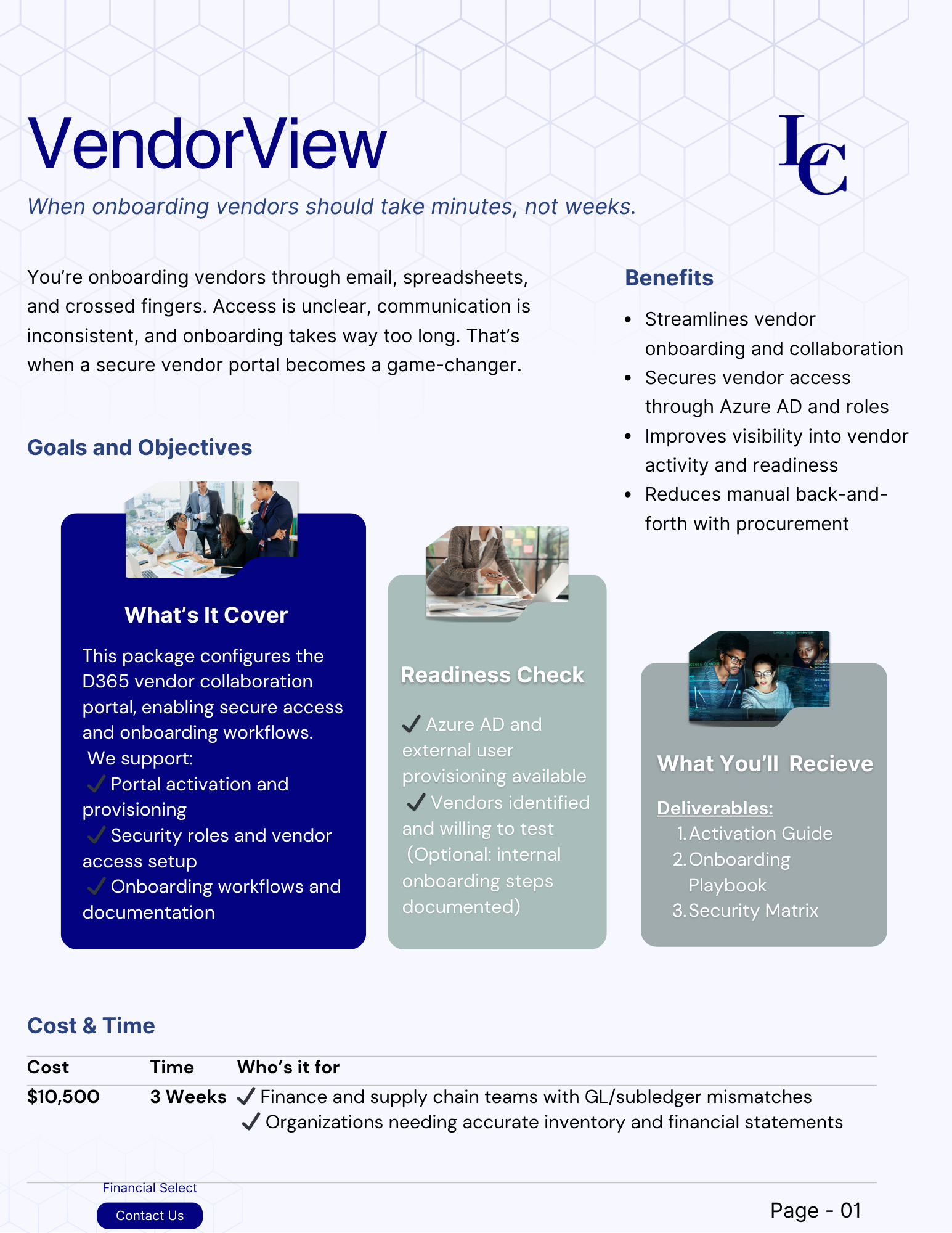


Reviews and corrects ledger-to-subledger alignment in D365 by fixing posting configurations, inventory profiles, reconciliation logic, GL mapping, and critical reporting procedures.
When Is It Time to Reevaluate Your QAD Processes?
Posted on: May 26, 2026 | By: Blake Moore | QAD Financials|QAD Business Process, QAD Financials, QAD Practice News, QAD Manufacturing, QAD Business Process, QAD Distribution
For many manufacturers, QAD becomes deeply embedded into daily operations. From production reporting and inventory transactions to purchasing, shipping, EDI, and financial close, QAD often serves as the operational backbone of the business.
However, even well-implemented QAD environments can become less effective over time.
As organizations grow, acquire new facilities, change supply chain models, introduce automation, or expand customer requirements, the processes originally designed during implementation may no longer align with how the business operates today.
In many cases, the issue is not QAD itself. The issue is that the business evolved while the ERP processes did not.
Manual spreadsheets begin filling operational gaps. Users create workarounds outside the system. Reporting becomes harder to trust. Transactions require more corrections. Over time, inefficiencies that once seemed manageable begin impacting productivity, visibility, and decision-making.
That is why periodic QAD process reviews are important. The goal is not change for the sake of change. The goal is to ensure QAD continues supporting the business efficiently, accurately, and in a way that aligns with current operational realities.

Why ERP Process Reviews Matter
QAD processes touch nearly every part of the organization, from finance and purchasing to inventory, manufacturing, shipping, and customer service. When these processes are not reviewed regularly, small inefficiencies can turn into larger operational problems.
Recent ERP research shows that organizations are increasingly treating technology as a driver of business growth rather than just a tool for automation. Panorama Consulting’s 2024 ERP Report notes that companies are placing more focus on data-driven decision-making, advanced analytics, and process improvement as business conditions become more unpredictable.
That is why process reviews are valuable. They help organizations understand whether their current ERP setup is still helping them make accurate decisions, reduce manual effort, and maintain operational control.
Signs It May Be Time to Reevaluate Your ERP Processes:
Users Rely on Manual Workarounds
One of the clearest signs that QAD processes need attention is when users regularly operate outside the system. If users regularly export data to spreadsheets, track approvals outside the system, or rely on emails to complete core business tasks, the process may no longer be working as intended.
Manual workarounds often develop because users are trying to solve a real business problem. However, they can create inconsistent data, limited visibility, and added risk. When important steps happen outside of QAD, management may lose the ability to track activity, enforce controls, and report accurately.
Common examples include:
- Buyers managing purchasing activity through spreadsheets instead of QAD requisitions or planned orders
- Inventory teams manually reconciling balances between warehouses
- Production supervisors tracking manufacturing activity outside QAD
- Finance teams exporting large amounts of data into Excel to complete reporting or reconciliations
- Customer service teams manually tracking orders, shipments, or EDI exceptions
Reporting Takes Too Long
Accurate reporting is one of the main benefits of an ERP system. However, if teams spend too much time reconciling numbers, cleaning data, or combining reports from multiple sources, it may be time to review the underlying process.
Reporting issues are often a symptom of inconsistent data entry, outdated master data, or disconnected workflows. The ERP may contain the right information, but if the process does not capture that information consistently, reporting becomes harder than it needs to be.
This becomes increasingly important as organizations invest in business intelligence initiatives, automation, AI, and advanced analytics. Those initiatives are only as effective as the underlying ERP data supporting them.
Processes No Longer Match the Business
Many QAD environments were designed around how the business operated at the time of implementation. But businesses change.
Over time, organizations may:
- Add new plants or distribution centers
- Acquire other companies
- Expand internationally
- Introduce new product lines
- Implement customer-specific compliance requirements
- Increase EDI requirements from trading partners
- Shift warehousing or fulfillment strategies
- Adopt automation or connected manufacturing technologies
When the business changes but the ERP process stays the same, users may be forced into inefficient steps that no longer make sense. This can slow down operations and make the system feel more difficult than it needs to be.
A process review can help determine whether current workflows still match business reality. This includes reviewing approval paths, user roles, reporting structures, item setup, supplier processes, customer requirements, and financial controls.
For example:
- Approval workflows may no longer reflect organizational responsibilities
- Item setup structures may not support newer product strategies
- Legacy planning rules may conflict with current manufacturing realities
- Older EDI processes may create unnecessary manual intervention
- Security roles may no longer align with employee responsibilities
A QAD process review helps organizations determine whether the system configuration and workflows still align with operational reality.
Users Do Not Trust the System
Once users stop trusting QAD data, they will find other ways to do their work. This often results in shadow systems, duplicate records, and informal tracking methods. Once that happens, the organization may no longer have a single reliable source of information.
Lack of trust usually comes from repeated issues: incorrect inventory balances, outdated customer data, slow approvals, unclear reports, or transactions that require too much correction after the fact.
Reevaluating ERP processes helps identify why users are losing confidence. Sometimes the issue is training. Sometimes it is master data. Sometimes it is a process that was never fully aligned with the business. Regardless of the cause, the problem should be addressed before it becomes part of the company culture.
System Changes Are Being Delayed
Another major indicator is when organizations hesitate to make changes because the QAD environment feels overly customized, difficult to maintain, or operationally fragile. If every update, report change, or process adjustment creates concern, there may be underlying configuration or process issues that need to be cleaned up.
This is especially important before larger projects, such as upgrades, cloud transitions, new modules, automation, AI tools, or integrations. ERP research continues to show that project success depends heavily on process readiness. When organizations do not optimize processes or prepare employees, even advanced technology may fail to deliver expected benefits.
In other words, new technology will not fix a broken process by itself. organizations should first understand whether their current QAD processes are optimized, standardized, and scalable.
Where QAD Process Reviews Can Help
A QAD process review allows organizations to evaluate how the ERP system is currently being used and identify opportunities for operational improvement.
Areas commonly reviewed include:
- Financial and month-end close processes
- Purchasing and supplier management workflows
- Inventory accuracy and warehouse transactions
- Manufacturing reporting and backflushing
- Planning and scheduling processes
- Sales order and customer service workflows
- EDI transaction processing and exception handling
- Master data governance
- Approval workflows and security roles
- Reporting, KPIs, and analytics
- Integration points between QAD and external systems
The purpose is not to disrupt operations unnecessarily. The purpose is to identify areas where QAD may no longer align with the business and develop practical recommendations for improvement.
Final Thoughts
QAD implementations should not remain static as the business evolves.
Over time, even strong ERP environments can become weighed down by manual workarounds, inconsistent reporting, outdated workflows, and operational inefficiencies. These issues often develop gradually, making them difficult to identify internally until they begin affecting productivity, visibility, and decision-making.
A structured QAD process review helps organizations evaluate where the system is supporting the business effectively and where operational improvements may be needed.
If your team is spending more time working around QAD than working within it, it may be time to take a closer look.
At Logan Consulting, we help manufacturers evaluate their current QAD environment, identify operational inefficiencies, and develop practical improvement plans that align QAD with how the business operates today.