

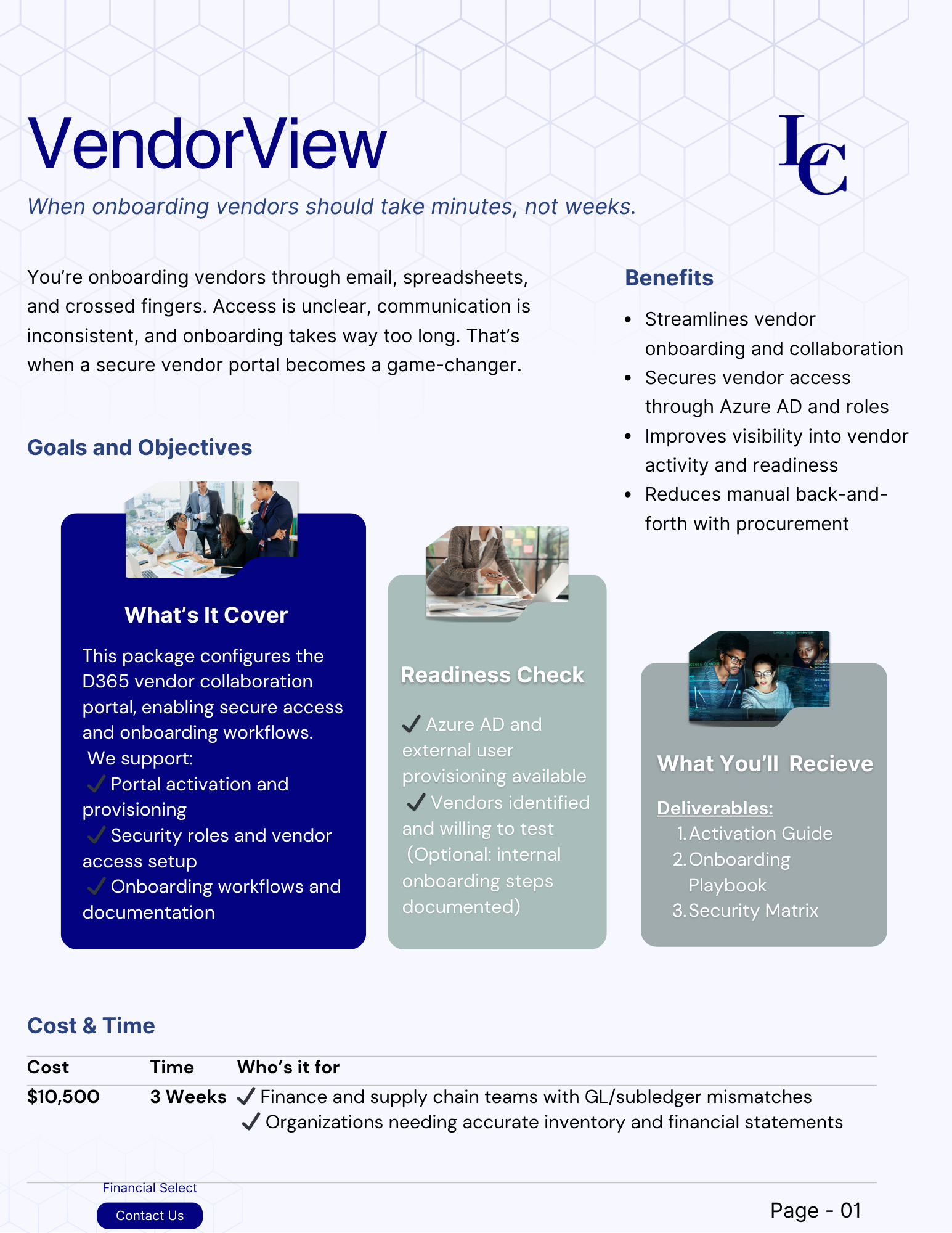


Reviews and corrects ledger-to-subledger alignment in D365 by fixing posting configurations, inventory profiles, reconciliation logic, GL mapping, and critical reporting procedures.
From Capital Projects to Corrective Maintenance: Using QAD EAM to Manage the Complete Asset Lifecycle
Posted on: September 10, 2026 | By: Michael Angel | QAD Business Process, QAD Distribution, QAD Manufacturing, Uncategorized
Managing physical assets effectively is about much more than keeping equipment running. For manufacturers and asset-intensive organizations, asset management begins long before a machine is installed and continues throughout its useful life.
A capital project may involve planning a new production line, purchasing equipment, installing utilities, commissioning machinery, and bringing the asset into production. Once operational, that same asset requires spare parts, preventive maintenance, corrective repairs, inspections, labor, purchasing, and detailed work-order management.
When these activities are managed through disconnected processes and systems, organizations can lose visibility into costs, inventory, equipment history, and maintenance performance.
QAD Enterprise Asset Management (EAM) provides a framework for connecting these activities and creating a more complete view of the asset lifecycle.
From capital project management to MRO stock management, requisitions, purchasing, equipment management, preventive and corrective maintenance, and asset work orders, QAD EAM can help organizations bring maintenance and asset-related processes together.
Capital Project Management: Managing Assets Before They Exist
Asset management begins with the decision to invest in an asset.
Capital projects can involve significant expenditures and coordination between engineering, operations, maintenance, purchasing, finance, and project management. Whether the project is a new manufacturing line, facility expansion, replacement machine, or major equipment upgrade, organizations need visibility into what is being purchased, how much it costs, and when the asset will become operational.
QAD EAM can support the transition from capital investment to operational asset management by providing a structured approach to identifying equipment and related maintenance requirements.
A typical capital project lifecycle might include:
- Identifying the business need
- Developing the capital request
- Establishing project budgets
- Creating requisitions for equipment and services
- Purchasing equipment and materials
- Managing installation activities
- Commissioning the equipment
- Creating equipment and asset records
- Establishing preventive maintenance requirements
- Moving the asset into routine maintenance operations
The key benefit is continuity.
Instead of treating the capital project as a completely separate activity from maintenance, organizations can establish the information needed to manage the asset throughout its operational life.
MRO Stock Management: Having the Right Parts When You Need Them
Maintenance organizations depend heavily on MRO—maintenance, repair, and operations—inventory.
A production asset may require bearings, belts, filters, motors, electrical components, lubricants, seals, fasteners, or specialized replacement parts. Not having a critical part available can result in extended downtime. On the other hand, carrying excessive inventory ties up working capital and increases storage costs.
Effective MRO stock management requires a balance between availability and cost.
QAD EAM can connect maintenance requirements with inventory management so organizations can better understand which parts are associated with specific equipment and maintenance activities.
This creates opportunities to:
- Identify critical spare parts
- Track MRO inventory levels
- Associate parts with equipment
- Establish reorder requirements
- Reduce unnecessary stock
- Improve spare-parts availability
- Track parts consumed during maintenance
- Understand maintenance-related inventory costs
The result is a more informed approach to spare-parts management.
Rather than simply asking, “Do we have this part in inventory?” maintenance teams can ask a more valuable question: “Do we have the right parts available to keep our critical assets running?”
Requisitions: Turning Maintenance Needs Into Controlled Requests
Maintenance frequently generates purchasing requirements.
A technician may identify a failed component. A planner may determine that a preventive maintenance activity requires a specialized service. An engineer may identify a need for an equipment upgrade. A capital project may require outside contractors or additional materials.
The requisition process provides the bridge between an operational requirement and procurement.
With QAD EAM, maintenance-related requirements can be incorporated into a controlled purchasing process. This helps organizations maintain visibility into what is being requested, why it is needed, which asset or project it supports, and whether the expenditure has been approved.
A well-designed requisition process can help answer questions such as:
- Who requested the item or service?
- Which asset or project requires it?
- What is the expected cost?
- Has the request been approved?
- Is the item already available in inventory?
- Does it need to be purchased?
- When is it required?
This level of visibility can help reduce emergency purchases and improve purchasing discipline.
Purchasing: Connecting Procurement to Maintenance and Assets
Purchasing is an important part of asset management because equipment reliability depends on access to materials, services, and replacement components.
When purchasing information is disconnected from maintenance records, it becomes difficult to determine the true cost of maintaining an asset.
Consider a pump that repeatedly requires repairs. The maintenance department may know how many work orders have been performed, while purchasing knows how much has been spent on replacement parts and outside services. Finance may have another view of the costs.
Connecting these activities creates a more complete picture.
QAD EAM can help organizations relate purchasing activity to maintenance requirements, equipment, and projects. This provides greater visibility into the costs associated with maintaining and improving assets.
Over time, this information can support better decisions about whether an organization should:
- Continue repairing an asset
- Replace the asset
- Upgrade the asset
- Change the maintenance strategy
- Identify alternative parts or suppliers
- Review the asset’s total cost of ownership
Equipment Management: Creating a Digital History of the Asset
At the center of EAM is the equipment record.
An effective equipment record should provide more than a description and location. It should become the historical record of the asset.
Depending on the organization’s requirements, equipment management can capture information such as:
- Equipment identification
- Location
- Parent and child relationships
- Manufacturer and model
- Installation information
- Maintenance requirements
- Meter readings
- Maintenance history
- Parts usage
- Labor
- Outside services
- Corrective repairs
- Preventive maintenance
- Work-order history
- Equipment costs
This historical information becomes increasingly valuable as an asset ages.
When a maintenance planner needs to understand why a machine continues to fail, the answer may already exist within its maintenance history.
The equipment record effectively becomes the asset’s story.
Preventive Maintenance: Moving From Reactive to Planned
Preventive maintenance is one of the most important components of an effective EAM strategy.
Rather than waiting for equipment to fail, organizations can establish maintenance schedules based on time, usage, meter readings, operating conditions, or other defined criteria.
For example, a preventive maintenance program might require:
- Daily inspections
- Weekly lubrication
- Monthly equipment inspections
- Quarterly component replacement
- Annual major service
- Maintenance based on operating hours
QAD EAM can help organize these requirements into repeatable maintenance processes.
The objective is not simply to generate more work orders.
The objective is to perform the right maintenance at the right time.
A well-managed preventive maintenance program can help reduce unexpected failures, improve equipment reliability, standardize maintenance practices, and give maintenance teams greater control over their workload.
Corrective Maintenance: Responding When Things Go Wrong
Even the best preventive maintenance program cannot eliminate equipment failures.
When an asset fails, the organization needs a controlled process for identifying the problem, assigning the work, obtaining parts, performing repairs, and documenting the result.
Corrective maintenance begins with identifying the problem.
A technician or operator may report:
“Production machine is vibrating excessively.”
The maintenance organization then needs to determine the cause, prioritize the work, assign resources, obtain required parts, perform the repair, and return the equipment to service.
QAD EAM can provide the framework for managing this process through work orders and associated maintenance information.
Most importantly, the completed corrective work should not simply disappear once the machine is repaired.
The repair becomes part of the asset’s history.
That history can then be analyzed to identify recurring failures and opportunities for improvement.
Asset Work Order Management: Turning Maintenance Into a Managed Process
The work order is where maintenance planning becomes execution.
A work order can bring together the information required to perform a maintenance activity, including:
- Asset
- Maintenance requirement
- Work description
- Priority
- Labor
- Materials
- Services
- Instructions
- Scheduling
- Costs
- Completion information
For preventive maintenance, the work order represents planned work.
For corrective maintenance, it represents the response to an equipment problem.
For a capital project, it can represent installation, modification, commissioning, or other asset-related work.
This makes work-order management one of the most important connecting points within EAM.
From Work Order to Asset Intelligence
The real value of EAM is not simply creating and closing work orders.
It is what organizations can learn from the information contained in those work orders.
Suppose a critical production asset generates 25 corrective work orders over two years.
By analyzing those work orders, the maintenance organization may discover that:
- A particular component fails repeatedly.
- The same failure mode occurs every few months.
- Excessive downtime is associated with a specific repair.
- A particular spare part represents a significant portion of maintenance spending.
- Outside contractors are being used frequently.
- Preventive maintenance is not preventing a particular failure.
This information can lead to better maintenance decisions.
The organization might modify its preventive maintenance strategy, change a component, increase spare-parts availability, redesign the equipment, or ultimately replace the asset.
In this way, work-order history becomes an important source of asset intelligence.
Connecting the Entire Asset Lifecycle
The greatest opportunity comes when these capabilities are viewed as one connected process rather than separate functions.
Consider the lifecycle of a new piece of production equipment:
Capital Project → Requisition → Purchasing → Installation → Equipment Record → Preventive Maintenance → MRO Inventory → Work Order → Corrective Maintenance → Asset History → Replacement Decision
Each stage produces information that can improve the next stage.
The capital project establishes the investment.
Purchasing records the acquisition.
Equipment management establishes the asset.
MRO management ensures the necessary parts are available.
Preventive maintenance protects the asset.
Corrective maintenance restores it when failures occur.
Work orders document what was done.
The resulting history helps management determine how the asset should be maintained, upgraded, or eventually replaced.
That is the fundamental value of an integrated EAM approach.
The Business Benefits of an Integrated EAM Strategy
When these processes are connected, organizations can move toward a more proactive approach to asset management.
Potential benefits include:
- Improved equipment reliability through structured preventive and corrective maintenance
- Reduced downtime through better planning and spare-parts availability
- Better MRO inventory control by connecting parts to maintenance requirements
- Improved purchasing visibility by linking expenditures to assets and projects
- Greater cost transparency across the asset lifecycle
- Better maintenance planning through centralized work-order information
- Stronger asset history for troubleshooting and decision-making
- Improved capital planning using actual maintenance and operating history
- Better resource utilization through coordinated labor, materials, and services
- More informed replacement decisions based on the total cost and performance of an asset
EAM as More Than a Maintenance System
One of the biggest misconceptions about EAM is that it is simply a computerized maintenance management system.
Modern EAM should be viewed more broadly.
It is a framework for managing the economic and operational life of physical assets.
That life begins with a capital investment and continues through acquisition, installation, operation, maintenance, repair, improvement, and eventual replacement.
QAD EAM can support that broader perspective by bringing together the processes that organizations traditionally manage separately.
Capital projects, purchasing, inventory, equipment, preventive maintenance, corrective maintenance, and work orders are not isolated activities.
They are interconnected pieces of the asset lifecycle.
Conclusion: Managing Assets From Investment to Retirement
For asset-intensive manufacturers, the goal of EAM is not simply to fix equipment faster.
The larger objective is to maximize the value of every physical asset throughout its useful life.
That requires visibility from the initial capital investment through procurement, installation, operation, maintenance, repair, and eventual replacement.
By using QAD EAM to connect capital project management, MRO stock management, requisitions, purchasing, equipment management, preventive and corrective maintenance, and asset work-order management, organizations can create a more complete picture of how their assets perform and what they cost.
The result is a shift from reactive maintenance to proactive asset management—where maintenance history, inventory, purchasing, projects, equipment information, and work execution all contribute to better operational decisions.
In today’s manufacturing environment, that connected view can make the difference between simply maintaining equipment and strategically managing the assets that drive the business.