




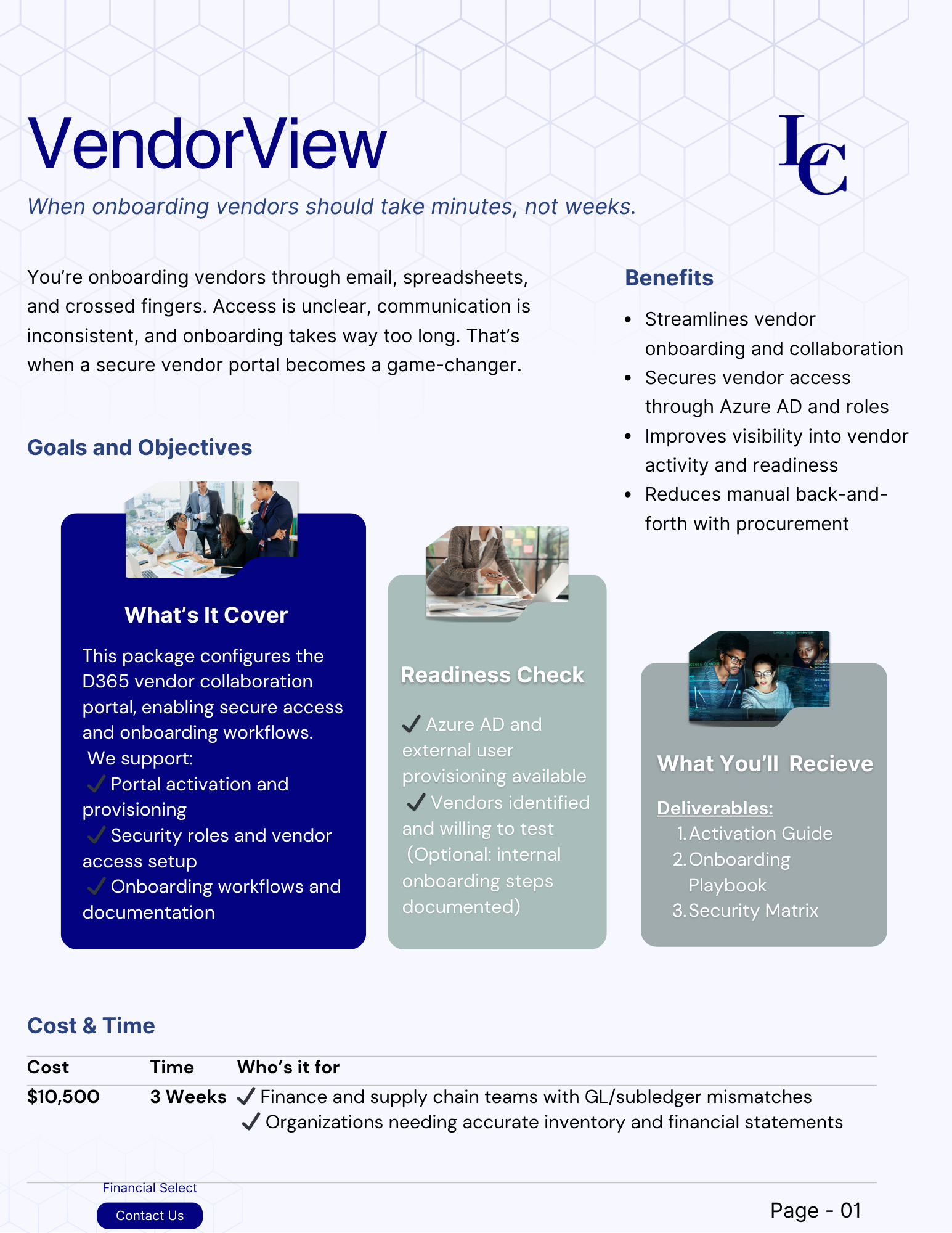


Reviews and corrects ledger-to-subledger alignment in D365 by fixing posting configurations, inventory profiles, reconciliation logic, GL mapping, and critical reporting procedures.
Why More Organizations Are Migrating from Dynamics GP to Business Central
Posted on: June 17, 2026 | By: Anika Dewjee | Microsoft Dynamics GP, Microsoft Dynamics Business Central
For decades, Microsoft Dynamics GP has helped organizations manage financials, operations, and reporting. However, as Microsoft continues investing in cloud-based technologies, many GP users are beginning to evaluate what comes next. Increasingly, organizations are choosing Microsoft Dynamics 365 Business Central as their path forward. Migrating from GP to Business Central is about more than replacing software, it is an opportunity to modernize processes, improve visibility, and prepare for future growth.
Moving Beyond Legacy Limitations
While Dynamics GP remains a reliable ERP system, many organizations are encountering challenges that make modernization increasingly important. Aging infrastructure, manual processes, disconnected systems, and limited access to new functionality can create inefficiencies that slow growth.
Business Central addresses these challenges with a cloud-based platform that delivers real-time access to data, automated workflows, and continuous innovation through Microsoft’s ecosystem.
Taking Advantage of the Microsoft Ecosystem
One of the biggest benefits of moving from GP to Business Central is seamless integration with Microsoft technologies. Organizations can connect Business Central with:
- Microsoft 365 applications such as Excel and Outlook
- Microsoft Teams for collaboration
- Power BI for advanced reporting and analytics
- Power Automate for workflow automation
- Copilot and AI-driven capabilities
These integrations help organizations eliminate silos and create a more connected business environment.
Improving Visibility and Decision-Making
Business Central provides real-time dashboards, reporting, and financial insights that help leaders make more informed decisions. Instead of relying on static reports or spreadsheet-driven analysis, users gain access to up-to-date information across finance, inventory, purchasing, sales, and operations. This increased visibility allows organizations to respond faster to changing business conditions and identify opportunities for improvement.
Supporting Growth and Scalability
As businesses expand, their ERP systems must evolve with them. Business Central offers the flexibility to support additional users, entities, locations, and processes without requiring major infrastructure investments. Its cloud-based architecture also enables remote access and simplifies upgrades, helping organizations remain agile as business requirements change.
Preparing for AI and Automation
Modern ERP systems are becoming increasingly intelligent. Business Central’s integration with Microsoft Copilot and the Power Platform allows organizations to automate repetitive tasks, generate insights faster, and improve productivity. By migrating from GP, businesses position themselves to take advantage of emerging technologies that can drive efficiency and long-term competitiveness.
Next Steps
As Microsoft continues focusing its innovation efforts on cloud ERP, now is the ideal time for Dynamics GP users to begin planning for the future. Logan Consulting helps organizations assess their GP environments, develop migration strategies, and successfully transition to Business Central.
If you’re considering moving from Dynamics GP to Business Central, contact Logan Consulting today to learn how we can help you modernize your ERP and position your organization for long-term success.