


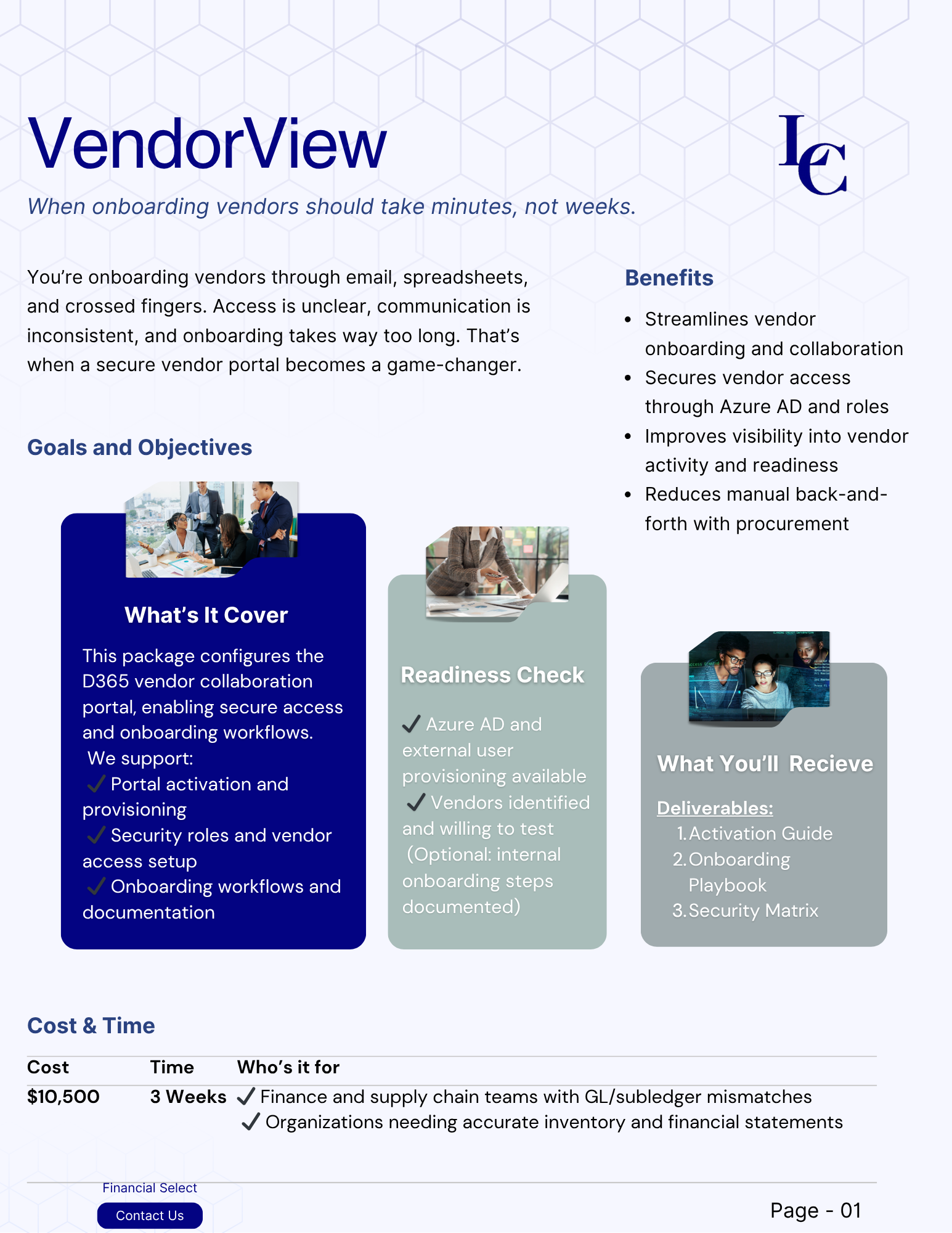


Reviews and corrects ledger-to-subledger alignment in D365 by fixing posting configurations, inventory profiles, reconciliation logic, GL mapping, and critical reporting procedures.
Where QAD ChampionAI Fits in Your Manufacturing Business
Posted on: October 27, 2026 | By: Courtney Xia | QAD Manufacturing
A buyer spends the morning following up on purchase orders. A sales coordinator rebuilds a customer request in a spreadsheet before preparing a quote. An accounts payable specialist searches for a receipt that would clear an invoice exception. Each task deserves attention, but together they can consume the time a manufacturer needs for improving operations.
These are useful places to begin a conversation about QAD ChampionAI. Before choosing a tool, identify the work that repeatedly slows a process and the business consequences of that delay.
In this monthly series, we will examine where ChampionAI may fit across manufacturing workflows, what teams need to evaluate, and how to decide whether an opportunity warrants investment.
Understanding the different ways to use ChampionAI
QAD describes ChampionAI as its agentic AI layer for manufacturing. Agentic AI can carry out steps in a workflow within defined permissions, rather than requiring a person to initiate every individual task.
There are important differences within QAD’s offering. Champion Assist provides conversational interaction inside Adaptive ERP. Role-based Champions operate on a standalone platform and connect to business workflows across systems. QAD’s September publications describe Procurement, Sourcing, Sales, and Accounts Payable Champions in this category.
For a manufacturer, that means the evaluation should start with the specific capability and environment. Confirm the supported release, required connections, and available functions for the proposed workflow. A broad product description cannot establish how a particular deployment will work.
Look at a complete workflow
Consider the work after a purchase order is issued. Someone may need to obtain an acknowledgment, review a revised delivery date, update the order, and notify the person responsible for material availability. If those steps cross several inboxes and spreadsheets, knowing that an order is late may still leave substantial work to resolve it.
QAD describes Procurement Champion capabilities that include order confirmations, supplier document follow-ups, delivery monitoring, and ERP synchronization. The evaluation should establish which of those activities consume time in your business and where an approval is required.
In a hypothetical pilot, a manufacturer might begin with acknowledgment follow-ups for one supplier group. The team would define the follow-up schedule, the information an agent can use, and the point at which a buyer takes over. Changes to commercial terms or production commitments would need their own explicit approval rules.
That narrow scope makes it easier to test whether the workflow functions as intended and whether the result matters to the people running it.
Give each opportunity a business measure
At Logan Consulting, our approach is to understand the process and quantify the operational problem before recommending technology. QAD’s own published approach to starting with agentic AI similarly emphasizes a specific workflow and a defensible business case.
For a procurement pilot, useful starting measures might include weekly time spent chasing acknowledgments, the number of unconfirmed orders past the agreed deadline, and the age of unresolved delivery exceptions. Record a baseline before the pilot and use the same definitions afterward.
Include software, integration, training, and ongoing review effort in the business case. If automation releases employee time, explain where that capacity will go. Hours available for supplier development have value, but they do not automatically become a reduction in payroll expense.
Define who owns the decisions
An agent’s authority should be clear to the people accountable for the process. A reminder to a supplier and a change to a purchasing commitment carry different consequences.
Before a pilot, document what the agent can read and change, which actions require approval, and who handles exceptions. Agree on how the team will review activity, correct errors, and pause the workflow when necessary. QAD’s architecture discussion makes access, write permissions, human approval, and traceability explicit evaluation topics.
Also test the less convenient cases. What happens when a supplier uses a different part number, a receipt is missing, or an integration cannot complete an update? These situations will help determine the support effort and whether the team can trust the process.
Choose a first use case your team can evaluate
A useful starting point has enough repetitive work to matter, an owner who understands the exceptions, and data that can support the proposed activity. It should also have a clear boundary, such as one supplier group or one type of invoice.
Some problems may call for changes to master data, responsibilities, or existing ERP configuration before AI is useful. Our role is to help manufacturers evaluate those options and determine where ChampionAI supports a worthwhile business improvement.
If your team is considering ChampionAI, start by identifying one recurring task that is consuming time or delaying decisions. Logan Consulting can help review the process, assess the requirements, and determine whether there is a practical case for moving forward.
Next month, we will take a closer look at Procurement Champion and the work that happens after a purchase order is issued.