







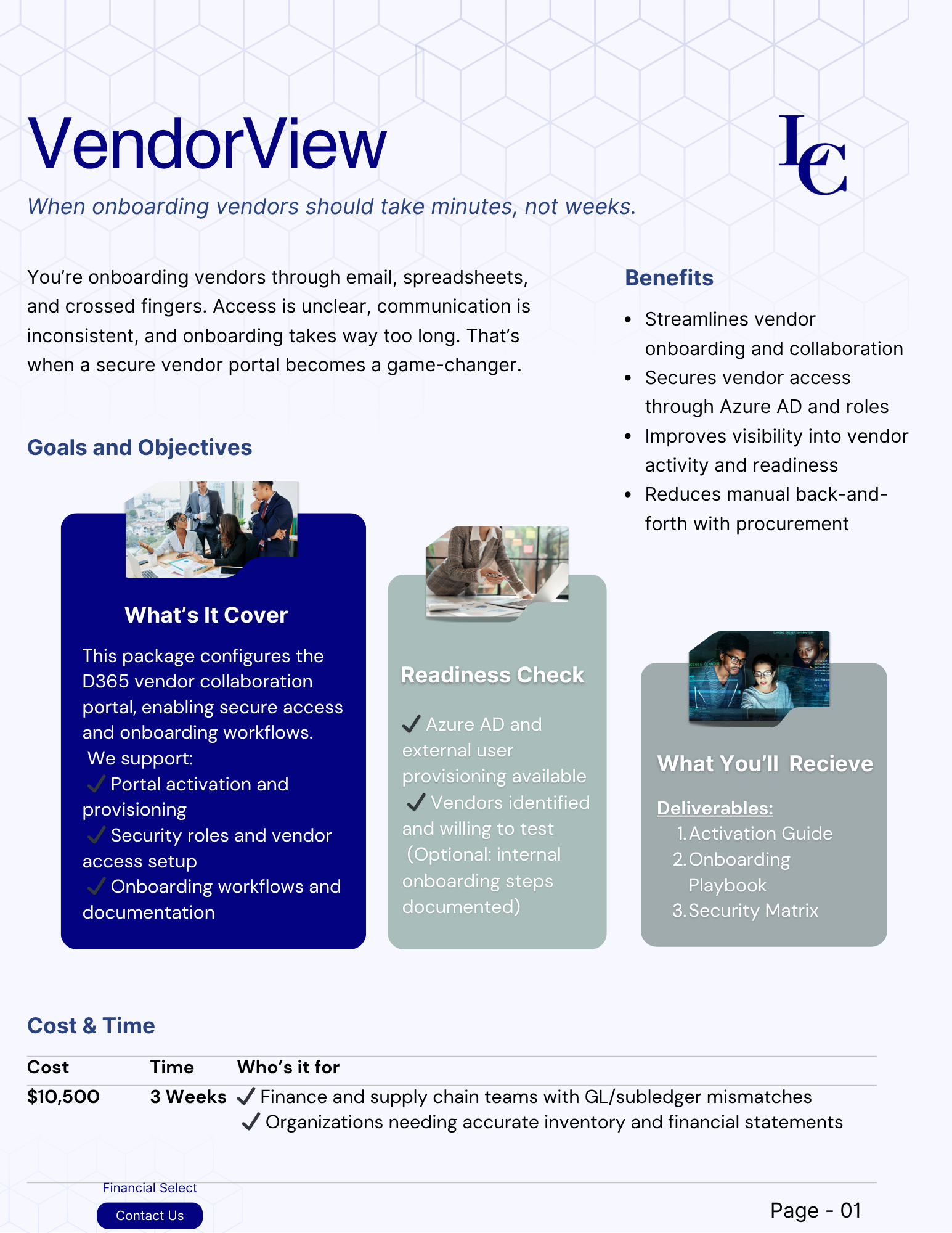


Reviews and corrects ledger-to-subledger alignment in D365 by fixing posting configurations, inventory profiles, reconciliation logic, GL mapping, and critical reporting procedures.
Preparing for Microsoft Dynamics GP End of Life: Migrating to Business Central
Posted on: March 11, 2026 | By: Anika Dewjee | Microsoft Dynamics GP, Microsoft Dynamics Business Central
For many organizations, Microsoft Dynamics GP has been a reliable ERP system for decades. However, as Microsoft continues to shift its focus toward cloud-based solutions, companies running Dynamics GP must begin planning for the future. While GP will not disappear overnight, organizations should start evaluating migration strategies now to ensure a smooth transition and avoid potential disruptions. For many companies, the natural next step is moving to Microsoft Dynamics 365 Business Central: Microsoft’s modern cloud ERP platform designed for growing businesses. Below are key considerations for organizations preparing to migrate from Dynamics GP to Business Central.
Understanding the Dynamics GP Lifecycle
Dynamics GP has long been a cornerstone of Microsoft’s ERP portfolio. However, the company’s strategic direction now prioritizes cloud-based platforms that offer continuous updates, enhanced security, and broader integration capabilities. While GP will continue receiving support and updates for a limited period, organizations should recognize that long-term innovation will be focused on cloud ERP solutions like Business Central. Waiting until support deadlines approach can create unnecessary pressure and increase migration risk. By planning early, companies can transition at a pace that aligns with their operational needs.
Why Business Central is the Natural Successor
Business Central is built on the same financial and operational principles that made GP successful, but it expands those capabilities with modern cloud technology. Key advantages include:
- Cloud accessibility that allows teams to work securely from anywhere
- Automatic updates that keep the system current without large upgrade projects
- Deep integration with Microsoft 365 tools such as Excel, Outlook, CRM and Teams
- Enhanced reporting and analytics for better decision-making
- Scalable architecture that supports business growth
For many GP users, Business Central feels familiar while delivering a significantly more flexible and modern experience.
Streamlined Migration Paths for GP Users
One major benefit for organizations currently running Dynamics GP is the availability of structured migration tools developed specifically for Microsoft ERP transitions. These tools help move financial data, customer records, vendors, and historical transactions into Business Central with minimal disruption. Because both systems share Microsoft architecture and financial structures, the migration process can be more straightforward than transitioning between unrelated ERP platforms. Businesses can preserve critical historical data while upgrading their operational capabilities.
Modernizing the User Experience
Beyond technical improvements, migrating to Business Central significantly enhances the user experience. The system’s browser-based interface is intuitive and accessible across devices, making it easier for employees to navigate daily tasks. Users familiar with Microsoft tools often adapt quickly because the interface aligns with the broader Microsoft ecosystem. This familiarity reduces training time and helps organizations achieve faster user adoption compared to traditional ERP upgrades.
Next Steps
The end of life for Dynamics GP represents a turning point for many organizations. Rather than viewing it as a challenge, businesses can treat it as an opportunity to modernize their ERP systems and unlock new capabilities in the cloud. Logan Consulting brings deep expertise in both Dynamics GP and Business Central, helping organizations plan and execute successful migrations. From assessing your current environment to implementing Business Central and optimizing workflows, our team ensures a smooth transition that positions your business for the future. If your organization is currently running Dynamics GP and evaluating next steps, contact Logan Consulting today to start planning your migration to Business Central.