






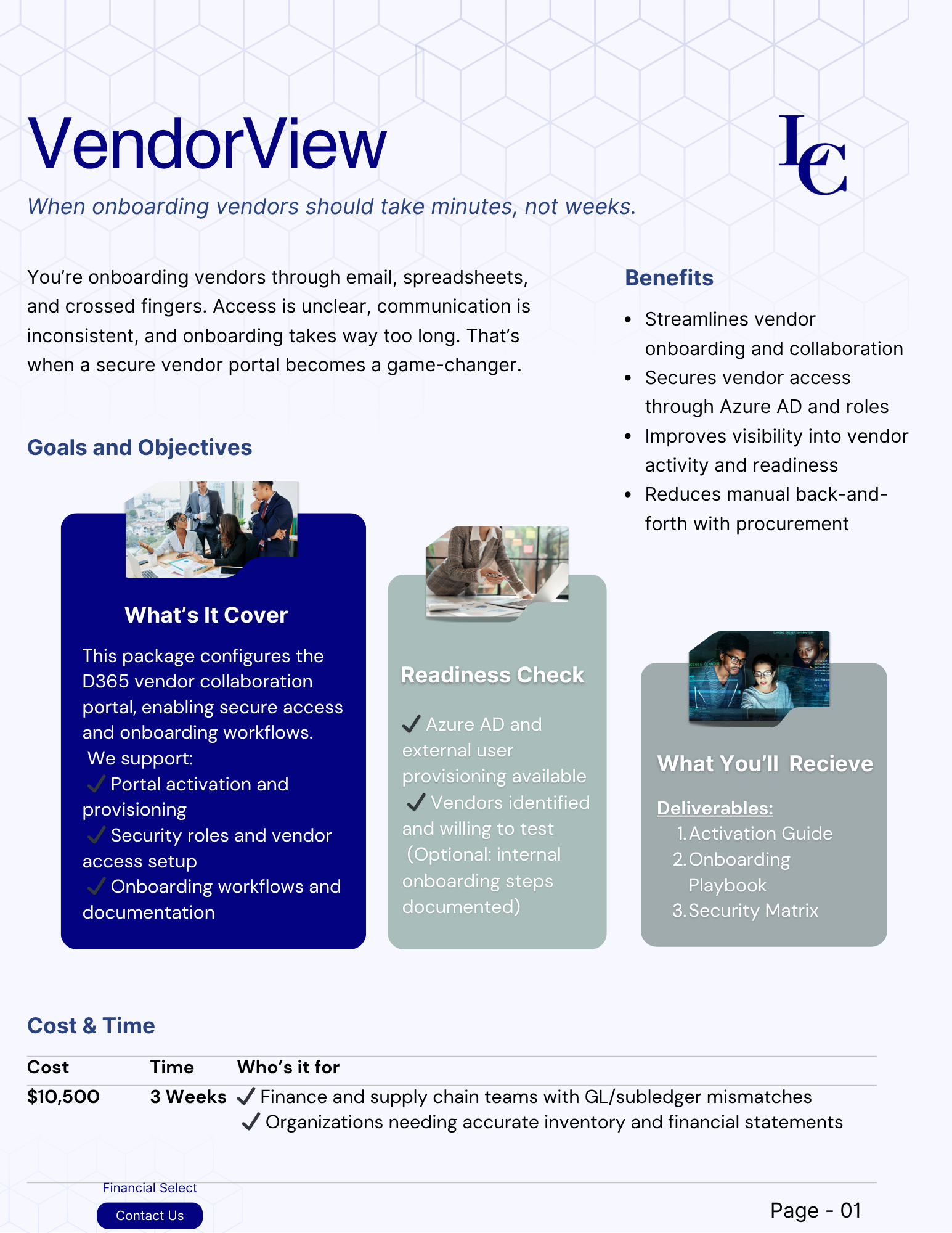


Reviews and corrects ledger-to-subledger alignment in D365 by fixing posting configurations, inventory profiles, reconciliation logic, GL mapping, and critical reporting procedures.
Ease of Migration into Microsoft Dynamics 365 Business Central
Posted on: March 5, 2026 | By: Anika Dewjee | Microsoft Dynamics Business Central
For many organizations still running legacy accounting systems or older ERP platforms, modernization can feel like a complex and disruptive process. Data migration, user adoption, and system compatibility are often major concerns. However, Microsoft Dynamics 365 Business Central is designed with scalability and accessibility in mind, making the transition from legacy systems significantly smoother than many businesses expect. With flexible migration tools, structured implementation approaches, and deep integration with the Microsoft ecosystem, Business Central provides a clear path for companies looking to upgrade their financial and operational systems. Below are the key reasons why migrating to Business Central is easier than many organizations anticipate.
Structured Migration Tools and Data Management
One of the biggest challenges when upgrading ERP systems is moving historical data accurately and efficiently. Business Central simplifies this process through built-in migration tools that guide organizations through importing financial data, customer records, vendor information, and historical transactions. Microsoft provides migration utilities and templates that allow organizations to extract data from legacy systems and import it into Business Central in a structured format. These tools help ensure financial records remain accurate while minimizing manual data entry.
Seamless Integration with the Microsoft Ecosystem
Organizations already using Microsoft tools benefit from a natural transition into Business Central. Because the ERP is built within the Microsoft ecosystem, it integrates seamlessly with applications such as Excel, Outlook, and the broader Microsoft 365 environment. Finance teams can continue working within Excel for reporting while communication workflows remain connected through Outlook. This familiarity reduces training time and accelerates adoption after migration.
Migration Paths for Legacy Microsoft Systems
Organizations currently running older Microsoft solutions, such as Dynamics GP or Dynamics NAV, benefit from especially streamlined migration paths. Microsoft has developed upgrade frameworks and data conversion tools specifically designed to help these customers move to Business Central with minimal disruption. These structured migration pathways help preserve existing data, maintain operational continuity, and ensure users can transition to the modern platform with greater confidence.
Improved Usability and Faster User Adoption
As a browser-based cloud ERP, Business Central provides a clean user experience that reduces complexity and improves productivity. Because many employees are already familiar with Microsoft-style navigation and workflows, training requirements are often significantly reduced. This ease of use accelerates adoption and allows teams to focus on improving processes rather than learning a completely unfamiliar system.
Next Steps
Migrating ERP systems can seem like a daunting process, but with the right strategy and tools, the transition to Business Central can be both efficient and highly beneficial. Logan Consulting brings deep experience in ERP migrations and Microsoft solutions, helping organizations plan their transition, migrate critical data, and optimize their systems for long-term success. If you are considering upgrading to Business Central, contact Logan Consulting today to learn how a structured migration approach can help your organization modernize with confidence.