







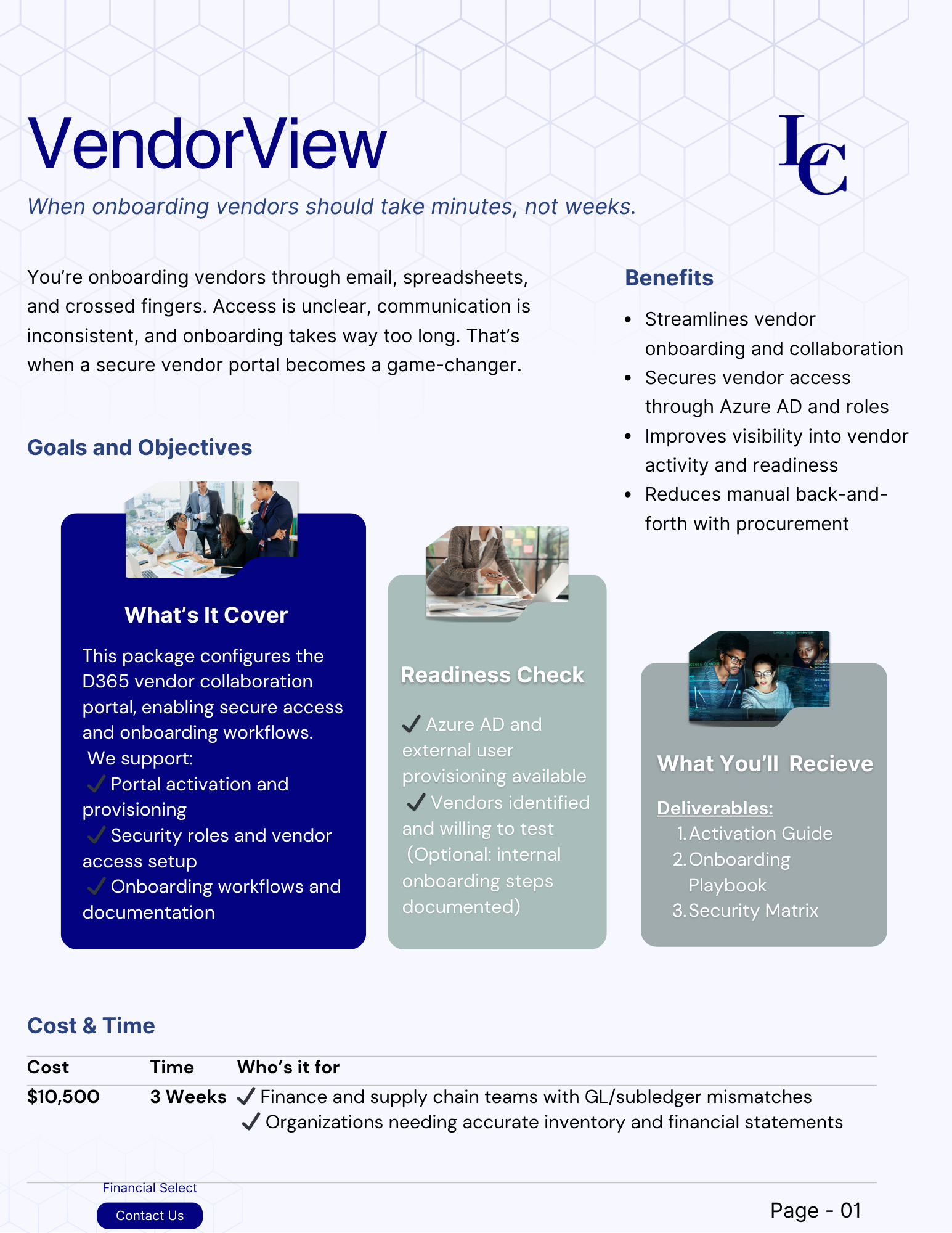


Reviews and corrects ledger-to-subledger alignment in D365 by fixing posting configurations, inventory profiles, reconciliation logic, GL mapping, and critical reporting procedures.
Goodbye SOAP, Hello REST: What NetSuite’s API Shift Means for Your Business
Posted on: July 7, 2026 | By: Jackson Morris | NetSuite
For years, the integrations connecting NetSuite to banks, warehouses, ecommerce platforms, and other business systems have run quietly in the background. Most finance and operations leaders never think about them until something breaks. That’s about to change. Oracle is retiring NetSuite’s original SOAP-based web services in favor of a modern REST API, and the transition carries a firm deadline. Organizations that don’t plan ahead risk integration failures that touch payments, inventory, and financial reporting all at once.

What is Changing
NetSuite has long supported two ways for outside systems to exchange data with it: SOAP web services, the original integration standard, and REST web services, a newer and more flexible approach. Oracle has confirmed that SOAP is being phased out on a multi-year schedule. The last planned SOAP release shipped in 2025, and starting in 2026 all new integrations must be built on REST using OAuth 2.0 authentication. By 2027, new SOAP-based integrations will no longer be allowed at all, and existing SOAP connections are set to stop working entirely in 2028.
For most organizations, this isn’t an overnight problem. Existing SOAP integrations will keep running for a period of time. But every new feature, every enhancement, and every ounce of Oracle’s development investment is now going into REST. SOAP is effectively frozen in place.
Why It Matters
Integrations are not a side detail of an ERP system. They are how NetSuite talks to the bank feeds that reconcile cash, the warehouse systems that track inventory, the ecommerce platforms that generate orders, and the payroll or tax tools that keep the business compliant. When those connections were built years ago, often by a developer or partner who may no longer be involved, few organizations documented exactly how they work or which API standard they rely on.
That’s what makes this transition worth attention now rather than later. A quiet technical migration deep in Oracle’s release notes can turn into a business disruption if a critical integration stops functioning without warning. Waiting until the deadline approaches leaves little room to identify every affected connection, coordinate with integration partners, and test changes properly.
Business Benefits of Moving to REST
The shift to REST is not simply about compliance with Oracle’s timeline. It brings real advantages for the business. REST is generally faster and more efficient than SOAP, which means integrations processing high volumes of transactions, such as order flows or inventory updates, can run with less delay. It also uses a more modern authentication model that is easier to secure and maintain over time.
REST integrations are more adaptable to future needs as well. Because REST can access account-specific data structures, including custom fields and custom records, it is better suited to organizations that have configured NetSuite around their own processes. It also lines up well with the broader direction the business software industry is heading, including AI-driven tools and reporting platforms that are built to work with modern, REST-based connections rather than older SOAP standards.
Real-World Applications
The organizations most exposed to this transition tend to share a few traits. They have integrations that were built several years ago and haven’t been touched since, they rely on a third-party developer or partner who may not be actively engaged anymore, and nobody on the current team can say with confidence which integrations still run on SOAP.
Common examples include automated bank feed connections used for cash reconciliation, EDI or third-party logistics integrations that keep inventory synced across warehouses, and ecommerce platforms that push order data into NetSuite in real time. Manufacturing and distribution companies, in particular, often have several of these connections running simultaneously, which makes an unplanned failure more disruptive than a single missed order.
Preparing for the Future
The most effective approach is to treat this as a planning exercise rather than a last-minute scramble. Start by taking inventory of every integration connected to NetSuite and identifying which ones still rely on SOAP. From there, prioritize based on business impact. Integrations tied to cash movement, such as bank feeds and payment processing, and integrations tied to inventory accuracy typically carry the highest risk and should be addressed first.
It’s also worth confirming whether existing integration partners and software vendors have already updated their tools to support REST, since some third-party platforms are further along in this transition than others. Running a new REST-based integration alongside the existing SOAP connection for a period of time, rather than switching over all at once, allows the business to confirm that data matches before fully retiring the old connection.
Next Steps
NetSuite’s move from SOAP to REST web services is reshaping how integrations connect to the platform, and the transition window is shorter than it may seem. If you’re not sure which of your NetSuite integrations still rely on SOAP, contact Logan Consulting today to assess your integration landscape and build a migration plan that avoids disruption.