





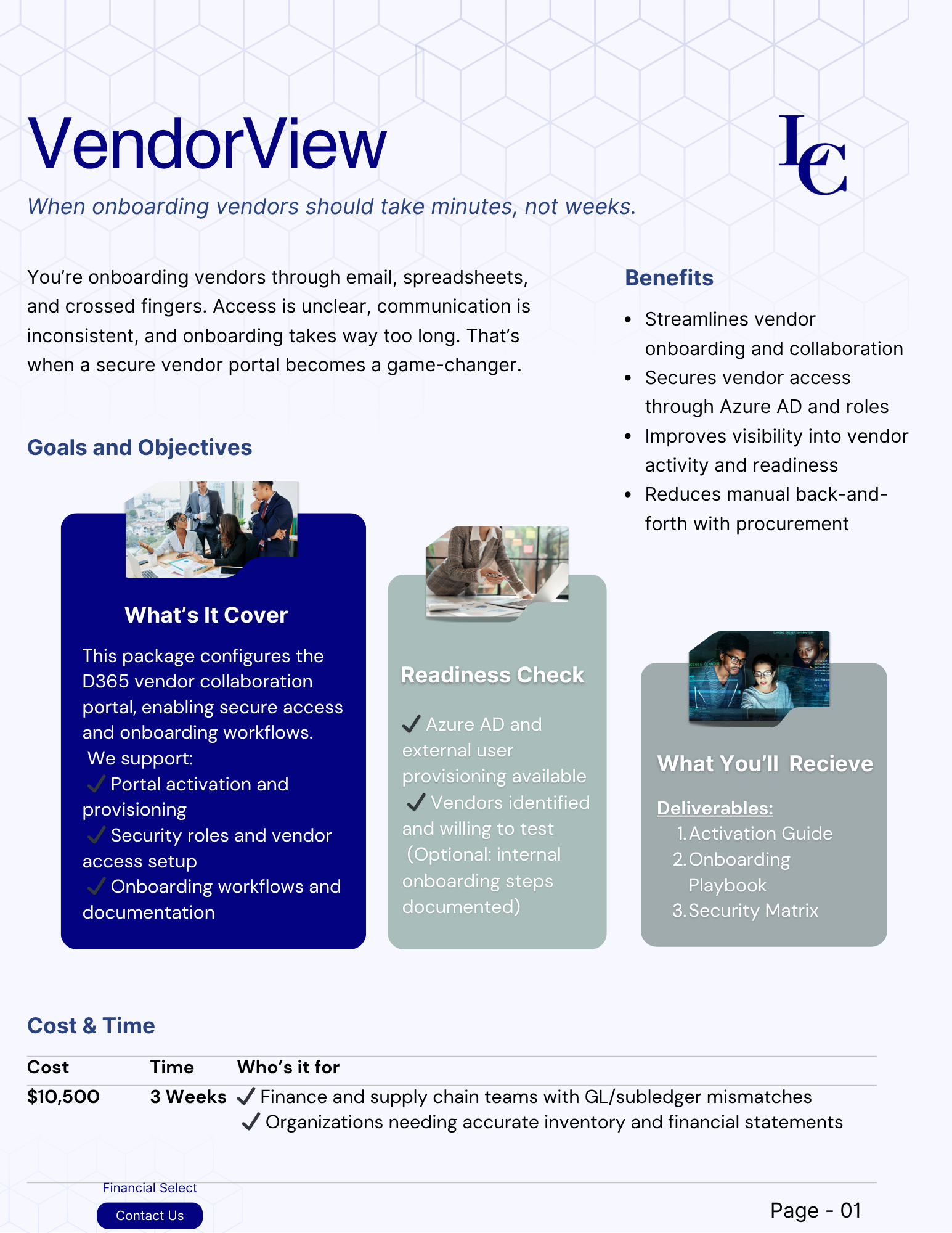


Reviews and corrects ledger-to-subledger alignment in D365 by fixing posting configurations, inventory profiles, reconciliation logic, GL mapping, and critical reporting procedures.
Multi-Entity Financials Across Industries: Simplifying Complexity for Growing Organizations
Posted on: July 2, 2026 | By: Jackson Morris | Acumatica, Microsoft Dynamics Business Central, NetSuite
As organizations grow through acquisition, expansion into new markets, or the addition of new business units, managing financial data across multiple entities becomes increasingly difficult. Separate ledgers, disconnected systems, and manual consolidation processes can slow down reporting and introduce errors at exactly the moment leadership needs clear, accurate financial visibility. Multi-entity financial management addresses this challenge, giving organizations a unified way to manage finances across subsidiaries, locations, and business units without sacrificing accuracy or speed.

What is Multi-Entity Financial Management?
Multi-entity financial management refers to the ability to manage accounting and reporting for multiple legal entities, subsidiaries, or business units within a single, connected system. Rather than maintaining separate instances of accounting software for each entity, organizations can centralize financial data while still preserving the distinct reporting requirements of each business unit.
This typically includes support for multiple currencies, tax jurisdictions, charts of accounts, and intercompany transactions. Modern ERP platforms such as Business Central, NetSuite, and Acumatica each offer multi-entity capabilities, though the right fit depends on an organization’s specific structure, industry, and growth plans.
Why It Matters
For organizations operating across multiple entities, financial visibility is often the first casualty of growth. Finance teams may find themselves manually consolidating spreadsheets from different subsidiaries, reconciling intercompany transactions by hand, or waiting weeks to close the books across the organization.
These delays create real business risk. Leadership may be making decisions based on outdated or incomplete financial data, and month-end close can become a drawn-out, error-prone process. As organizations add entities through acquisition or expansion, the complexity only increases, making a scalable approach to multi-entity financials a priority rather than a nice-to-have.
Key Benefits
A connected multi-entity financial platform offers several advantages over managing separate systems for each business unit. Centralized reporting allows finance teams to view consolidated financial statements alongside entity-level detail, without manually combining data from multiple sources.
Automated intercompany transactions reduce the manual work involved in eliminating intercompany balances and ensure that transactions between entities are recorded consistently. This improves the accuracy of consolidated financial statements while giving finance teams time back for higher-value analysis.
Faster financial close is another significant benefit. When entities share a common platform and consistent processes, finance teams can close the books more quickly and with greater confidence in the numbers, giving leadership timelier access to the insights needed to guide strategic decisions.
Industry-Specific Applications
Multi-entity financial management applies differently depending on the industry. In distribution, organizations with multiple warehouses or regional divisions rely on multi-entity capabilities to track profitability by location while still consolidating results at the corporate level.
In construction, companies often manage multiple legal entities for different projects, joint ventures, or regional operations. Multi-entity financials allow these organizations to maintain project-level cost visibility while consolidating financial performance across the broader business.
Professional services firms with offices in multiple regions or countries use multi-entity capabilities to manage local compliance and currency requirements while still reporting on overall firm performance. Manufacturers with multiple production facilities or subsidiaries benefit from consolidated visibility into costs, inventory, and profitability across every location.
Best Practices
Organizations considering a multi-entity financial strategy should start by evaluating their current chart of accounts and reporting structure. A consistent structure across entities makes consolidation easier and reduces the manual work required during close.
Standardizing intercompany processes is equally important. Establishing clear rules for how intercompany transactions are recorded and eliminated helps prevent discrepancies and reduces the time needed to reconcile accounts. Organizations should also evaluate their reporting needs at both the entity and consolidated level before selecting a platform, since the right solution depends on business requirements such as entity count, currencies involved, and industry-specific needs.
Next Steps
Managing financials across multiple entities does not need to be a manual, time-consuming process. Logan Consulting helps organizations evaluate, implement, and optimize multi-entity financial management across Business Central, NetSuite, and Acumatica. If your organization is managing multiple entities, subsidiaries, or locations and looking to simplify consolidation and reporting, contact Logan Consulting today to learn how we can help.