

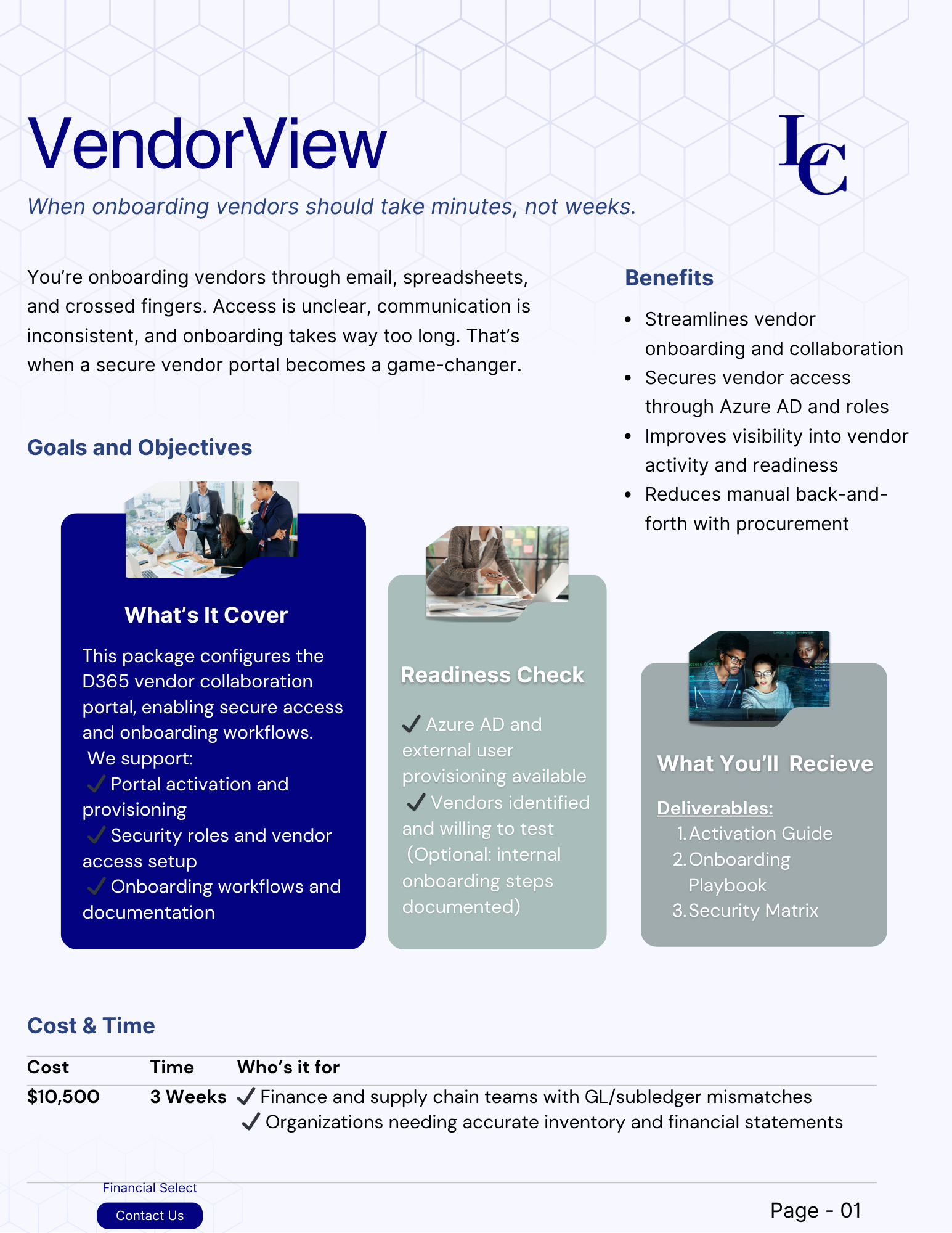


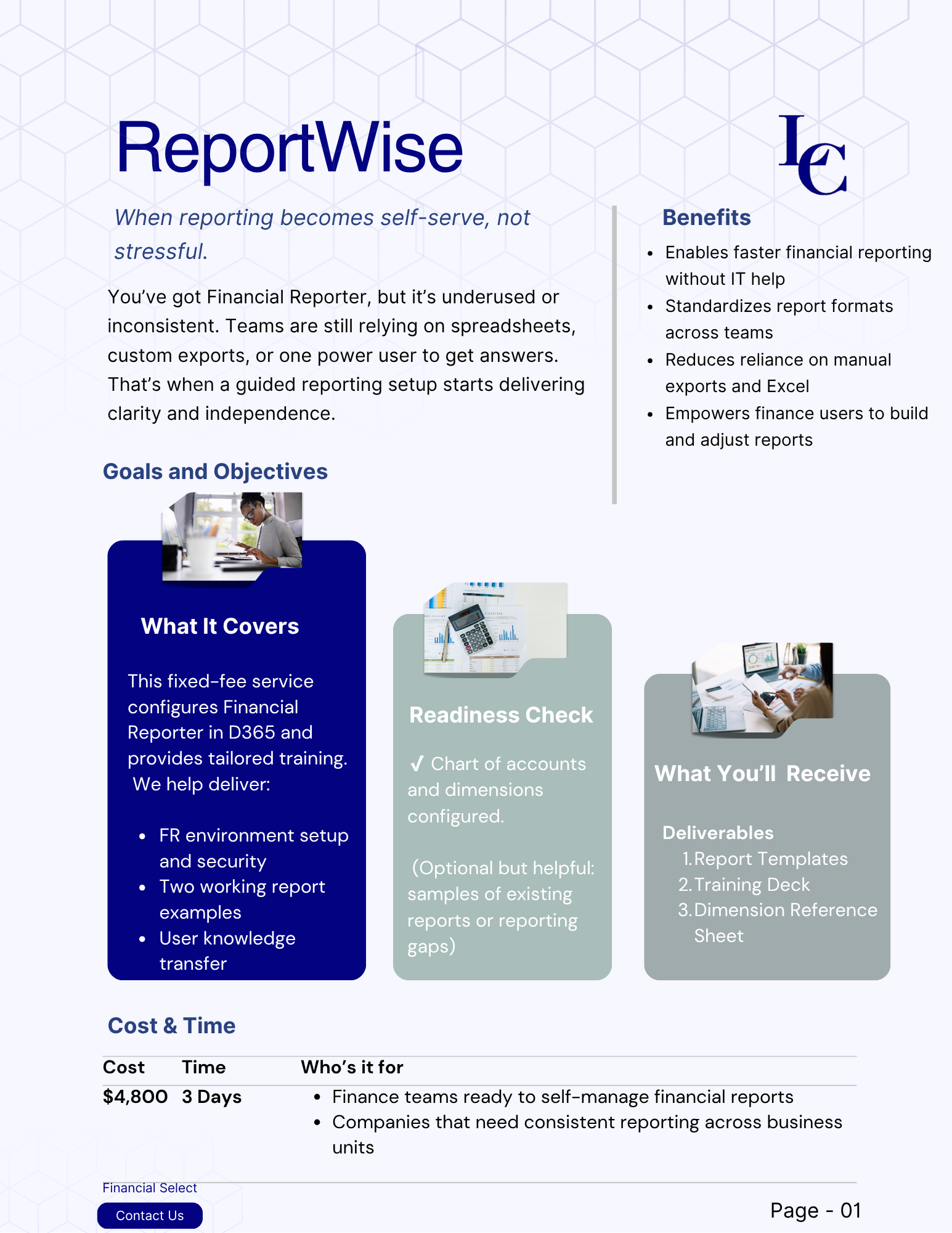
Reviews and corrects ledger-to-subledger alignment in D365 by fixing posting configurations, inventory profiles, reconciliation logic, GL mapping, and critical reporting procedures.
Unlocking Business Performance Analytics with Microsoft Dynamics 365 Finance and Supply Chain Management
Posted on: May 28, 2024 | By: Jarrod Kraemer | Microsoft Dynamics Manufacturing, Microsoft Dynamics AX/365
In today’s rapidly evolving business environment, having real-time, actionable insights is crucial for maintaining competitive advantage. Microsoft Dynamics 365 Finance & Supply Chain Management (D365) offers a solution for business performance analytics (BPA) that integrates seamlessly with existing systems, empowering organizations to harness their data effectively. In this blog, we will explore the key aspects of BPA with Dynamics 365 Finance and how it can transform your business operations.

What is Business Performance Analytics?
Business Performance Analytics (BPA) is a comprehensive framework within D365 designed to centralize and analyze data from various business processes. This solution addresses common challenges faced by organizations, such as disparate data sources, complex reporting requirements, and the need for reliable and timely insights. Read more about how to set it up here.
Key Features and Principles of BPA
1. User-Centric Design:
BPA prioritizes ease of use and accessibility for business analysts, finance professionals, and controllers. The goal is to enable users to create reports without needing extensive developer support, utilizing familiar tools like Microsoft Excel and Power BI.
2. Data-Driven and Trustworthy:
BPA ensures that data is current, accurate, and secure. Role-based access control is implemented to safeguard sensitive information, making sure that only authorized personnel can access and modify the data.
3. Extensibility and Integration:
The solution is designed to be flexible and scalable. BPA allows for the integration of additional data models from external sources and supports partner and ISV solutions. This extensibility ensures that the system can grow with the organization’s needs.
Process Architecture and Value Chains
BPA utilizes a dimensional modeling approach, grouping business processes into value chains such as Record to Report, Procure to Pay, Order to Cash, and Acquire to Retire. This structure enables detailed and comprehensive reporting on transactions across different business processes.
For example:
- Record to Report: Includes transactions related to budgets, general ledger, and financial reporting.
- Procure to Pay: Covers the entire procurement process from purchase orders to payments.
- Order to Cash: Encompasses sales orders through to payments.
- Acquire to Retire: Manages fixed assets from acquisition to disposal.
Data Architecture and Extensibility
The BPA data architecture is built on an ETL (Extract, Transform, Load) pipeline that integrates data from D365 and other systems into a centralized data lake. The data is then transformed into a dimensional model using Spark transformations and loaded into Power BI for reporting and analysis.
Extensibility Scenarios:
- Integration with Custom Data Warehouses: Organizations can link their BPA instance to their own Microsoft Fabric environment, enabling custom datasets and reports.
- Complex ISV Integrations: BPA supports the addition of custom fields and tables, allowing for tailored reporting solutions.
- Third-Party ERP Integration: Future iterations aim to integrate data from other ERP systems, providing a unified view of all business data.
BPA offers a range of pre-built reports in Power BI, including trial balance, budget vs. actual, and aging reports. These reports are fully customizable, allowing users to duplicate and modify them to meet specific business needs. Additionally, BPA provides capabilities for drilling down into transactional data, enabling detailed analysis and accurate reporting.
Business Performance Analytics with D365 provides a powerful solution for organizations looking to centralize, analyze, and leverage their data. By focusing on user-centric design, data accuracy, and extensibility, BPA empowers businesses to make informed, data-driven decisions.
Next Steps:
If you want to learn more about business performance analytics in Microsoft Dynamics 365 Finance and Supply Chain Management, contact us here to learn how we can help you grow your business. You can also email us at info@loganconsulting.com or call (312) 345-8817.
Related Posts
-
Expense Management: Where Money Either Gets Controlled or Quietly Slips Away
Posted on: March 19, 2026
Most organizations don’t realize they have an expense problem until someone asks a simple question: “Why did we spend that?”...
-
Improving Retail Inventory Traceability and Accuracy
Posted on: March 16, 2026
Retailers do not have a visibility shortage. They have a traceability standard shortage. With Dynamics 365 Commerce and Microsoft’s Inventory...