

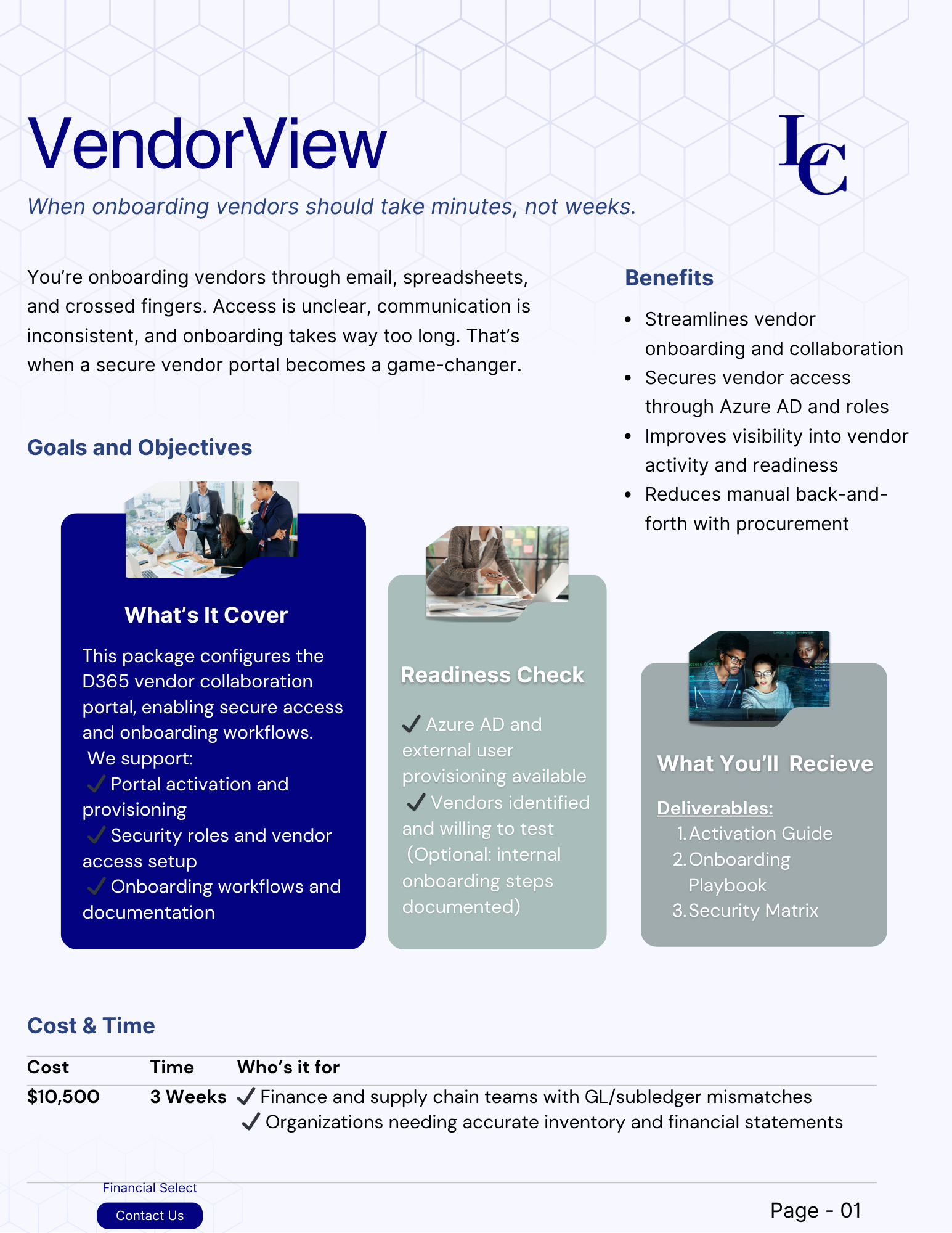


Reviews and corrects ledger-to-subledger alignment in D365 by fixing posting configurations, inventory profiles, reconciliation logic, GL mapping, and critical reporting procedures.
Maximizing Integration with PowerApps Components and Microsoft Dynamics 365
Posted on: April 15, 2025 | By: Maya VanderWoude | Microsoft Dynamics AX/365, Microsoft Dynamics Manufacturing
In PowerApps, components are reusable building blocks that help creators make custom controls for use within a single app or across multiple apps. Components allow for more efficient app development by reducing repetitive efforts, enhancing performance, and ensuring consistency in design. They also enable collaboration among users and help standardize the app look and feel within organizations that use Microsoft Dynamics 365 (D365) or Business Central.

Components are particularly useful in large apps with similar patterns. Once a component is defined in an app, all versions of that component reflect changes made to it. For example, if an app integrates with Business Central or D365 to display customer information, a common component like a customer card can be used across multiple screens. When the component is updated, all its instances across the app automatically reflect those changes, eliminating the need for manual adjustments and ensuring that the user experience remains consistent across the app. To learn more specifically about connecting D365 with PowerApps, view our previous blog here.
A component in PowerApps consists of custom properties that define its inputs and outputs. These properties allow data to flow into and out of the component, making it dynamic and interactive. Input properties allow the component to receive data from the app, while output properties emit data from the component, which can then be used by other controls in the app. For instance, if the component is connected to a D365 Sales database, the input properties could accept a list of customer records, while the output property could emit selected customer details to other parts of the app for further processing. In a Business Central app, this could be used to select specific modules like Finance, Sales, or Inventory, with the output property triggering the corresponding actions or data fetches from Business Central.
To manage components across different apps, PowerApps offers the option of importing and exporting components using component libraries. This ensures that components stay up to date and are easily reused, contributing to consistent app development. This feature is particularly valuable when developing multiple D365 or Business Central apps that need to share common components, such as dashboards, forms, or data filters. By using a component library, developers can update shared components centrally, ensuring that all apps using the library automatically benefit from the improvements.
In conclusion, components in PowerApps improve the app development process by promoting reusability, reducing redundancy, and improving consistency. With the use of custom properties, components can be highly customizable. These features make components a powerful tool in the PowerApps ecosystem, especially when working with enterprise solutions like Microsoft Dynamics 365 and Business Central that require efficient and scalable integration for a seamless user experience across various business operations.
Next Steps:
If you are interested in learning more about PowerApps Components in Microsoft Dynamics 365 Finance and Supply Chain Management, contact us here to find out how we can help you grow your business. You can also email us at info@loganconsulting.com or call (312) 345-8817.
Related Posts
-
Expense Management: Where Money Either Gets Controlled or Quietly Slips Away
Posted on: March 19, 2026
Most organizations don’t realize they have an expense problem until someone asks a simple question: “Why did we spend that?”...
-
Improving Retail Inventory Traceability and Accuracy
Posted on: March 16, 2026
Retailers do not have a visibility shortage. They have a traceability standard shortage. With Dynamics 365 Commerce and Microsoft’s Inventory...