

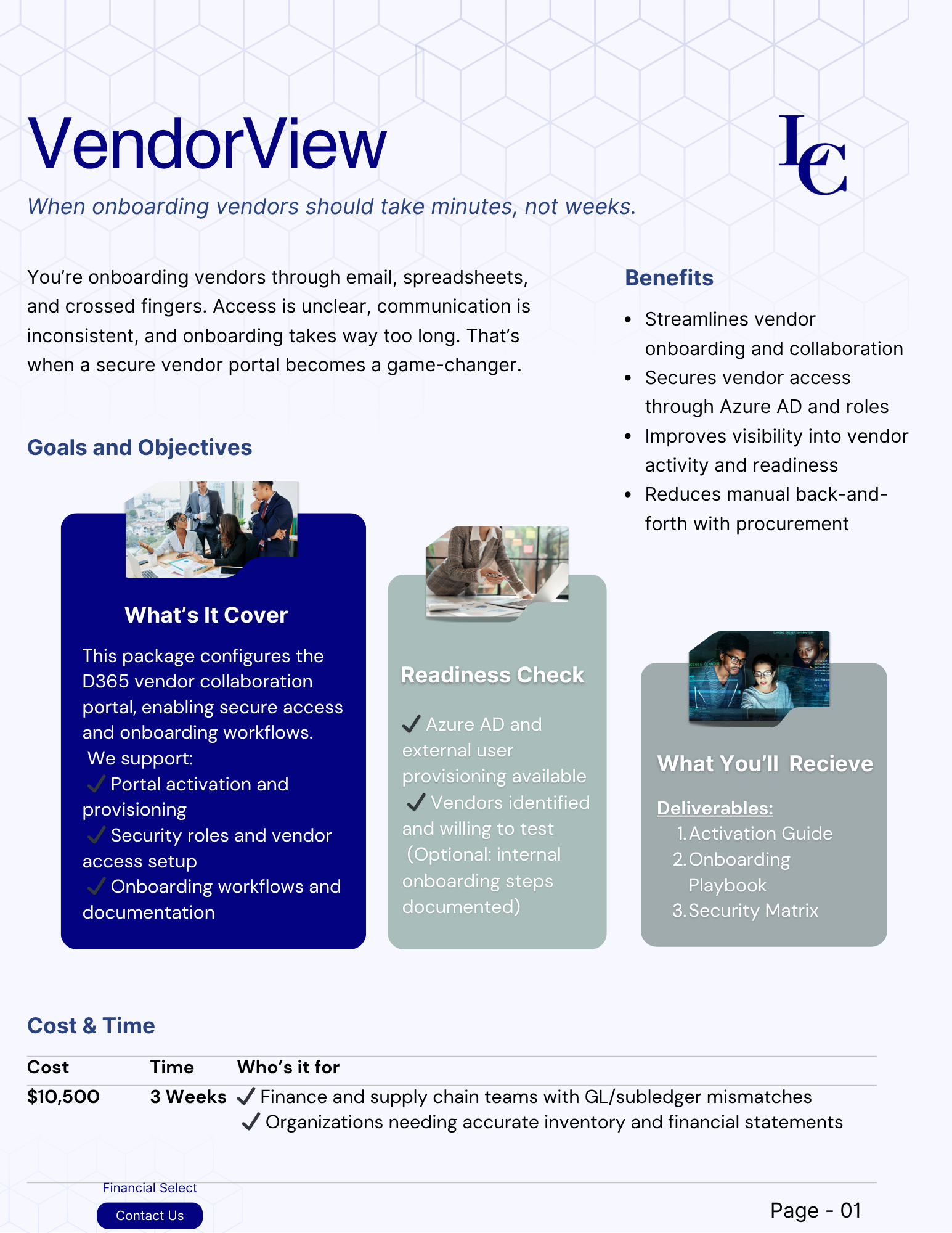


Reviews and corrects ledger-to-subledger alignment in D365 by fixing posting configurations, inventory profiles, reconciliation logic, GL mapping, and critical reporting procedures.
Integrated Fixed Asset Management for the Automotive Industry using Microsoft Dynamics 365 Finance
Posted on: April 7, 2025 | By: Maya VanderWoude | Microsoft Dynamics AX/365, Microsoft Dynamics Manufacturing
The automotive industry relies heavily on precise coordination between production facilities, supplier networks, and capital-intensive assets. From manufacturing lines and tooling equipment to testing machinery and vehicle fleets, fixed assets represent a significant portion of total investment. Ensuring these assets are properly tracked, depreciated, and maintained is critical to operational continuity and financial reporting.
Microsoft Dynamics 365 Finance enables automotive companies to seamlessly integrate Fixed Assets with Accounts Payable, creating an automated framework for managing high-value assets from acquisition through to retirement. In this blog, we explore how Microsoft Dynamics 365 Finance supports fixed asset management tailored to the automotive sector’s operational and regulatory demands.

Fixed Asset Acquisition Through Accounts Payable
Automotive organizations often invest heavily in assets such as testing benches, inspection machines, warehousing systems, or logistics fleets. With Microsoft Dynamics 365 Finance, fixed assets can be created directly from posted purchase orders or vendor invoices. This eliminates the need for manual asset creation and ensures that all acquired assets are captured accurately from the outset.
Whether you’re equipping a new R&D site or expanding logistics capacity, this level of automation provides assurance that asset records align with real procurement data—enabling timely capitalization and avoiding missed depreciation opportunities.
This approach also supports more complex use cases. For instance, when assets are procured under capital project budgets, they can be recorded in Work in Progress (WIP) until the asset is ready to be capitalized. At that point, the cost is eliminated from the project and transferred to the asset for depreciation.
Lifecycle Visibility for Capital-Intensive Assets
Microsoft Dynamics 365 Finance provides complete visibility across the asset lifecycle—from acquisition to retirement. Automotive companies can track maintenance, revaluation, and disposals with detailed audit trails. Assets can be grouped by category, location, or cost center, making it easier to segment data for financial reporting or operational analysis.
Depreciation profiles can be tailored to reflect corporate policy or local tax requirements, and companies can assign capitalization thresholds to determine which assets are depreciated automatically. For example, a threshold might be set so that any acquired item over $5,000 is depreciated over its useful life, while smaller assets are expensed immediately.
Additionally, if legacy systems or regulatory scenarios require support for negative net book values—such as government-funded grants—Microsoft Dynamics 365 Finance accommodates that as well. Functionality is available to post positive depreciation against negative-cost assets, which we’ve explored in more detail in this earlier post on Net Book Value handling.
Automation for Compliance and Control
The ability to automate depreciation proposals, eliminate project estimates, and post asset adjustments reduces manual intervention and improves audit readiness. For the automotive industry—where compliance with financial, safety, and environmental standards is non-negotiable—this functionality helps maintain consistent reporting and simplifies regulatory reviews.
Key financial settings can be locked down using workflow approvals, so that any changes to fixed asset records (such as disposal or reclassification) go through appropriate governance channels. Microsoft Dynamics 365 also enables real-time cost visibility across departments, making it easier to track asset performance and optimize future investments.
Conclusion
In the automotive industry, where fixed assets are vital to every aspect of business—from engineering and logistics to retail and support—managing them efficiently is critical. Microsoft Dynamics 365 Finance empowers companies to simplify asset acquisition, streamline depreciation, and ensure regulatory compliance through automated, integrated processes.
By adopting this solution, automotive organizations can reduce operational risk, enhance cost control, and achieve greater visibility into their asset portfolios—laying the groundwork for scalable and sustainable financial management.
Next Steps:
If you are interested in learning more about fixed assets in Microsoft Dynamics 365 Finance, contact us here to find out how we can help you grow your business. You can also email us at info@loganconsulting.com or call (312) 345-8817.
Related Posts
-
Improving Retail Inventory Traceability and Accuracy
Posted on: March 16, 2026
Retailers do not have a visibility shortage. They have a traceability standard shortage. With Dynamics 365 Commerce and Microsoft’s Inventory...
-
Fixed Assets in the Age of ESG, Remote Audits, and Digital Finance
Posted on: March 9, 2026
Most companies can tell you how many fixed assets they own. Fewer can quickly tell you which book they sit...