

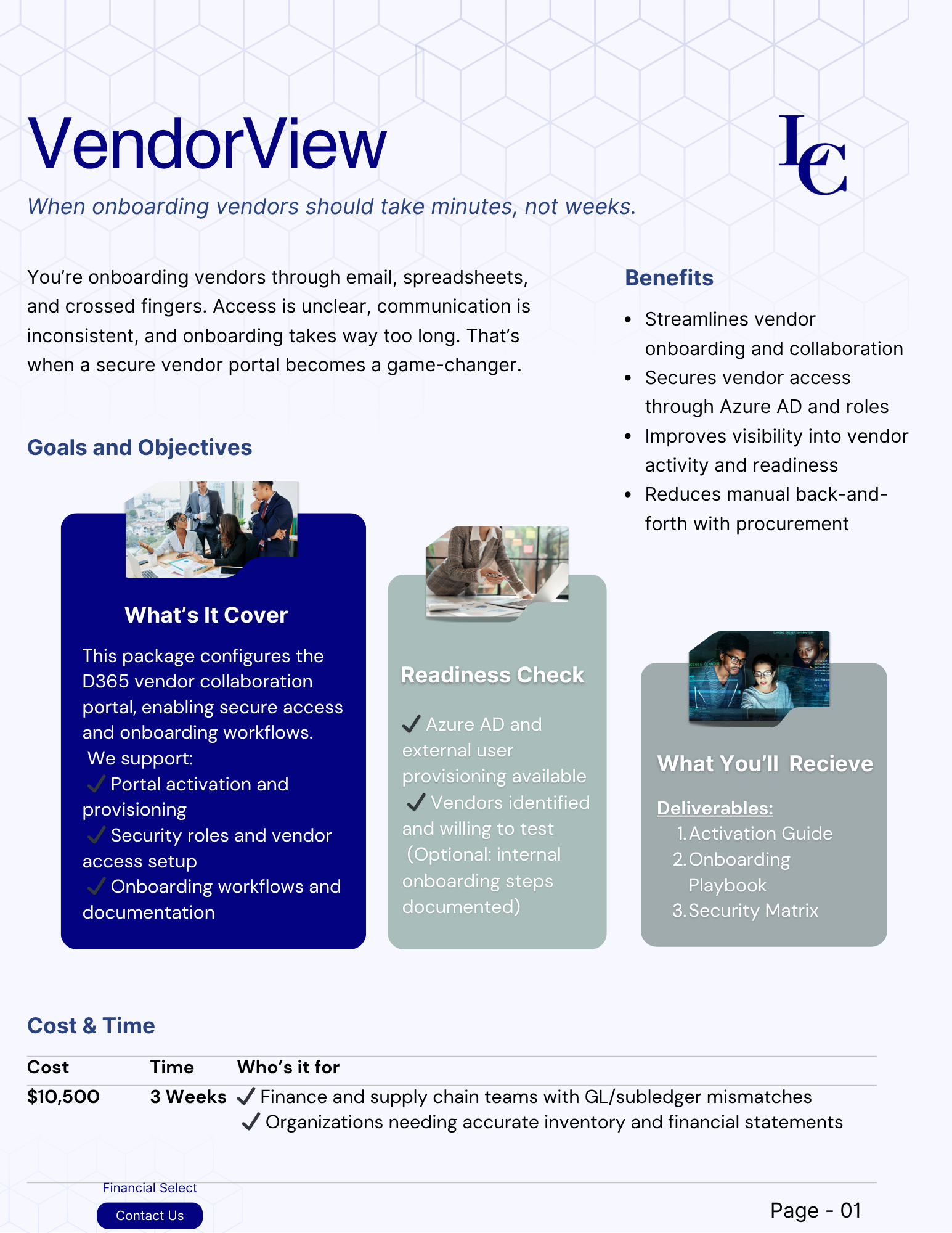


Reviews and corrects ledger-to-subledger alignment in D365 by fixing posting configurations, inventory profiles, reconciliation logic, GL mapping, and critical reporting procedures.
ERP Isn’t a Software
Posted on: January 21, 2026 | By: Blake Moore | ERP Selection|QAD Business Process, ERP Selection
Too often, ERP projects start with the wrong assumption: that ERP is a piece of software you buy, install, and then magically benefit from. It isn’t. ERP is a foundational framework for how an organization operates, makes decisions, and aligns people, processes, and data toward a common goal. The software is simply the tool that supports that concept. Treat it as anything less, and the project is already at risk.
At its core, an ERP initiative is an opportunity for business transformation. The real value is not found in screens, workflows, or reports, it’s found in business process improvement and the collective commitment of the organization to operate more effectively than it did before. When those elements are weak or missing, even the best ERP software will fail to deliver meaningful results.
Business process improvement is the true “meat” of an ERP project. Implementing ERP without rethinking processes is like paving over potholes instead of fixing the roadbed. ERP should force hard conversations: Which processes actually add value? Where are we introducing cost, risk, or delay? Where are handoffs breaking down? When organizations simply recreate legacy processes in a new system, they miss the opportunity entirely.

Change management (CM) is where ERP projects are most often underestimated. ERP implementation projects require people to change how they work, how they think about data, and how they collaborate across functions. If the organization is not prepared for that change, if leaders don’t reinforce it, if users don’t understand the “why,” or if incentives remain misaligned, the system will be resisted, bypassed, or underutilized. No amount of configuration can fix a change problem.
Program and project management (PM) are equally critical. ERP touches finance, supply chain, operations, sales, IT, and leadership all at once. Without strong leadership, governance, clear decision-making, disciplined scope control, and realistic timelines; projects drift. Teams end up optimizing for go-live rather than outcomes, checking boxes instead of driving value. ERP success is not about finishing on time; it’s about finishing with impact.
Perhaps most importantly, ERP requires communal contribution. This is not an IT project. It is not a finance project. It is not an operations project. It is an enterprise project. When departments optimize for themselves instead of the whole, ERP becomes fragmented and political. When teams collaborate around shared goals and shared metrics, ERP becomes a platform for alignment and growth.
And that brings us to the ultimate measure of ERP success: EBITDA. An ERP project should drive measurable financial outcomes, improved margins, lower working capital, reduced operational cost, better forecasting, faster decision-making. If an ERP initiative is not explicitly tied to EBITDA improvement, it is being executed incorrectly. Efficiency, visibility, and control are not abstract benefits; they should translate directly into financial performance.
ERP isn’t software. It’s a disciplined approach to running a better business. The software just makes it possible.
Next Steps
If you’re planning an ERP initiative, or questioning whether your current system is delivering real value, it may be time to step back and reassess your approach. Our experts help organizations align ERP strategy with business transformation, change management, and measurable financial outcomes. Connect with us to start a conversation about how your ERP can drive real, lasting impact. Contact our experts here!