

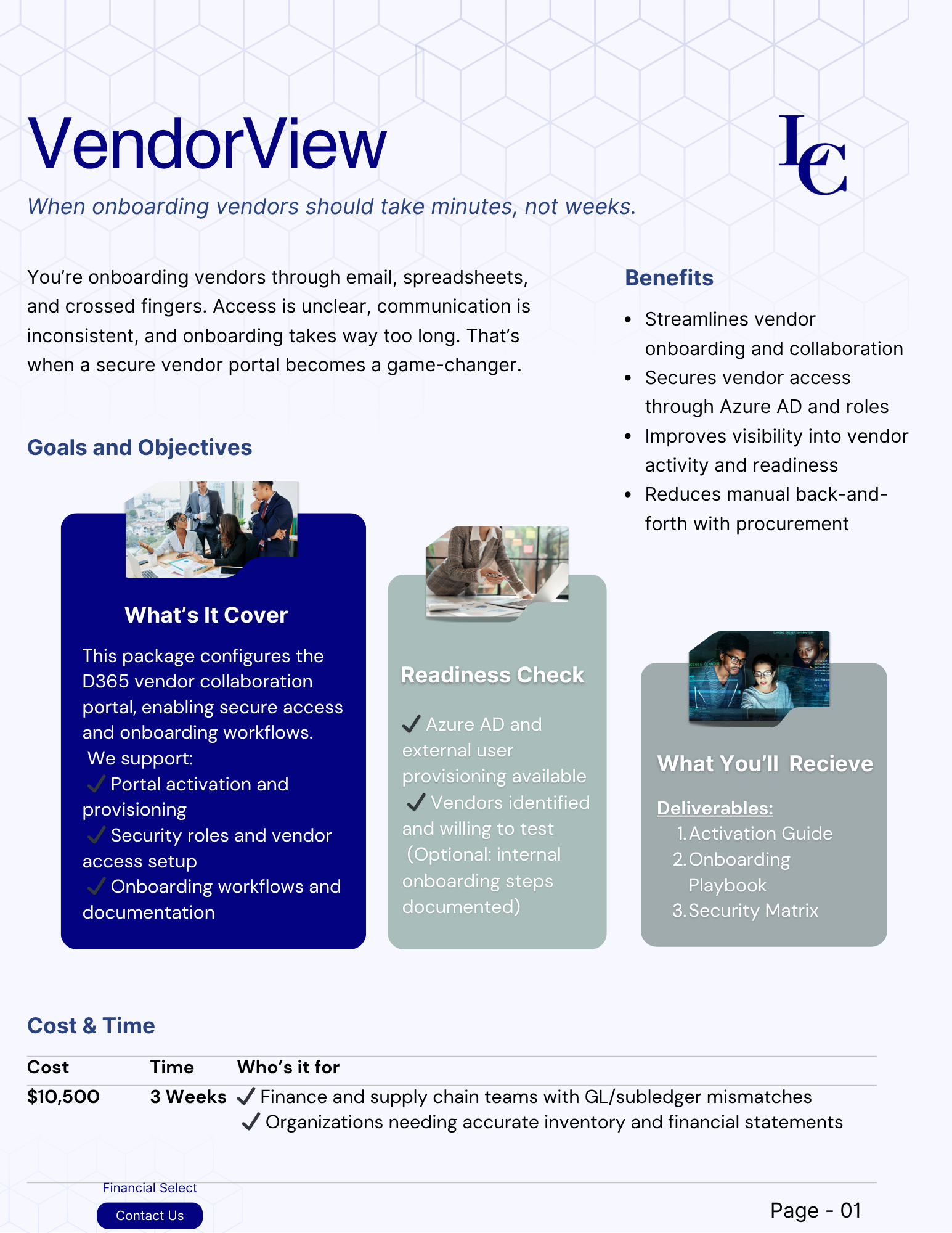


Reviews and corrects ledger-to-subledger alignment in D365 by fixing posting configurations, inventory profiles, reconciliation logic, GL mapping, and critical reporting procedures.
Enhancing Traceability and Recall Readiness with Microsoft Dynamics 365 Supply Chain Management
Posted on: January 29, 2025 | By: Maya VanderWoude | Microsoft Dynamics AX/365, Microsoft Dynamics Manufacturing
In today’s fast-paced and highly regulated business environment, traceability has become a cornerstone of efficient and compliant supply chain management. For organizations looking to improve product tracking, streamline recalls, and ensure regulatory compliance, the Traceability add-in for Microsoft Dynamics 365 Supply Chain Management offers a powerful solution.
This blog explores how businesses can leverage the capabilities of the Traceability app to enhance operational efficiency and product quality while preparing for the unexpected.

The Importance of Traceability
Traceability is no longer just a regulatory requirement—it is a strategic necessity. By tracking products throughout their lifecycle, businesses can:
- Ensure Regulatory Compliance: Meet industry standards and regulations by demonstrating detailed product tracking and accountability.
- Enhance Recall Readiness: Quickly identify and locate affected products, minimizing the financial and reputational impact of recalls.
- Improve Product Quality: Leverage insights from traceability data to address quality issues and refine processes.
With Microsoft Dynamics 365 Supply Chain Management, businesses can achieve these goals through an integrated and user-friendly solution designed to manage complex traceability demands.
Key Capabilities
The Traceability add-in is built into Microsoft Dynamics 365 Supply Chain Management, offering comprehensive features to support traceability across your supply chain:
1. Genealogy Trace Reporting
- Provides a detailed view of a product’s genealogy, including the multi-level bill of materials.
- Enables users to drill into specific components and view related attributes and events.
- Offers graphical and tabular interfaces for intuitive navigation and analysis.
2. Where-Used Reporting
- Tracks where specific raw materials or components have been used in finished products.
- Supports rapid recall efforts by identifying affected items across multiple levels of production.
- Upcoming Copilot integration will provide AI-driven summaries, allowing users to assess the impact and take swift action during recalls.
3. Backward and Forward Searches
- Backward Search: Analyze the history and genealogy of a specific product to trace its origin and components.
- Forward Search: Identify finished products containing a specific component or raw material for targeted recalls.
4. Integration with the Microsoft Platform
- Seamlessly connects with other Dynamics 365 modules, such as Quality Management and Procurement.
- Uses Azure Data Lake for robust data storage and long-term accessibility.
- Supports public API integration with third-party systems, ensuring flexibility and scalability.
Benefits of Using Traceability
Streamlined Product Tracking
By maintaining a single source of truth for product genealogy, businesses can easily track as-built and as-maintained bills of materials.
Reduced Recall Costs and Time
The Traceability app allows businesses to identify and act on recalls quickly, reducing financial loss and mitigating risks to brand reputation.
Enhanced Operational Efficiency
With rapid access to traceability data, quality engineers and supply chain teams can identify issues faster and focus on resolution rather than manual tracking.
Improved Customer Satisfaction
Businesses can respond proactively to quality concerns, improving trust and loyalty among customers.
Implementing Traceability in Your Operations
To maximize the benefits of the Traceability app, consider the following best practices:
- Integrate with Existing Systems: Leverage the native integration capabilities of Microsoft Dynamics 365 Supply Chain Management to unify data across your organization.
- Train Your Team: Ensure employees understand how to use backward and forward searches, interpret genealogy data, and act on insights.
- Monitor and Optimize: Regularly review traceability data to identify trends, address recurring quality issues, and enhance processes.
- Partner with Experts: Work with our team of consultants to tailor the Traceability solution to your unique business needs, ensuring a seamless implementation and maximum value. Contact our team here.
Conclusion
The Traceability add-in for Microsoft Dynamics 365 Supply Chain Management is a transformative tool for businesses aiming to elevate their supply chain operations. By improving traceability, streamlining recalls, and ensuring compliance, this solution empowers organizations to maintain trust, efficiency, and excellence in today’s competitive market.
Next Steps:
If you want to learn more about Traceability in Microsoft Dynamics 365 Supply Chain Management, contact us here to learn how we can help you grow your business. You can also email us at info@loganconsulting.com or call (312) 345-8817.
Related Posts
-
DynamicsCon 2026 Logan Consulting Speakers and Sessions
Posted on: April 8, 2026
Logan Consulting is proud to have several team members presenting at DynamicsCon in Las Vegas. These speakers bring deep expertise...
-
Turning Compliance Into Capability with Dynamics 365
Posted on: April 6, 2026
For a long time, compliance lived in the margins of the business. It appeared during audit season, surfaced in frantic...