

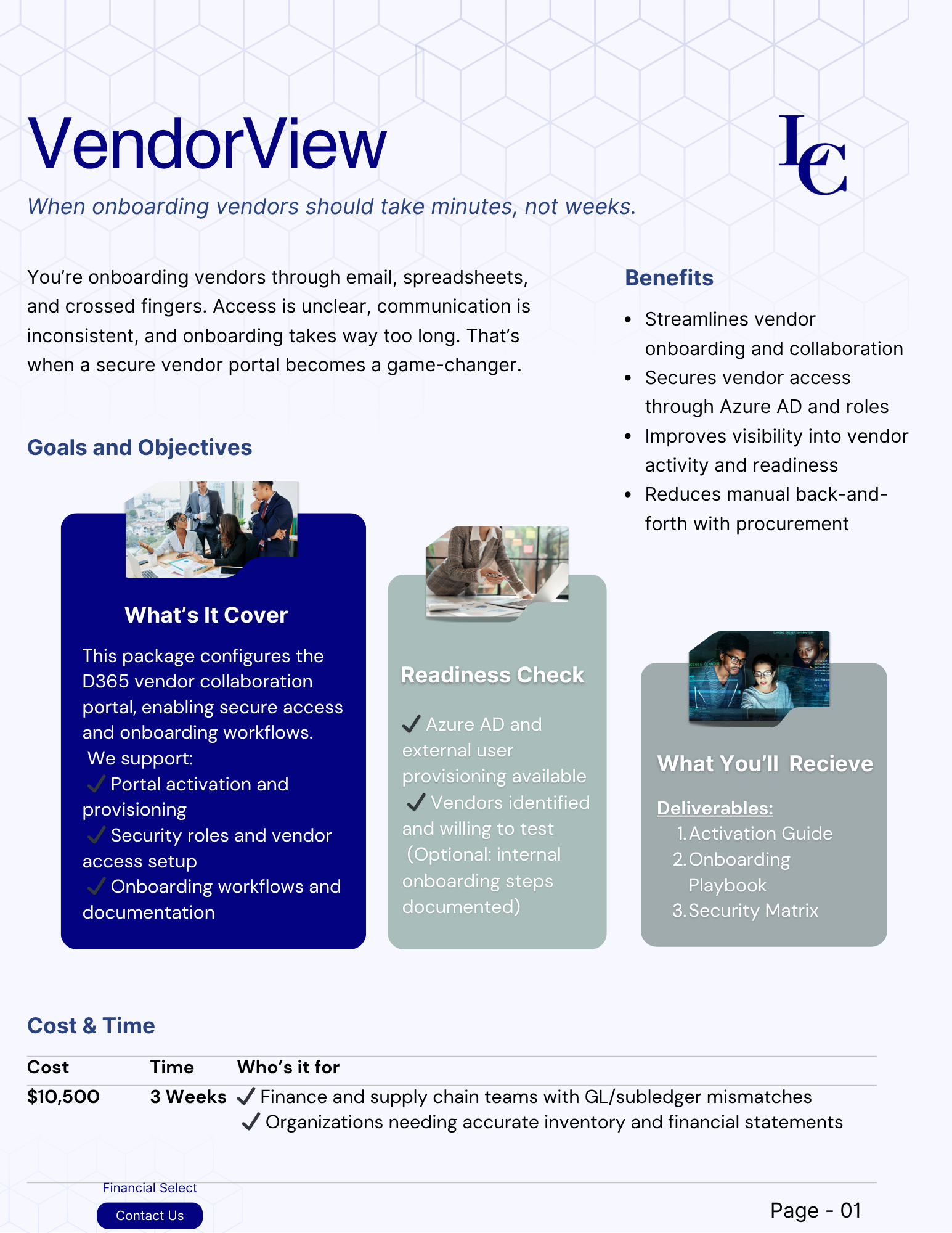


Reviews and corrects ledger-to-subledger alignment in D365 by fixing posting configurations, inventory profiles, reconciliation logic, GL mapping, and critical reporting procedures.
Effective Data Maintenance in Microsoft Dynamics 365 Finance: Part 1
Posted on: June 5, 2024 | By: Jarrod Kraemer | Microsoft Dynamics AX/365, Microsoft Dynamics Manufacturing
Managing data efficiently is crucial for any organization using Microsoft Dynamics 365 Finance. A well-crafted data maintenance strategy ensures optimal storage use and prevents costly overages. This blog post, the first in a two-part series, will explore the tools and features in Dynamics 365 Finance that can help you develop an effective data maintenance plan. Part two will focus on implementing your plan.

The Importance of a Data Maintenance Team
Data maintenance is not just the responsibility of system administrators. Effective management of data throughout its lifecycle requires collaboration from various stakeholders:
- Business Users: These users need data for daily operations. Involving them ensures that removing outdated data doesn’t disrupt business processes.
- BI and Reporting Team: This team understands reporting requirements and can identify which data is crucial for operational reports and should be kept in live storage or exported to a data warehouse.
- Customization Team: Customizations might rely on data targeted by standard cleanup routines. It’s essential to test all customizations and integrations before running a cleanup.
- Auditors and Controllers: They can determine the regulatory requirements for data retention and guide when outdated financial data can be purged.
- Dynamics 365 System Admins: These admins can schedule cleanup jobs during non-disruptive times and configure new features for efficient data management.
- Microsoft 365 System Admins: They have access to the Power Platform admin center, which includes the finance and operations storage capacity report, useful for creating a data maintenance strategy.
Tools for Reviewing Storage Usage
Once your team is in place, the next step is to gather information about your organization’s data footprint using the following tools:
- Finance and Operations Storage Capacity Report: This report shows the storage usage and capacity of your Dynamics 365 environments down to the table level.
- Just-in-Time Database Access: This feature allows you to access a recently refreshed sandbox environment database. While it may not exactly match the production environment, it provides valuable insights for storage actions.
Features for Managing Storage
A comprehensive data maintenance strategy should utilize the data management features available in the Dynamics 365 Finance apps. Key features include:
- Environment Life Cycle Management: This involves creating, refreshing, and decommissioning sandbox environments based on testing and development needs. Regularly review your environments’ storage capacity and consider decommissioning sandboxes that are no longer necessary. For example, post go-live, you might retire the training environment or reduce performance tests in the QA environment.
- Cleanup Routines: These are standard or custom functions that automatically delete temporary or obsolete data. Cleanup routines might run as batch jobs or behind the scenes, invisible to admins.
- Retention Settings: These settings schedule automatic cleanup of specific data after a predetermined period. For instance, document history might be set to retain history for a specified number of days.
- Archiving Functions: These functions move historical data to a separate storage location, freeing up space in live storage.
- Compression Routines: These routines reduce the size of stored data. For example, the Compress Payment Tokens feature applies compression to stored payment property tokens, saving significant storage space.
Effective data maintenance in Dynamics 365 Finance involves strategic planning and collaboration across multiple roles within your organization. By leveraging the available tools and features, you can ensure your data storage is optimized and avoid unnecessary costs. Stay tuned for part two, where we will delve into the implementation of your data maintenance plan.
Next Steps:
If you want to learn more about effective data maintenance in Microsoft Dynamics 365 Finance, contact us here to learn how we can help you grow your business. You can also email us at info@loganconsulting.com or call (312) 345-8817.
Related Posts
-
Expense Management: Where Money Either Gets Controlled or Quietly Slips Away
Posted on: March 19, 2026
Most organizations don’t realize they have an expense problem until someone asks a simple question: “Why did we spend that?”...
-
Improving Retail Inventory Traceability and Accuracy
Posted on: March 16, 2026
Retailers do not have a visibility shortage. They have a traceability standard shortage. With Dynamics 365 Commerce and Microsoft’s Inventory...