

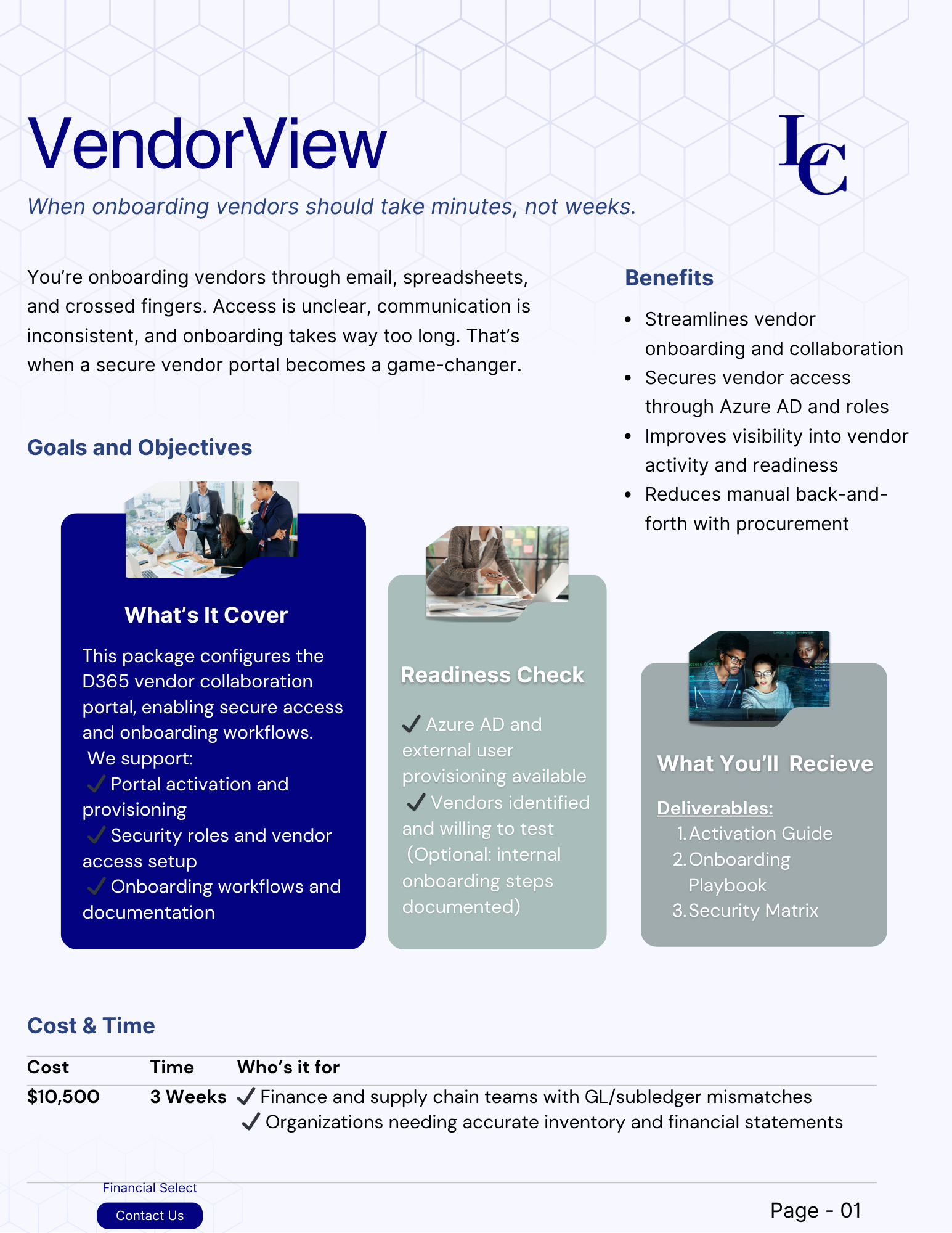


Reviews and corrects ledger-to-subledger alignment in D365 by fixing posting configurations, inventory profiles, reconciliation logic, GL mapping, and critical reporting procedures.
Creating a Data Retention Strategy for Dynamics 365 Finance and Supply Chain Management
Posted on: June 12, 2024 | By: Maya VanderWoude | Microsoft Dynamics AX/365, Microsoft Dynamics Manufacturing
Efficiently managing your data is crucial for maintaining optimal system performance and cost-effectiveness. A well-defined data retention strategy not only enhances database performance but also helps reduce storage costs. This blog will guide you through creating a robust strategy for your Dynamics 365 Finance and Supply Chain Management environment, ensuring your data remains manageable, secure, and compliant.

Understanding the Importance of Data Retention
Data retention is a critical component of any data maintenance strategy. By determining how long data should be kept before it is deleted or archived, businesses can prevent unnecessary data accumulation, enhance system performance, and ensure compliance with regulatory requirements.
Steps to Create a Data Retention Strategy
1. Identify and Categorize Your Data
Begin by identifying the various types of data within your Dynamics 365 system. Categorize this data based on its purpose and usage. Common categories include:
- Log and Temporary Data: Data generated during routine operations that may not need long-term storage.
- Operational Data: Day-to-day business data that supports ongoing activities.
- Historical Data: Older data that may still be required for reporting and analysis.
- Audit and Compliance Data: Data kept for legal and regulatory purposes.
2. Determine Retention Requirements
For each category, determine how long the data should be retained. This involves consulting with various stakeholders, such as system administrators, business users, and compliance officers. Consider the following factors:
- Business Needs: How often is the data accessed? Is it still relevant to ongoing operations?
- Regulatory Requirements: Are there legal mandates dictating how long certain data must be kept?
- Storage Costs: What are the financial implications of storing this data long-term?
3. Develop Retention Policies
Once you have determined the requirements for each data category, develop clear retention policies. These policies should specify:
- Retention Periods: How long each type of data should be retained.
- Deletion/Archival Processes: Procedures for safely deleting or archiving data once it reaches the end of its retention period.
- Access Controls: Measures to ensure only authorized personnel can alter or delete data.
4. Implement and Automate Retention Policies
Leverage the tools available within Dynamics 365 and the Power Platform to implement your retention policies. Use automated processes to manage data retention, reducing the risk of human error and ensuring consistent application of policies. Key steps include:
- Setting Up Automatic Cleanup Jobs: Configure jobs to automatically delete or archive data based on your retention policies.
- Regularly Reviewing Storage Usage: Use capacity reports to monitor storage usage and identify areas where retention policies need adjustment.
- Testing in Sandbox Environments: Before applying changes in production, test your retention processes in a sandbox environment to ensure they work as expected.
5. Monitor and Review Your Strategy
An effective data strategy is not static. Regularly review and adjust your policies to account for changes in business needs, regulatory requirements, and system performance. Engage with stakeholders to gather feedback and make necessary improvements.
Best Practices for Data Retention
- Stakeholder Engagement: Involve key stakeholders in the development and review of retention policies to ensure they meet the needs of all departments.
- Documentation: Maintain comprehensive documentation of your retention policies and procedures to facilitate training and compliance audits.
- Data Security: Implement robust security measures to protect retained data from unauthorized access or breaches.
- Continuous Improvement: Periodically assess the effectiveness of your strategy and make adjustments as needed.
Conclusion
Creating and implementing an effective data retention strategy is essential for maintaining the performance and efficiency of your Dynamics 365 Finance and Supply Chain Management environment. By systematically categorizing data, determining retention requirements, and automating processes, you can ensure your data remains relevant, secure, and compliant.
Next Steps:
If you want to learn more about data retention in Microsoft Dynamics 365 Finance and Supply Chain Management, contact us here to learn how we can help you grow your business. You can also email us at info@loganconsulting.com or call (312) 345-8817.
Related Posts
-
Expense Management: Where Money Either Gets Controlled or Quietly Slips Away
Posted on: March 19, 2026
Most organizations don’t realize they have an expense problem until someone asks a simple question: “Why did we spend that?”...
-
Improving Retail Inventory Traceability and Accuracy
Posted on: March 16, 2026
Retailers do not have a visibility shortage. They have a traceability standard shortage. With Dynamics 365 Commerce and Microsoft’s Inventory...