





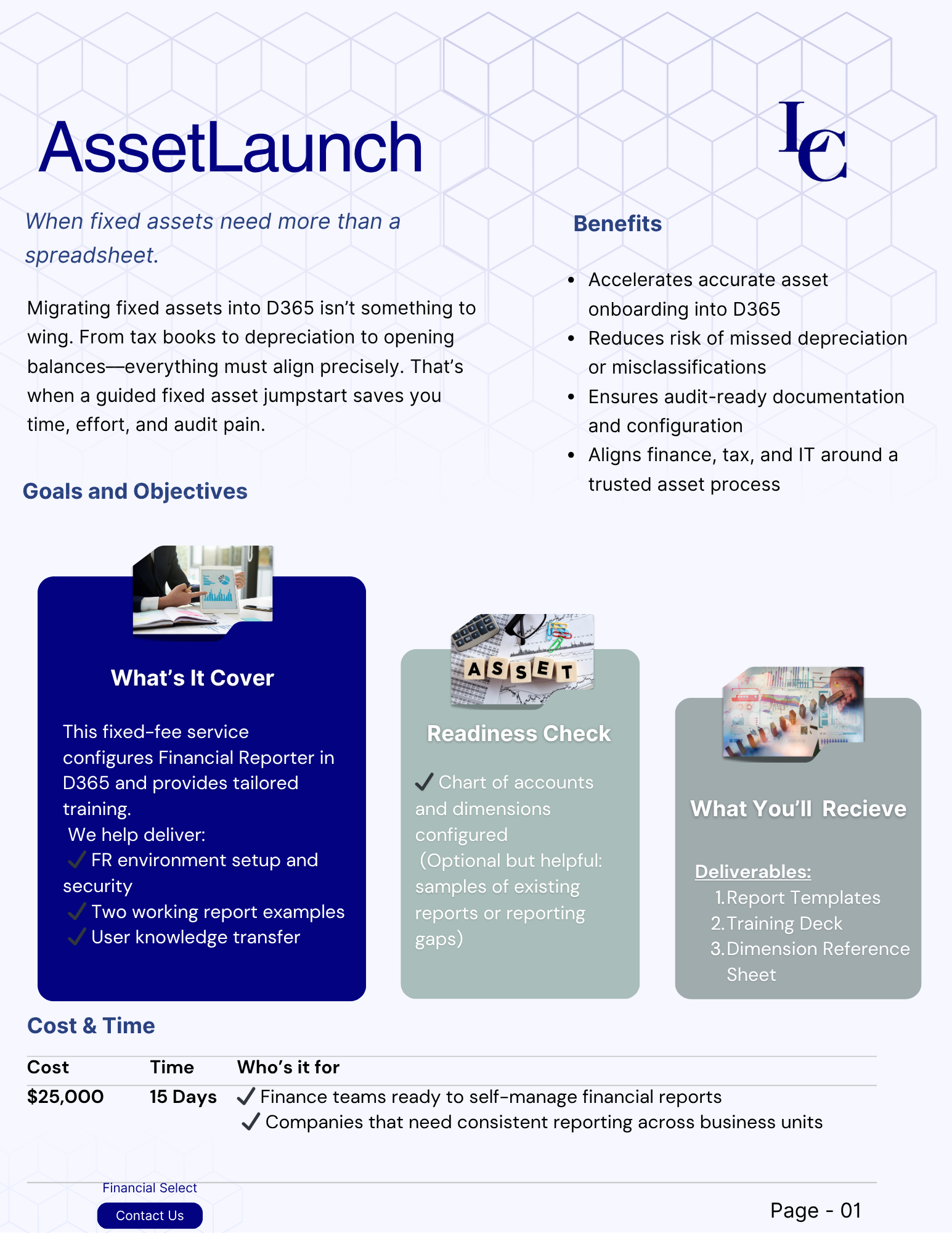
Reviews and corrects ledger-to-subledger alignment in D365 by fixing posting configurations, inventory profiles, reconciliation logic, GL mapping, and critical reporting procedures.
Purchase Orders and Invoices in Business Central
Posted on: February 27, 2024 | By: Page Wildridge | Microsoft Dynamics Business Central
Business Central is a powerful tool for businesses looking to maintain accurate financial records while staying on top of their inventory. The ERP comes equipped with a robust system for keeping track of your purchase orders and invoices which will dynamically update inventory levels. In this blog, we will discuss creating the details of creating these records.
Creating a Purchase Invoice
The process of creating and posting a purchase invoice is fairly simple and straightforward. Start by entering the name of your vendor in the “Vendor” field. Next, fill in the remaining fields as needed. You can hover your mouse over each field to read a description of the field itself.
Next, you can start to fill in information with the resources you purchased from your vendor. Navigate to the “Lines” FastTab, and enter in the number of the inventory item under “Item No.” After that, enter the quantity of items you are purchasing under “Quantity.” In the “Invoice Discount Amount” field, enter the amount that should be deducted from the value shown at the end of your invoice in the “Total Incl. Tax” field.
Non-Inventory Items and Resources
When keeping track of your finances, you will need to include items outside of inventory items in your records. To do so within Business Central, you can classify each new entry as a resource or an item. From there, the items can be further categorized as “inventory,” “non-inventory,” or “service” type.
When you enter a resource, you can also include external resources, like invoicing a vendor for work delivered. In order to enter your external resource to the ERP, you might need to establish the resource’s capacity and assign it manually to the job.
Purchase Orders vs. Purchase Invoices
Both purchase orders and purchase invoices in Business Central are quite similar and can be utilized interchangeably, with a few exceptions. These exceptions include if your business needs to record partial receipts of an order, or if your business utilizes drop shipments directly from vendors to your customers. In these two cases, you should always create a “purchase order.” Otherwise, you can use whichever you prefer.
If you are interested in a more in-depth explanation of setting up purchase orders and invoices in Business Central, check out the video below. In the video, a Logan expert takes you step by step through the process of creating these financial records.
Next Steps
Logan Consulting, a proud Microsoft partner, is committed to ensure our clients get the most out of their ERP. Contact us today to speak to an expert about Business Central.