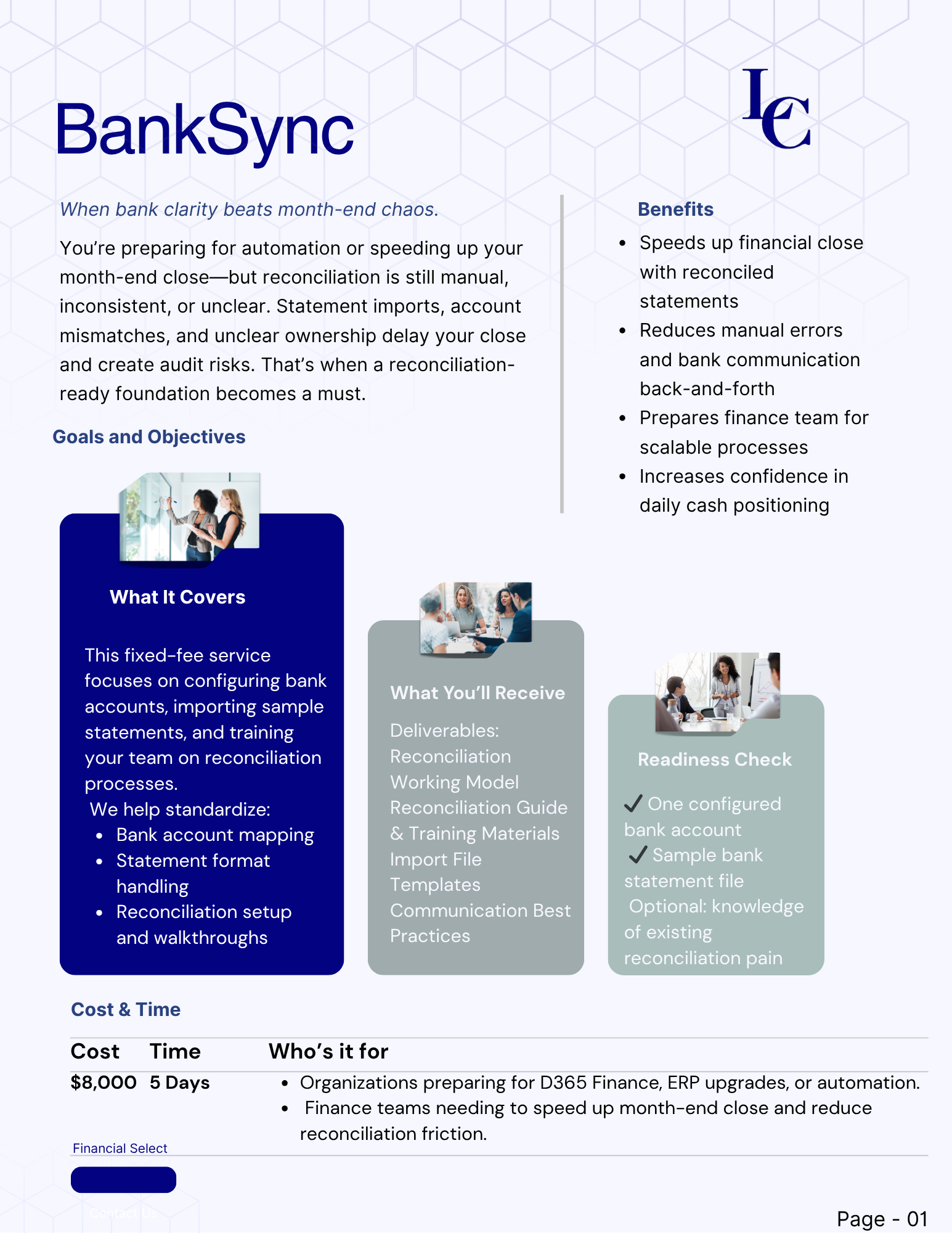
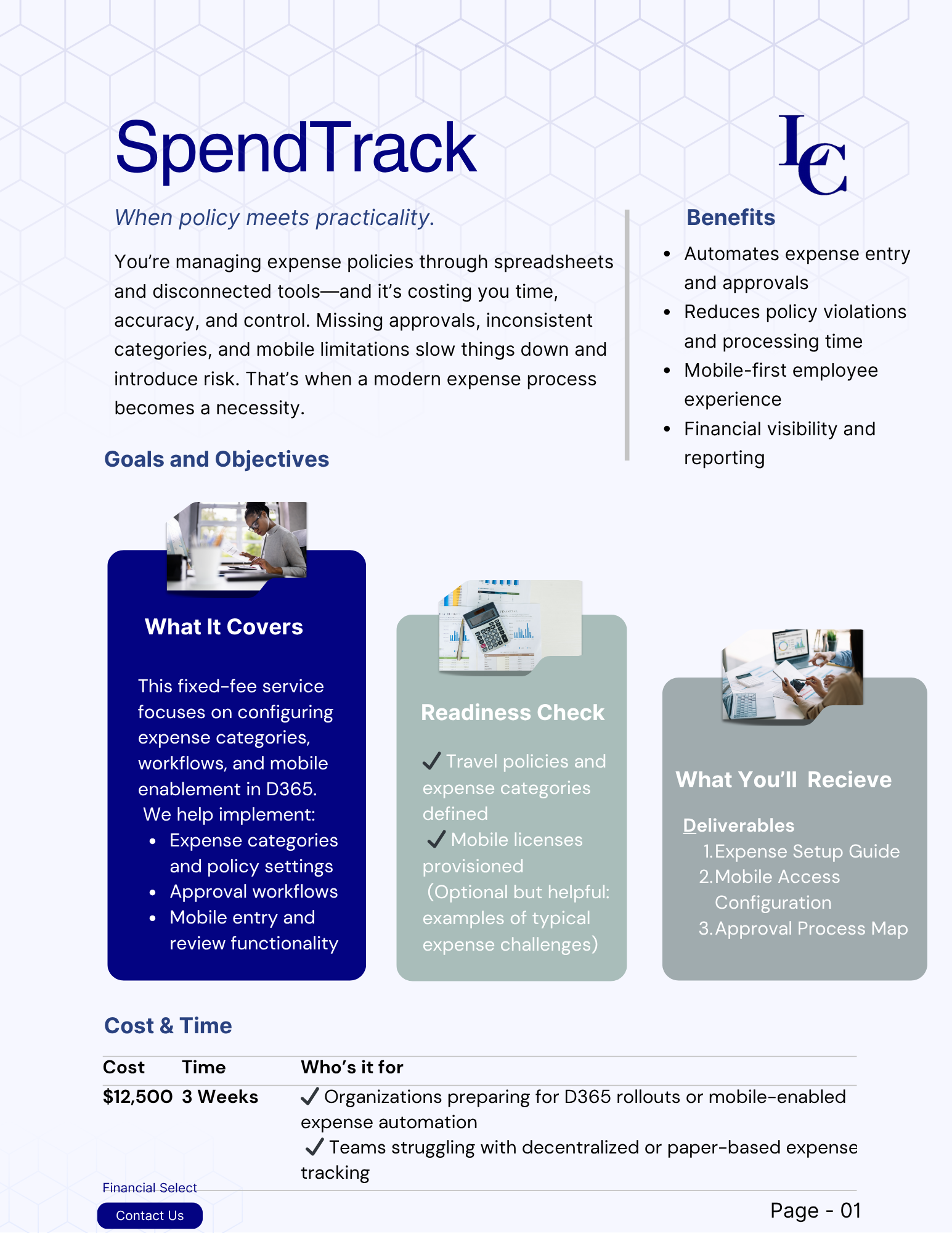


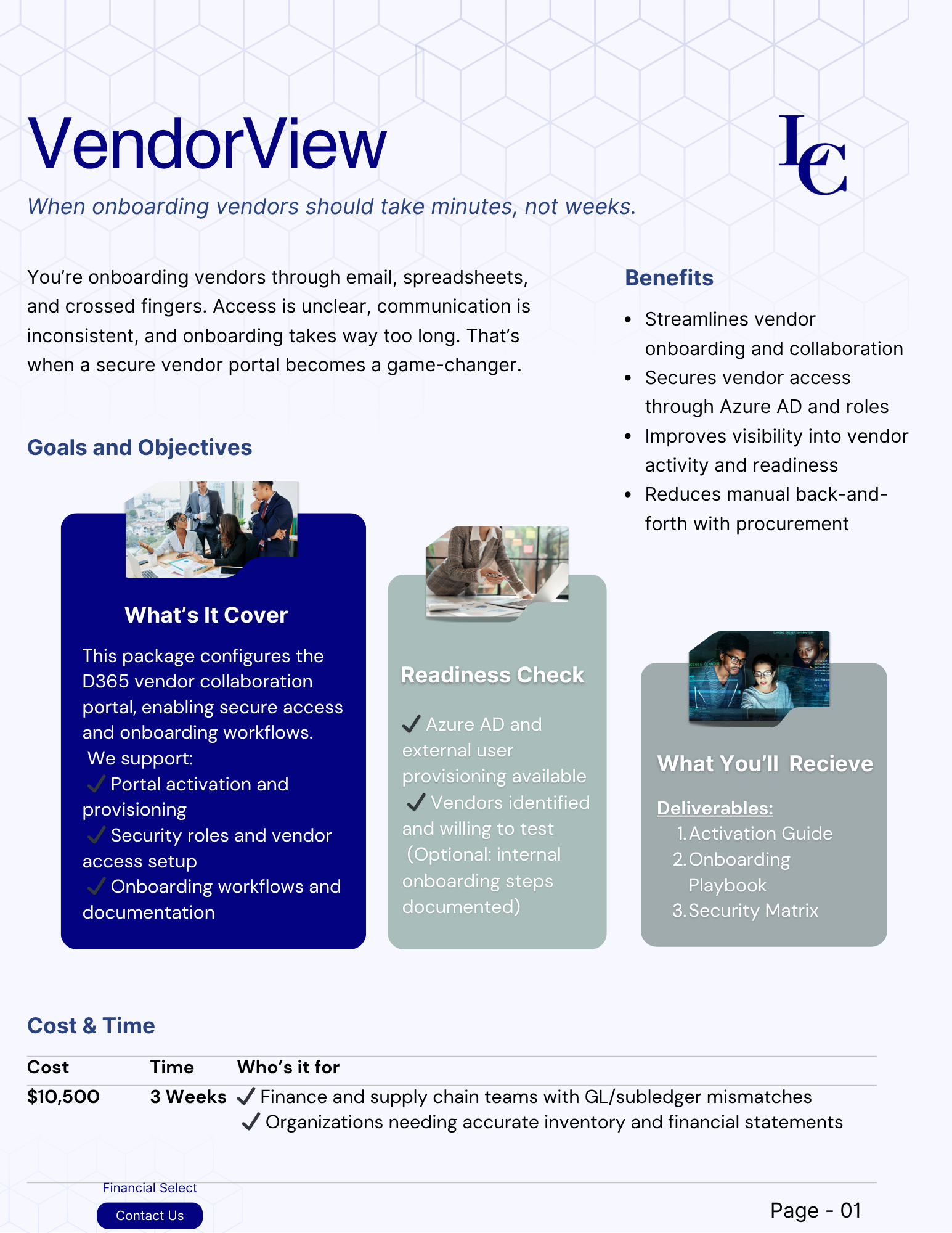


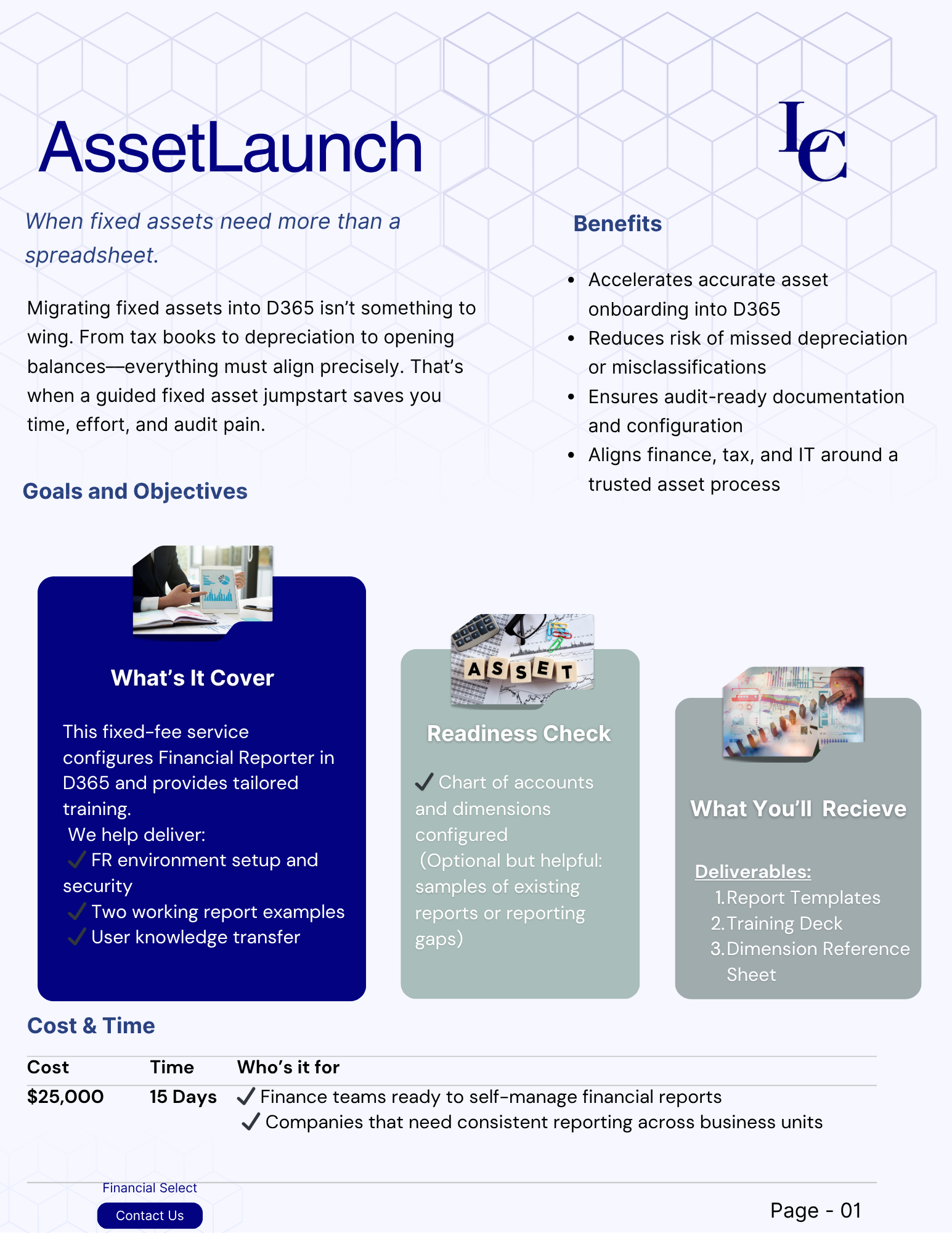
Reviews and corrects ledger-to-subledger alignment in D365 by fixing posting configurations, inventory profiles, reconciliation logic, GL mapping, and critical reporting procedures.
Use Rolling Forecasts to Predict Demand in Microsoft D365 Supply Chain Management
Posted on: June 10, 2024 | By: Maya VanderWoude | Microsoft Dynamics AX/365, Microsoft Dynamics Manufacturing
Effective supply chain management is critical for businesses to stay competitive in today’s dynamic market environment. Microsoft Dynamics 365 (D365) for Supply Chain Management offers a powerful feature known as rolling forecasts, which can significantly enhance your demand planning process. This blog will guide you through the benefits, usage, and setup of rolling forecasts within D365 for Supply Chain Management.

Introduction to Rolling Forecasts
Rolling forecasts allow businesses to maintain a continuous and adaptive forecasting model, ensuring that predictions remain relevant as new data becomes available. Unlike static forecasts, rolling forecasts automatically update and extend the forecast horizon, aligning your demand planning with real-time business conditions. This continuous recalibration helps improve the accuracy and reliability of your forecasts, making it easier to navigate the uncertainties of the business environment.
Benefits:
- Improved Accuracy: Regular updates ensure that your forecasts are based on the latest data and assumptions, reducing the risk of outdated or incorrect predictions.
- Enhanced Flexibility: Adapt quickly to changing market conditions by continuously adjusting your forecasts.
- Better Collaboration: Facilitate communication and coordination with stakeholders across sales, marketing, and finance.
- Strategic Alignment: Ensure your demand planning aligns with the overall strategic goals of your organization.
Using Rolling Forecasts:
Once set up, rolling forecasts allow you to:
- Compare Forecast Versions: View different versions of the same time series to analyze historical demand, current forecasts, and previous forecasts.
- Modify and Edit Forecasts: Make necessary adjustments to your forecasts as required, ensuring they remain accurate and relevant.
- Monitor Performance: Track the effectiveness of your demand planning process and identify areas for improvement.
Setting Up Rolling Forecasts:
Setting up rolling forecasts in D365 involves scheduling each process, which can be fully automated to streamline the forecast. Here’s a concise guide:
- Transport Data: Go to Data Management > Import or Export, depending on your process.
- Select a Profile: Use an existing profile or create a new one. Use the creation wizard as usual to create a new profile.
- Schedule the Forecast Process:
- Choose ‘None’ for manual runs or ‘Recurring’ for automatic runs on a specific schedule (daily, weekly, or monthly).
- Define the start and end dates, and the frequency of the process.
- Configure Output Settings:
- To create a new time series after each run, set the Save output as field to Create new time series. Name the series and add a dynamic suffix for uniqueness.
- To add a new version to an existing time series, set the Save output as field to ‘New version of the same time series’. Select the target time series and enable the option to save the current version before overwriting to maintain traceability.
Rolling forecasts in Microsoft Dynamics 365 for Supply Chain Management are a powerful tool for enhancing your demand planning accuracy and responsiveness. By automating and continuously updating your forecasts, you can stay ahead of market changes and ensure that your supply chain operations are always optimized.
Next Steps:
If you want to learn more about Rolling Forecasts in Microsoft Dynamics 365 Supply Chain Management, contact us here to learn how we can help you grow your business. You can also email us at info@loganconsulting.com or call (312) 345-8817.
Related Posts
-
From Forecast to Fire Drill: Why Demand Planning Fails Without Governance
Posted on: March 25, 2026
Demand forecasts rarely fail because someone chose the wrong algorithm. They fail because too many organizations still treat the forecast...
-
Expense Management: Where Money Either Gets Controlled or Quietly Slips Away
Posted on: March 19, 2026
Most organizations don’t realize they have an expense problem until someone asks a simple question: “Why did we spend that?”...