

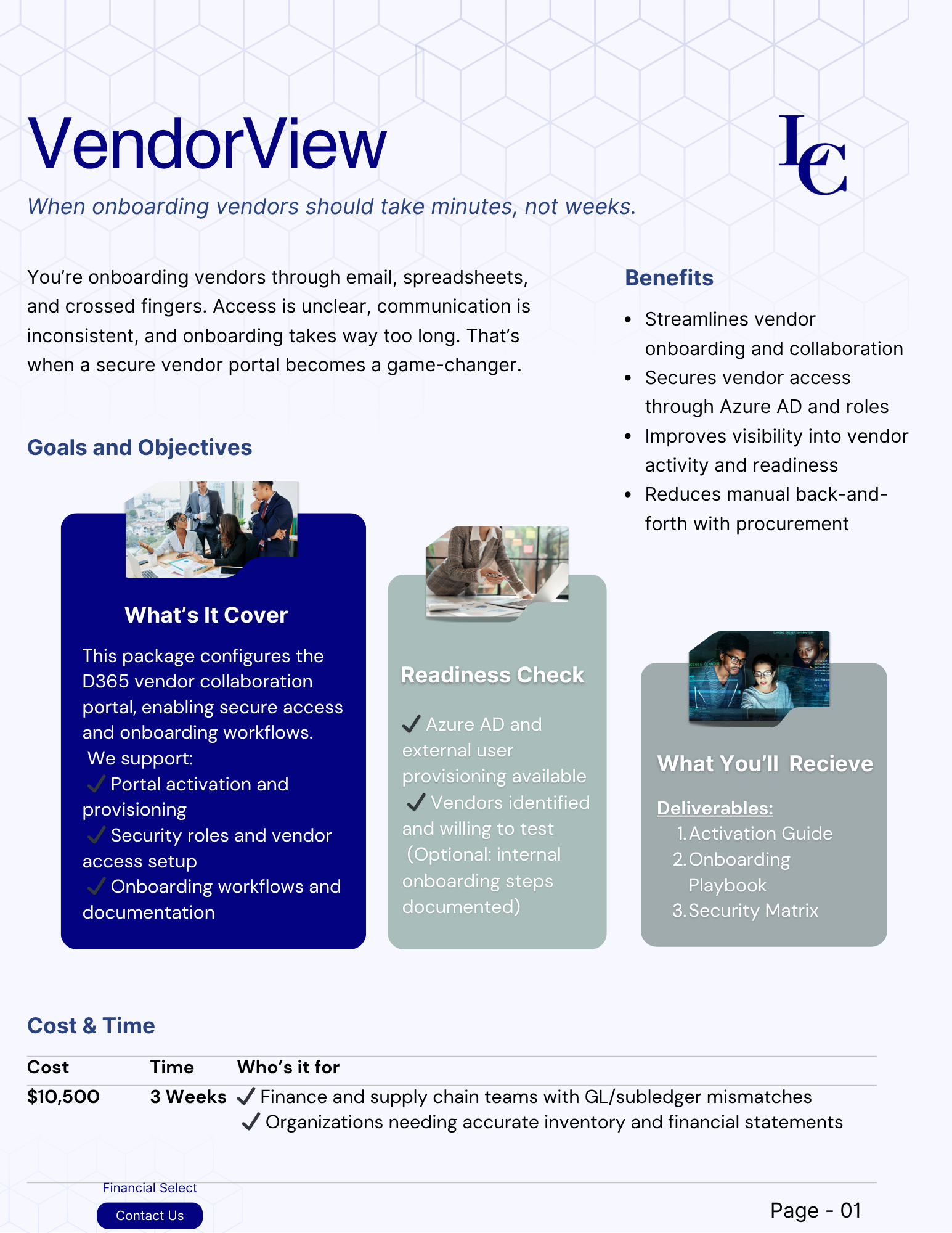


Reviews and corrects ledger-to-subledger alignment in D365 by fixing posting configurations, inventory profiles, reconciliation logic, GL mapping, and critical reporting procedures.
Turning Tariff Strategy into Competitive Advantage with Microsoft Dynamics 365 Supply Chain Management
Posted on: April 23, 2025 | By: Maya VanderWoude | Microsoft Dynamics AX/365, Microsoft Dynamics Manufacturing
In today’s volatile global trade landscape, tariffs have become more than just a line item—they’re a strategic variable that impacts sourcing, pricing, and profitability. For businesses using Microsoft Dynamics 365 Supply Chain Management (D365), integrating tariff analysis into your operational workflows is not only possible—it’s essential.
At Logan Consulting, we help organizations implement comprehensive tariff management strategies using our T.A.R.I.F.F. framework (Trade Analysis & Risk Identification for Freight), designed to embed trade intelligence into core supply chain operations through D365. See our comprehensive approach.

Logan’s Framework for Tariff Analysis in D365
Tariff Exposure Heatmap
D365’s vendor and SKU data can be mapped against HS codes and country of origin to visualize risk-heavy trade lanes. This heatmap helps procurement and compliance teams proactively adjust sourcing strategies.
Scenario-Based Margin Impact Model
Using configurable cost and margin structures in D365, organizations can simulate different tariff scenarios to understand impact by SKU, product category, or business unit—supporting dynamic decision-making.
Trade Lane Risk Profile Report
With the analytics and reporting capabilities in D365, companies can track trade lane volatility and prioritize routes based on cost, lead time, and tariff sensitivity.
Duty Optimization Matrix
By leveraging FTZ (Foreign Trade Zone) configurations, updated item classifications, and revised sourcing routes, D365 users can strategically reduce tariff exposure and increase landed cost accuracy.
Embedding Strategy into Business Processes
Integrating a tariff strategy into D365 allows businesses to:
-
Align sourcing with tariff-optimized vendors.
-
Automate landed cost updates for more accurate forecasting.
-
Visualize tariff impact in Power BI dashboards.
-
Respond dynamically to trade policy changes.
This strategic alignment helps mitigate the financial impact of tariffs and supports long-term profitability.
Conclusion
As tariffs continue to influence global supply chain economics, businesses must evolve their ERP strategies to stay ahead. By incorporating the T.A.R.I.F.F. methodology within Microsoft Dynamics 365 Supply Chain Management, organizations can turn regulatory uncertainty into an operational advantage.
This is Logan Consulting’s approach—designed to embed trade strategy directly into your D365 environment. From scenario modeling and duty optimization to automated data mapping and visibility dashboards, we work alongside your team to build a system that minimizes risk and maximizes margin. Let us help you translate tariff complexity into actionable business outcomes.
Next Steps
If you want to learn more about tariff strategy in Microsoft Dynamics 365 Supply Chain Management, contact us here to learn how we can help you grow your business. You can also email us at info@loganconsulting.com or call (312) 345-8817.
Related Posts
-
Expense Management: Where Money Either Gets Controlled or Quietly Slips Away
Posted on: March 19, 2026
Most organizations don’t realize they have an expense problem until someone asks a simple question: “Why did we spend that?”...
-
Improving Retail Inventory Traceability and Accuracy
Posted on: March 16, 2026
Retailers do not have a visibility shortage. They have a traceability standard shortage. With Dynamics 365 Commerce and Microsoft’s Inventory...