



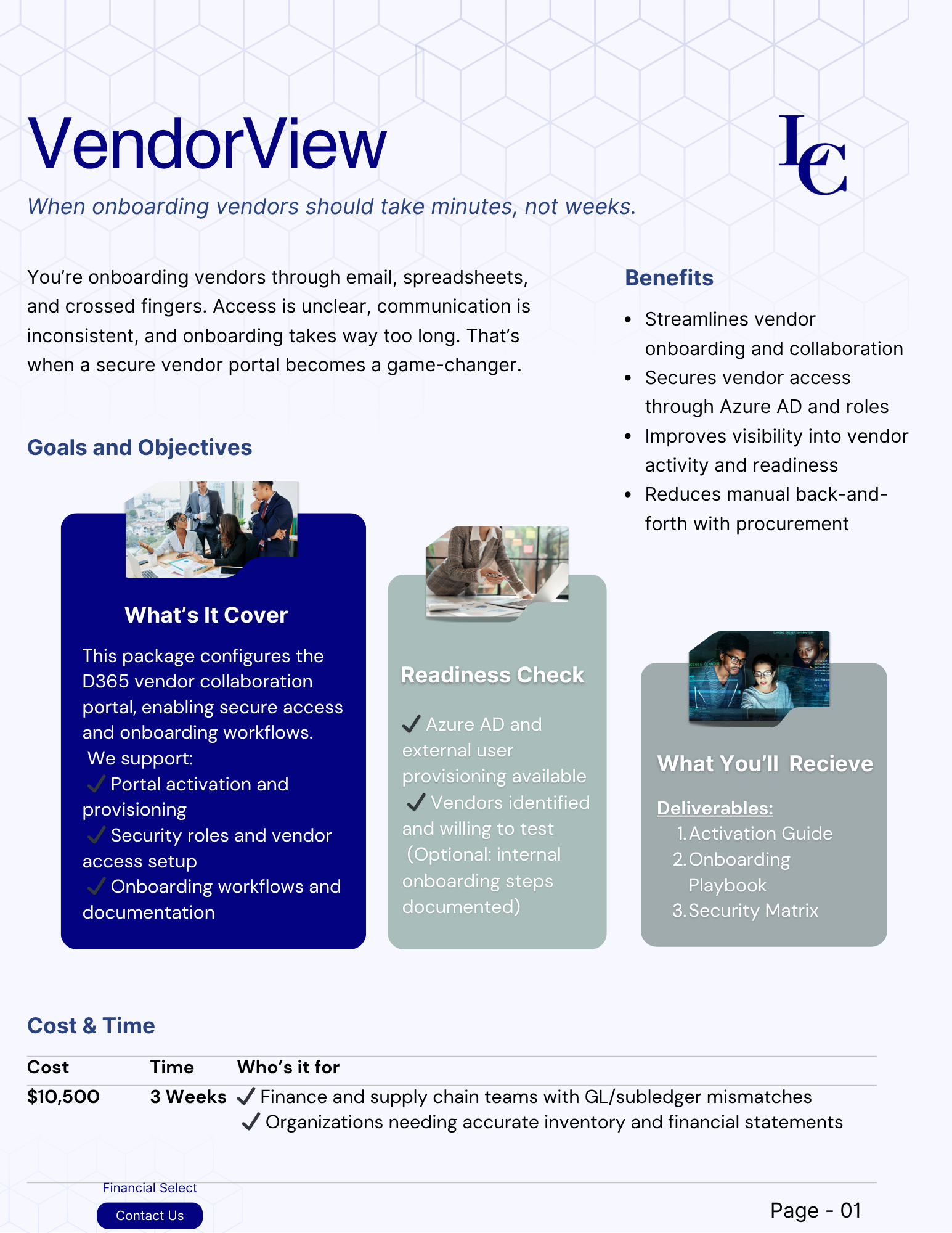


Reviews and corrects ledger-to-subledger alignment in D365 by fixing posting configurations, inventory profiles, reconciliation logic, GL mapping, and critical reporting procedures.
Sales Tax in Business Central
Posted on: June 19, 2024 | By: Page Wildridge | Microsoft Dynamics Business Central
Sales tax management is a critical component of financial operations for businesses across various industries. In Microsoft Dynamics 365 Business Central, managing sales tax is streamlined and efficient, ensuring compliance with regional tax regulations while simplifying the overall accounting process. In this blog, we will cover the benefits of using Business Central to stay on top of your sales tax.
Benefits of Business Central:
Business Central provides robust features for configuring, calculating, and reporting sales tax. One of its key functionalities is the ability to define tax jurisdictions and rates based on the specific requirements of each region where the business operates. This flexibility allows businesses to accurately calculate sales tax according to local laws. This includes varying rates for different products or services.
The system enables users to set up tax groups, which categorize items or services based on their taxability. This categorization ensures that the appropriate tax rates are applied automatically to each transaction. This reduces the risk of errors and ensuring consistency in tax calculations.
Business Central also supports tax-inclusive and tax-exclusive pricing, allowing businesses to choose the pricing method that aligns best with their pricing strategies and customer expectations. This flexibility ensures that sales tax is accounted for transparently in the pricing of goods and services.
Moreover, Business Central simplifies the process of tax reporting and compliance. It generates accurate tax reports, including sales tax returns, which can be submitted to tax authorities in a timely manner. This helps businesses avoid penalties for non-compliance and ensures adherence to regulatory requirements.
Furthermore, Business Central integrates seamlessly with other modules within the ERP system, such as sales, purchasing, and finance. This integration allows for real-time visibility into tax-related transactions and ensures that sales tax calculations are accurately reflected in financial statements and reporting.
Overall, Microsoft Dynamics 365 Business Central provides businesses with the tools they need to effectively manage sales tax. This is from configuration and calculation to reporting and compliance. By automating and streamlining these processes, Business Central helps businesses save time and resources while ensuring accuracy and compliance with tax regulations.
Next Steps
Logan Consulting, a proud Microsoft partner, is committed to ensuring our clients get the most out of their ERPs. Contact us today to learn more.