

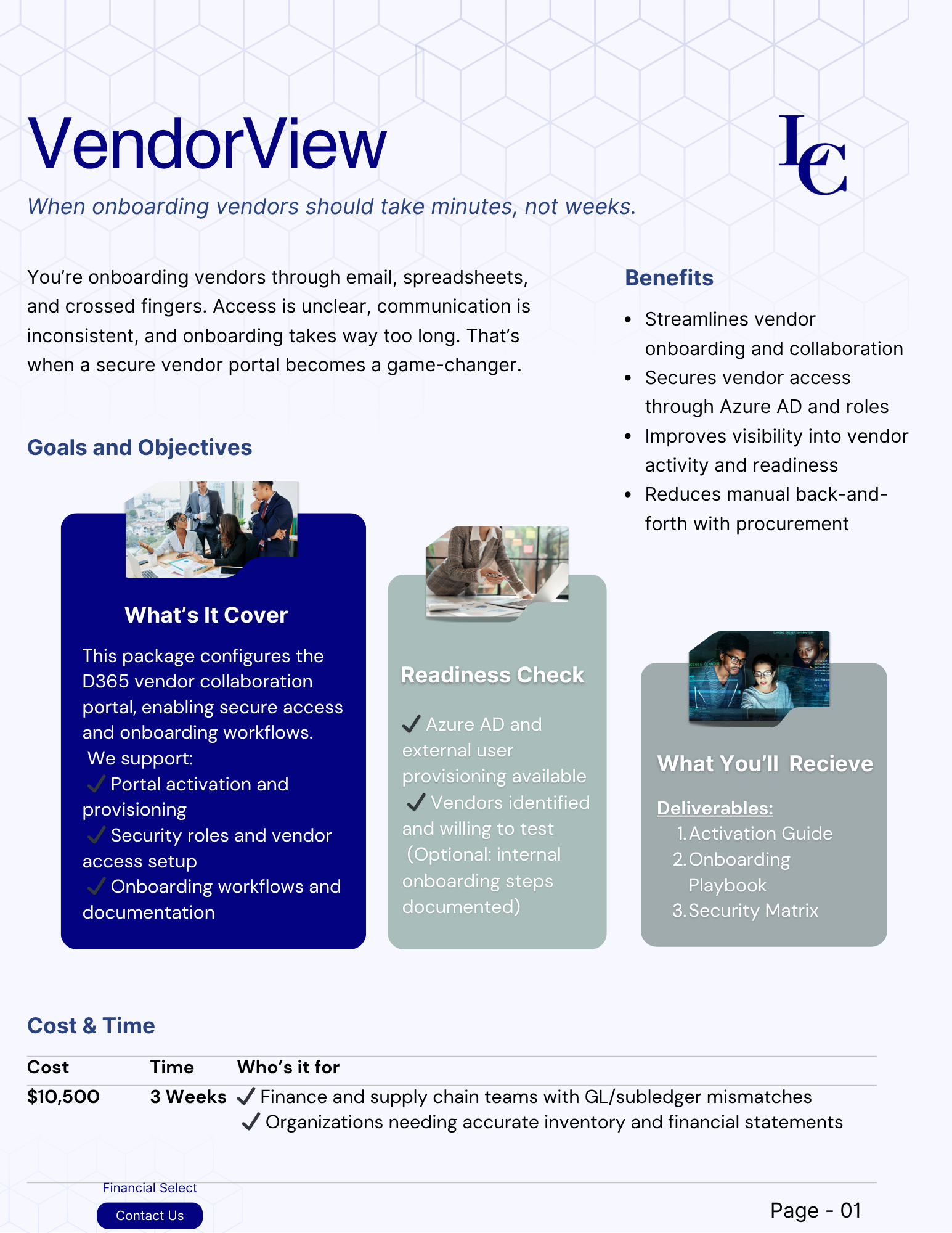



Reviews and corrects ledger-to-subledger alignment in D365 by fixing posting configurations, inventory profiles, reconciliation logic, GL mapping, and critical reporting procedures.
Global Tariffs: Mastering Inbound Voyage Tracking in D365 Supply Chain Management for the Electronics Industry
Posted on: April 17, 2025 | By: Maya VanderWoude | Microsoft Dynamics AX/365, Microsoft Dynamics Manufacturing
In the fast-paced electronics industry, where component lead times are long, supplier networks are global, and market demand can shift rapidly, gaining visibility into inbound supply chains is essential. Electronics companies must ensure that materials arrive on time and in full — without exception. Delays or blind spots can cascade across production schedules and impact customer commitments.
Microsoft Dynamics 365 Supply Chain Management (D365) supports this need through Inbound Tracking, a robust capability within the Landed Cost module that enables electronics businesses to monitor the complete lifecycle of shipping container voyages. With precise oversight over estimated and actual timelines, companies can reduce risk, improve planning accuracy, and stay responsive to shifting market and customer demands.
Additionally, with global tariff policies frequently changing, especially on high-tech goods and components, tracking exact shipping timelines and locations becomes essential for applying correct duties and managing landed cost exposure. Having clear insight into where your goods are — and when they cross customs thresholds — helps ensure accurate tariff calculation and reduces the risk of compliance penalties.
In this blog, we explore how electronics organizations can use Inbound Tracking in D365 to manage shipping milestones, adjust delivery expectations, and maintain alignment between global sourcing and warehouse operations.

Centralized Visibility with the Inbound Tracking Page
The Inbound Tracking workspace, accessible via Landed cost > Tracking > Inbound tracking, serves as a central hub for monitoring incoming voyages. Each journey is mapped through a series of defined activities — such as departure, transit, customs clearance, and final delivery — all visible in one place.
For electronics businesses, where precision and timing are non-negotiable, this centralized visibility allows:
-
Real-time monitoring of estimated and actual dates.
-
Early identification of potential delays.
-
Continuous alignment between procurement, logistics, and production.
Updating Inbound Activities: From Estimate to Execution
Tracking starts when the first activity’s start date is entered. From there, the system auto-generates estimated end dates based on predefined lead times. As real-world progress is made, users can update actual end dates, triggering recalculations for downstream activities. This dynamic scheduling is crucial in the electronics sector, where even short disruptions can impact assembly lines or customer delivery timelines.
Fields such as Estimated vs. Actual Days, Mode of Delivery, and Activity Notes allow logistics teams to stay informed and respond quickly to deviations.
Seamless Integration with Purchase and Transfer Orders
For electronics companies managing inbound flows across global regions, automated date synchronization between voyage tracking and purchase/transfer orders is a significant advantage. When dates in the tracking module are updated, D365 can revise:
-
Delivery dates on purchase orders, or
-
Receipt dates on transfer orders, depending on configuration.
This ensures warehouse and production planning teams are working with the most accurate information — minimizing misalignment and bottlenecks.
As highlighted in our earlier post on Inbound & Outbound Warehouse Operations in Transportation, integrated logistics capabilities like these help businesses streamline processes across both ends of the supply chain.
Flexible Actions via the Inbound Tracking Action Pane
D365 offers a range of tools to support tracking updates and journey management. Through the Action Pane, users can:
-
Edit, create, or delete voyage records.
-
Update start or actual end dates across all containers.
-
Add activities manually for special handling or inspections.
In an industry where freight delays, customs procedures, and tariff enforcement are top-of-mind, these controls offer the agility needed to adapt without compromising tracking accuracy or compliance.
Voyage-Level and Leg-Specific Detail Views
The Overview and General tabs provide granular data per voyage leg — including both estimated and actual durations. These tools help electronics companies:
-
Analyze carrier performance.
-
Detect bottlenecks in multi-leg transit.
-
Support data-driven logistics planning.
Conclusion
Inbound visibility is vital for electronics companies navigating global sourcing complexities, time-sensitive deliveries, and production-driven demand. With Microsoft Dynamics 365 Supply Chain Management, Inbound Tracking offers a powerful way to manage shipping container journeys, reduce planning uncertainty, and keep stakeholders aligned.
By embedding real-time logistics tracking into procurement and warehouse operations — and staying prepared for evolving trade and tariff considerations — electronics businesses can improve agility, ensure on-time availability of components, and drive operational efficiency across the inbound supply chain.
Next Steps:
If you are interested in learning more about credit management in Microsoft Dynamics 365 Finance and Supply Chain Management, contact us here to find out how we can help you grow your business. You can also email us at info@loganconsulting.com or call (312) 345-8817.
Related Posts
-
Expense Management: Where Money Either Gets Controlled or Quietly Slips Away
Posted on: March 19, 2026
Most organizations don’t realize they have an expense problem until someone asks a simple question: “Why did we spend that?”...
-
Improving Retail Inventory Traceability and Accuracy
Posted on: March 16, 2026
Retailers do not have a visibility shortage. They have a traceability standard shortage. With Dynamics 365 Commerce and Microsoft’s Inventory...