



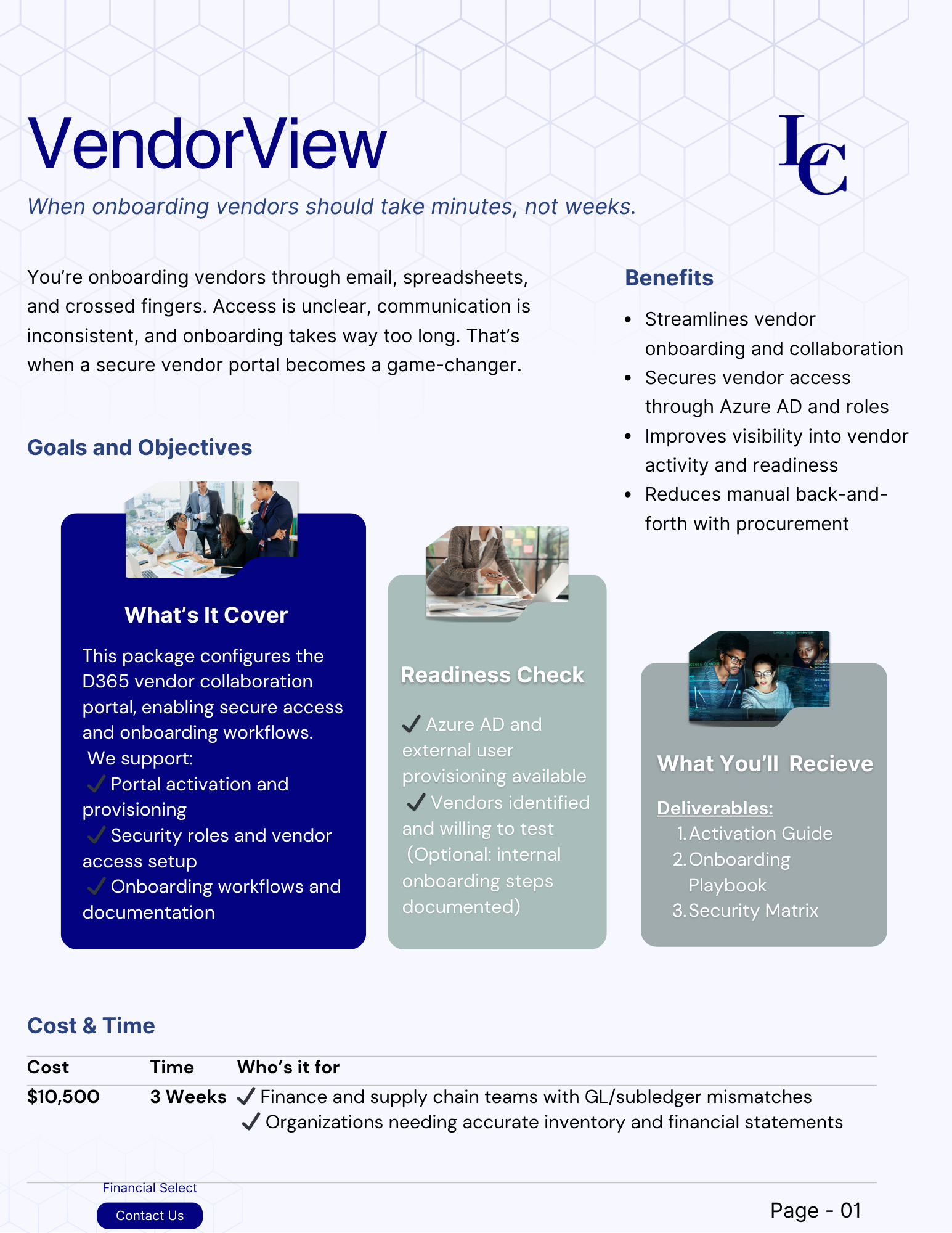


Reviews and corrects ledger-to-subledger alignment in D365 by fixing posting configurations, inventory profiles, reconciliation logic, GL mapping, and critical reporting procedures.
Making the Switch From Microsoft Dynamics GP
Posted on: January 2, 2025 | By: Page Wildridge | Microsoft Dynamics GP
Microsoft has officially announced the end of their support for Microsoft Dynamics GP, their longest standing enterprise resource planning solution. This update officially marks a shift in Microsoft’s focus to their cloud-based ERP software, Dynamics BC. If your business is a current user of GP, you have some decisions to make about the future of your ERP. In this blog, we want to highlight these options and how they can help your business.

Staying With GP
If you are a current user of GP, Microsoft will continue to support your business until April 30, 2031. Although this date seems very far off, it is important that your business start considering what remaining on GP means for you. Sticking with GP has a few risks in the long term. To start, the GP that you are using today will not be improving into the future. Microsoft will no longer release bug fixes or new functionalities. Additionally, when Microsoft’s support ends, you will need to look towards third party partners to help you with any errors you run into with the software. The longer you stay with GP, the higher these associated costs will be.
Changing to Another Microsoft Product
If you are deciding whether to make the switch to a cloud-based ERP, you have several options. To start with, you can transition to Microsoft’s cloud option, Microsoft Dynamics Business Central. Switching to Business Central allows you to access your ERP from any device that has internet access. Additionally, Business Central is constantly improving, with frequent new releases and bug fixes. It is worth noting that this transition is not a quick switch, but there is a mitigation tool to make the process easier.
Switching to Acumatica
You can also transition to a different cloud-based solution, like Acumatica. Acumatica is well known for its dynamic pricing model that charges based on your company’s needs and scales as your business grows. To help make your decision, check out Logan Consulting’s video on Business Central versus Acumatica here. In the video, we cover the similarities between the two ERPs, along with the major differences. This includes different functionalities, approaches, and CRM offerings.
Next Steps
If you are struggling with making a decision, or you want to hear more about your ERP options, contact us today to speak to an expert. As proud Microsoft and Acumatica partners, Logan Consulting is committed to ensuring you find the perfect fit for your business.