



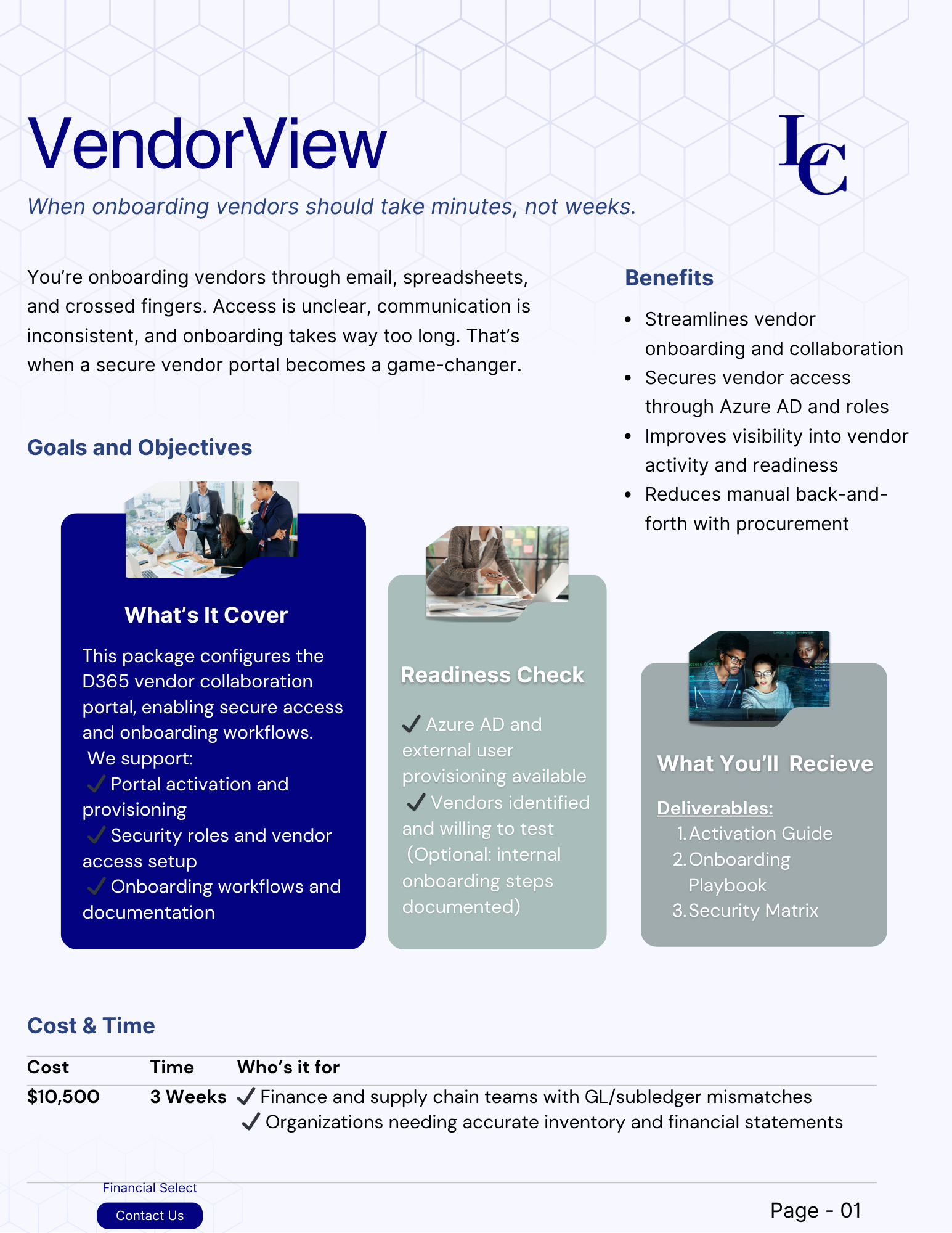


Reviews and corrects ledger-to-subledger alignment in D365 by fixing posting configurations, inventory profiles, reconciliation logic, GL mapping, and critical reporting procedures.
How Are You Planning on Valuing Your Inventory in GP?
Posted on: September 22, 2024 | By: Page Wildridge | Microsoft Dynamics GP
Inventory valuation is a critical decision that shapes your business’s financial health, and choosing the right approach has long-lasting implications for your profitability and reporting accuracy. Dynamics GP offers flexibility in this area, allowing businesses to leverage either Actual Costing or Standard Costing methods. But how do you decide which method is right for your business? In this blog, we will cover the differences between the two options and why it matters.

Differences Between Actual and Standard Costs
Considerations of your material, labor, and overhead costs are essential in determining the true cost of manufacturing a product. But how should a business value its inventory? Should it be based on the actual costs incurred at the time of production, or a standardized cost set beforehand?
Actual Costing: Reflecting Real-Time Expenses
When you choose Actual Costing, you are tracking the real, up-to-the-minute costs of producing inventory. This means that if the cost of plastic increases or labor expenses fluctuate, the actual cost method captures these changes.
For businesses that operate in industries with fluctuating raw material costs or unpredictable labor markets, Actual Costing provides an accurate and dynamic representation of inventory value. However, this real-time accuracy comes with potential challenges: costs may vary widely from one production cycle to the next, leading to more volatile financial statements.
Standard Costing: A Predictable Benchmark
On the other hand, Standard Costing offers a different approach. Businesses set a predetermined cost for producing a product, based on estimates of material, labor, and overhead expenses. For example, you might estimate that manufacturing a water bottle should cost $3. Throughout the production process, you compare actual costs to this standard to identify variances.
Standard Costing allows businesses to maintain stable, predictable financial reports and simplifies budgeting processes. It’s particularly useful for businesses that prioritize efficiency and consistency over real-time cost tracking.
Dynamics GP: Flexibility to Choose Either Method
With Dynamics GP, your business has the flexibility to implement either Actual or Standard Costing—or even both, depending on your operational needs. This versatility enables you to tailor your inventory valuation method to your specific business model, industry requirements, and financial goals.
Which Method Is Right for You?
Deciding between Actual and Standard Costing depends on the nature of your business, your market, and how you manage production. If you’re in an industry where material or labor costs fluctuate regularly, Actual Costing might be a better fit, as it provides an accurate reflection of current conditions. If your business values consistency and prefers to establish fixed costs for ease of budgeting, Standard Costing is likely the better choice.
Next Steps
By choosing the right method in Dynamics GP, you can gain greater control over your financial reporting, improve profitability analysis, and ensure that your business remains flexible in an ever-changing market. GP’s robust capabilities allow you to manage your costs in a way that aligns with your business goals. Logan Consulting is a proud Microsoft partner. Contact us today to speak to an expert about your ERP.