



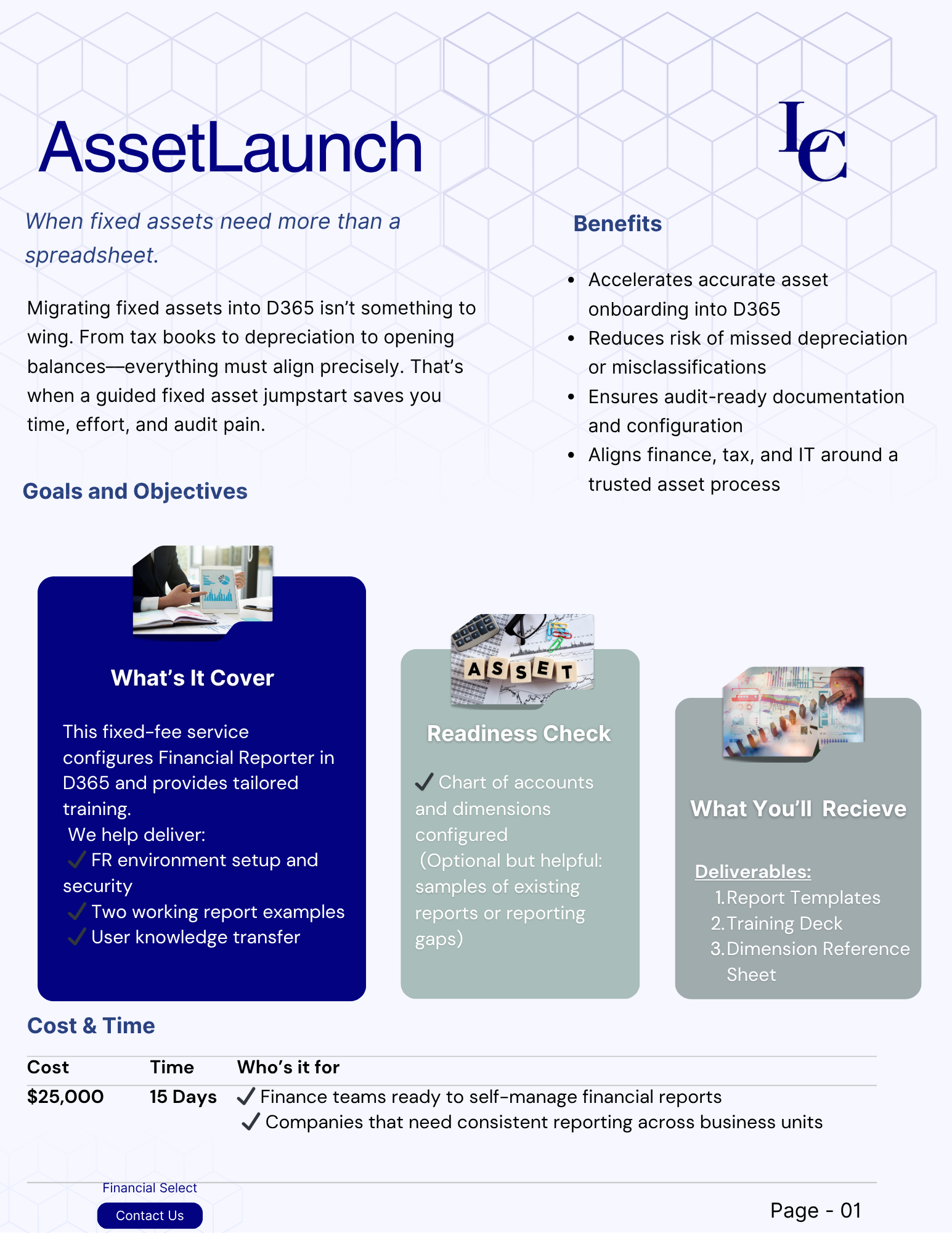
Reviews and corrects ledger-to-subledger alignment in D365 by fixing posting configurations, inventory profiles, reconciliation logic, GL mapping, and critical reporting procedures.
Getting Your ERP House in Order: How to Prepare QAD for Champions AI
Posted on: December 12, 2025 | By: Blake Moore | Uncategorized, QAD Practice News, QAD Manufacturing
Getting Your ERP House in Order: How to Prepare QAD for Champions AI
(For all QAD versions: Adaptive ERP, EE, SE, eB2)
With the introduction of Champions AI, QAD has signaled a major shift toward AI-enabled decision-making and faster operational execution across manufacturing. The opportunity is real—but it is not automatic, and it is not evenly accessible across all environments. The message coming out of the Champions conference was clear: your ERP must be healthy if you want AI to work for you.
Across every QAD version—Adaptive ERP or legacy—three foundational readiness requirements determine whether Champions AI can deliver meaningful value.
1. Your Business Processes Must Live Inside QAD, Not Around It
AI learns from the transactional “heartbeat” of your operations. If scheduling lives in spreadsheets, if production reporting is delayed, if inventory adjustments happen offline, or if planners make decisions based on email threads, AI has nothing reliable to interpret.
This applies equally to Adaptive customers and those on EE/SE/eB2.
Champion AI depends on complete, timely, and consistent signals inside the system. If the system isn’t used as the system of record for day-to-day operations, AI will simply reflect the noise and gaps.
2. Master Data Must Be Clean, Structured, and Trustworthy
The most widely acknowledged constraint—reinforced at the conference—is master data.
For any QAD environment, the following must be accurate and governed:
- Item masters
- BOMs and routings
- Work centers and calendars
- Supplier and customer records
- Inventory locations
- Planning parameters
AI doesn’t repair data problems. It exposes them faster. If your BOMs don’t reflect reality or your planning factors are outdated, Champions AI will inherit those flaws.
3. Usage Must Be Standardized and Governed Across Functions and Sites
AI assumes patterns. It expects consistency.
If every plant or department has its own approach to order management, production reporting, or MRP execution, AI cannot generate stable recommendations. The divergence found in many long-tenured QAD environments—especially those with site-specific variations—creates friction that AI cannot resolve.
Standardization does not have to be perfect, but it must be intentional.
Where to Start: A Practical Path Forward
Regardless of your version:
- Assess process discipline: where work is happening outside QAD.
- Clean and govern master data: start with items/BOMs/routings.
- Retire spreadsheets that duplicate or replace ERP functions.
- Standardize core workflows across plants and business units.
- Plan modernization if you’re on older QAD versions—AI can supplement, but it won’t overcome architecture limitations.
The Bottom Line
Manufacturers who capture the early benefits of Champions AI will be those who act before the market shifts—not after. If your organization wants an objective assessment of its QAD process discipline, data readiness, or AI enablement posture, our team can help you quantify gaps, prioritize actions, and build a practical roadmap. We’re advising QAD clients across the industry and can help you move with clarity and confidence.

If you are interested in learning more about QAD Champions of Manufacturing or QAD upgrade, contact us here to find out how we can help you grow your business. You can also email us at info@loganconsulting.com or call (312) 345-8817.