

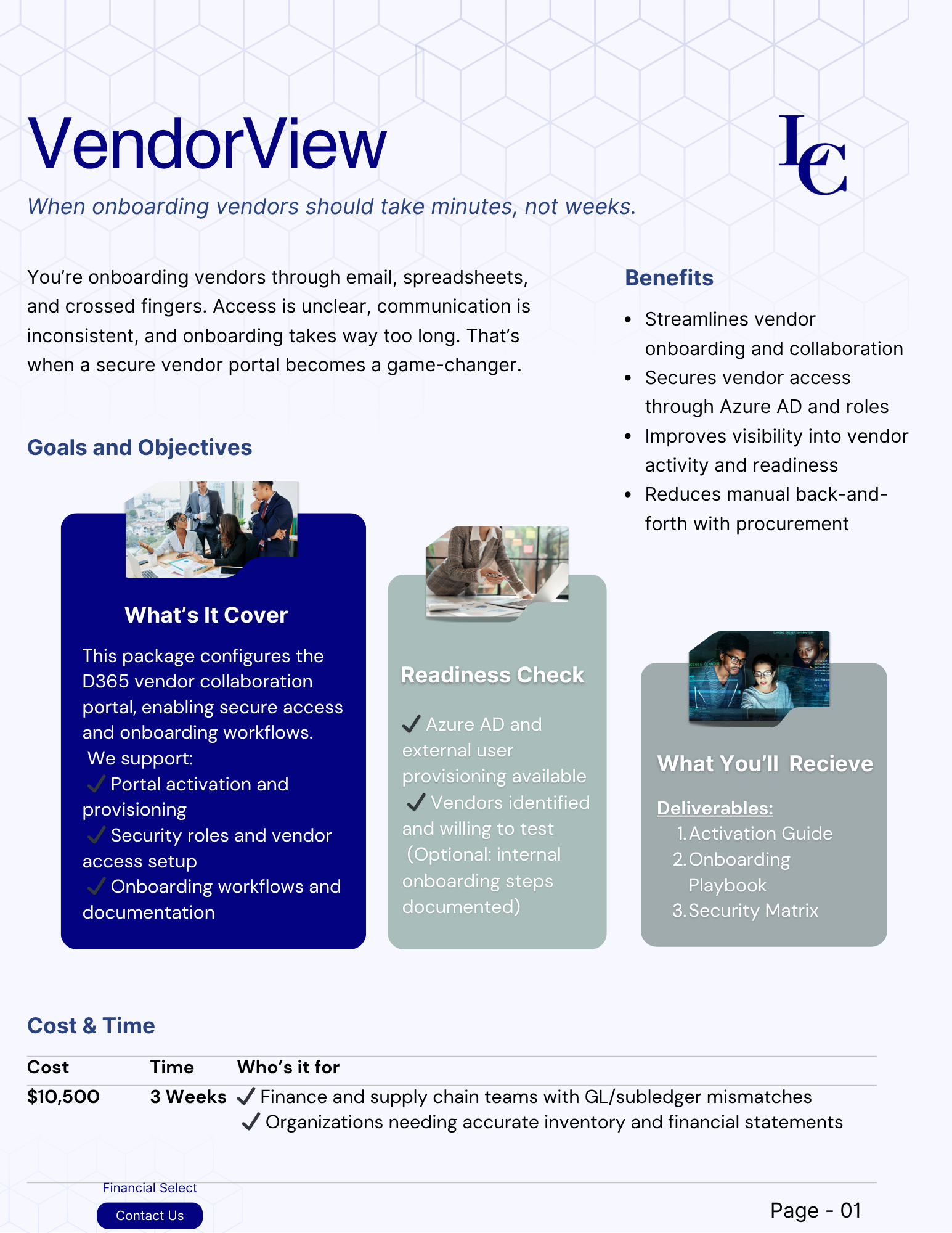


Reviews and corrects ledger-to-subledger alignment in D365 by fixing posting configurations, inventory profiles, reconciliation logic, GL mapping, and critical reporting procedures.
Expense Management: Where Money Either Gets Controlled or Quietly Slips Away
Posted on: March 19, 2026 | By: Ashley Xue | Microsoft Dynamics AX/365
Most organizations don’t realize they have an expense problem until someone asks a simple question:
“Why did we spend that?”
And the answer is… complicated.
Receipts exist. Reports are submitted. Finance closes the books.
But clarity? That’s usually somewhere between an email thread and a spreadsheet named FINAL_v3_THISONE.xlsx.
Expense management isn’t about tracking receipts. It’s about building a system where spending is visible, intentional, and accountable — before it becomes a problem.

The Real Goal of Expense Management
At its core, every expense process should answer three questions — quickly, confidently, and without investigation:
-
Where is money going?
-
Is it aligned with policy and priorities?
-
What should we do differently next time?
If those answers take more than a few clicks (or worse, a meeting), the process isn’t working — it’s coping.
Where Expense Management Breaks Down
Most expense challenges don’t come from bad intent. They come from inconsistent execution.
Common patterns include:
Manual Tracking Everywhere
Spreadsheets, email approvals, screenshots of receipts — all technically “tracking,” none of it reliable.
Policies That Exist — But Don’t Live in the Process
Everyone knows the rules. They just aren’t enforced consistently.
Delayed Visibility
By the time finance sees the expense, the decision has already been made — and paid for.
Too Much Data, Not Enough Clarity
You can export everything. You just can’t easily explain it.
Logan reality check:
If expense management relies on people remembering the right thing to do every time, it’s not a system — it’s a hope strategy.
What Good Expense Management Actually Looks Like
The difference isn’t more tracking. It’s better structure.
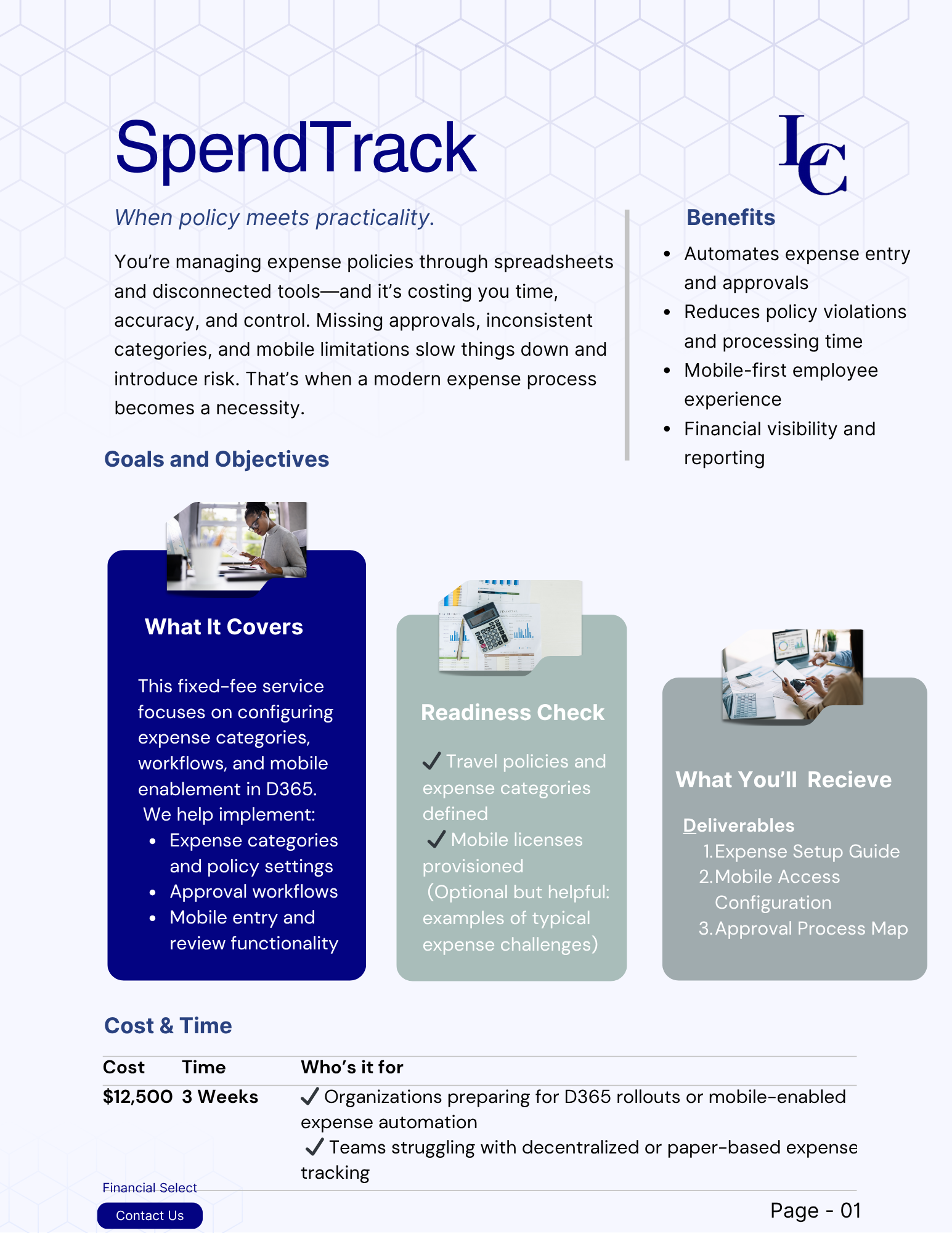
Modern expense management — especially within platforms like Dynamics 365 Finance and integrated tools — is designed to:
-
Capture expenses at the point of activity, not after the fact
-
Enforce policy through workflows, not reminders
-
Connect expenses directly to projects, cost centers, or departments
-
Provide real-time visibility into spend — not just month-end summaries
When done right, expenses don’t need to be “cleaned up.” They’re already aligned.
Technology Helps — But Only If It’s Used Correctly
Let’s be honest: most companies already have tools. The issue is how they’re used.
The right setup enables:
-
Mobile capture
Snap a receipt once. Don’t think about it again. -
Automated approvals
Route expenses based on rules (amount, category, role) so nothing sits in limbo. -
Integrated data flow
Expenses connect directly to finance, payroll, and reporting — no duplicate entry, no mismatched numbers. -
Policy enforcement at entry
If something doesn’t meet policy, it’s flagged immediately — not discovered weeks later.
Technology doesn’t fix bad processes. It just scales them faster.
But when the process is right, technology removes friction — and friction is where errors love to live.
The Hidden Connection: Expenses and Decision-Making
Expense management isn’t just about control. It’s about better decisions.
When expenses are structured and consistent:
-
Finance trusts the numbers
-
Leaders see trends earlier
-
Teams understand spending expectations
-
Forecasting becomes grounded in reality
When they’re not:
-
Reporting becomes reactive
-
Budget conversations get defensive
-
“One-off” expenses become patterns
-
No one fully trusts what they’re looking at
A Practical Starting Point (Logan-Style)
If you want quick improvement without overhauling everything:
-
Define clear policies
What’s allowed, what requires approval, and what doesn’t belong. -
Capture everything in one system
Not email + Excel + “we’ll figure it out later.” -
Automate approvals and routing
Remove bottlenecks and inconsistency. -
Tag expenses with business context
Department, project, cost center — this is where insight comes from. -
Review trends regularly
Not just totals — patterns.
Because expense management isn’t about catching mistakes.
It’s about preventing them from becoming patterns.
Final Thought
Expense management is often treated like an administrative task.
It isn’t.
It’s one of the clearest reflections of how an organization actually operates.
When expenses are structured, governed, and visible:
-
Spending becomes predictable
-
Planning becomes easier
-
Finance shifts from chasing receipts to guiding decisions
Because in the end:
Tracking expenses is helpful.
Understanding them is what creates control.