

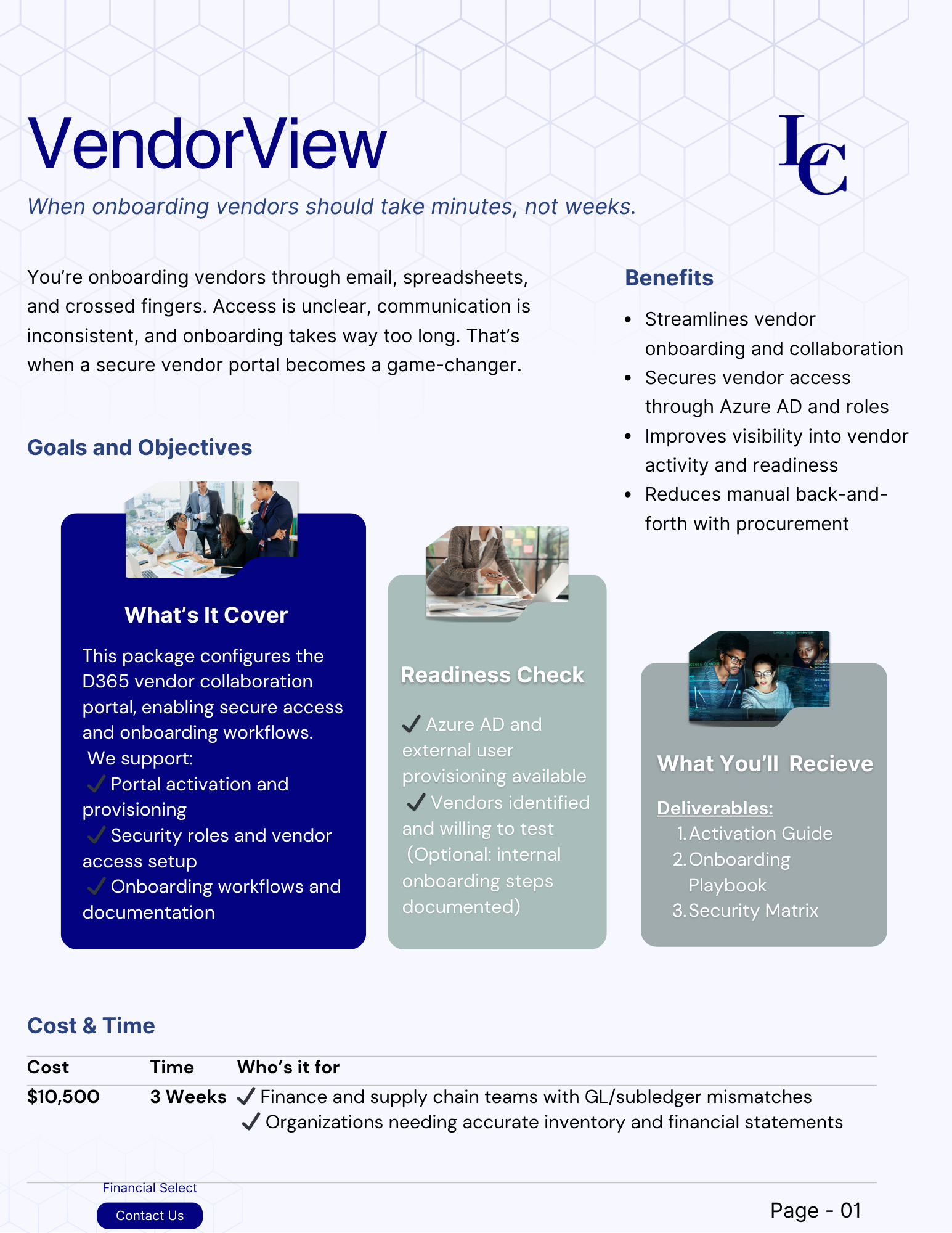


Reviews and corrects ledger-to-subledger alignment in D365 by fixing posting configurations, inventory profiles, reconciliation logic, GL mapping, and critical reporting procedures.
EDI Solution Providers: What to Look For
Posted on: August 29, 2024 | By: Meaghan Andrews | QAD Business Process
Part of selecting any EDI solution is identifying your options. Will you take it upon yourself to set up your own hardware and software to communicate and route EDI transactions with your trading partners or will you outsource it to someone else with the means and resources already available? In this blog, we explore various things to consider when comparing EDI Solution Providers to figure out the best one.
Most businesses today are moving to cloud-based solutions via various top EDI service providers in the industry. The benefits are the following:
- No hardware to maintain
- No software to maintain
- EDI onboarding is provided
- 24/7 support assistance
- Managed services team
If this sounds enticing to you then here are a few things to consider when choosing the right EDI solution and provider.
- Industry Leaders – To ensure that your solution is going to keep up with the growth potential of your business and industry its important to ensure that the company you are looking to partner with has a strong presence in the industry with vast experience.
- Certifications – Knowing that your solution partner is certified by specific ERP, CRM, TMS, WMS, as well as other solutions can bring some comfort to knowing others have enough trust in their EDI solution to certify them as an integration partner.
- Support Rating – Do some research, and see what others are saying. Whether it’s reviews of the provider on web forums or even asking them to speak to current clients to get a feel for how they operate and perform. Any provider looking to win your business is going to be happy to provide some references.
- Costs – There are a handful of different costs that come with partnering with an EDI solution provider…
- Annual/Monthly Costs – License/Subscription, VAN Mailbox, Trading Partner Maintenance
- Transactional Costs – VAN Mailbox fees usually in a KC (kilo char rate of some sort)
- One Time Costs – Installation/Setup fees – can add up based on add-on features, initial implementation costDon’t be afraid to inquire about service options and their cost as well as if and how do they pro-rate costs based on integration start/end dates.
- Solution – Understanding the toolset and what it has to offer as well as where it is headed is something to consider. Knowing the company’s product lifecycle could be helpful to know what the future direction is of the current solution. It would be terrible to buy into a solution that is on its way out.
- Architecture – A good solution is going to be built on a solid foundation and provide ease of use with efficient and effective tools.
- Integration – What are the different ways the solution can integrate with other packages? What are the other packages it has integrated with? Make sure the solution can integrate with the required systems your organization used today plus is flexible to easily connect to others.
- Reporting – Quality reporting can be very beneficial in capturing key EDI KPI’s to help guide your organizations growth and direction as you look to improve and continue building efficient solutions with your trading partners. Clear concise data at your fingertips out of box with the ability to build custom reports is key.
- Automation – Efficient EDI solutions must contain automation to ensure timely movement of inbound and outbound transactions. Does the toolset provide its own automation scheduler, or does it lean on OS tools or a combination of both? Ensure that the flexibility to automate can meet the demands of your business processes.
- Notifications – Automation is great in that it adds a level of ease to transacting larger volumes of documents till you meet failures. Knowing what your failures are and to be able to respond quickly is key to keeping your business moving. Notifications that are concise with key information delivered among various technologies, email, text, screen, etc. can be critical to keeping your system running with no interruptions.
- Upgrade Path – Knowing what your service provider’s upgrade path is, can bring some comfort to knowing the system is actively being kept up to date with the latest enhancements. Understanding when and how these are applied can also allow you to understand the overall impact to your organization.
- Disaster Recovery Plan – A solution is only as good when it is up and running. As much as a provider can boast about the quality of their service and/or product, disasters occur, and outages are caused. Knowing what your solution providers recovery plan is can help guide you in knowing if the solution will work to keep your business up and running and what your potential down time might be in regular scenarios. This can help to provide a level of comfort.
- Company Culture – When you select a solution provider to take care of your EDI needs, you’re building an on-going relationship. They become an extension of your company so ensuring their culture aligns with yours allows business to continue to run smoothly as their resources work with yours.
In conclusion, it is recommended that you don’t take this step lightly and you put in the effort to meet with a handful of potential EDI solution providers. Take the time to interview them and let others in the company that will have to interact with them interview them. Don’t be afraid to ask as many questions as you can to bring you comfort with not just the solution but also the organization. Ask for a Demo or multiple demos to dive deeper into the inner workings to truly understand what you are getting.
Next Steps
If you are interested in learning more about EDI Solution Providers, contact us here to find out how we can help you grow your business. You can also email us at info@loganconsulting.com or call (312) 345-8817.