

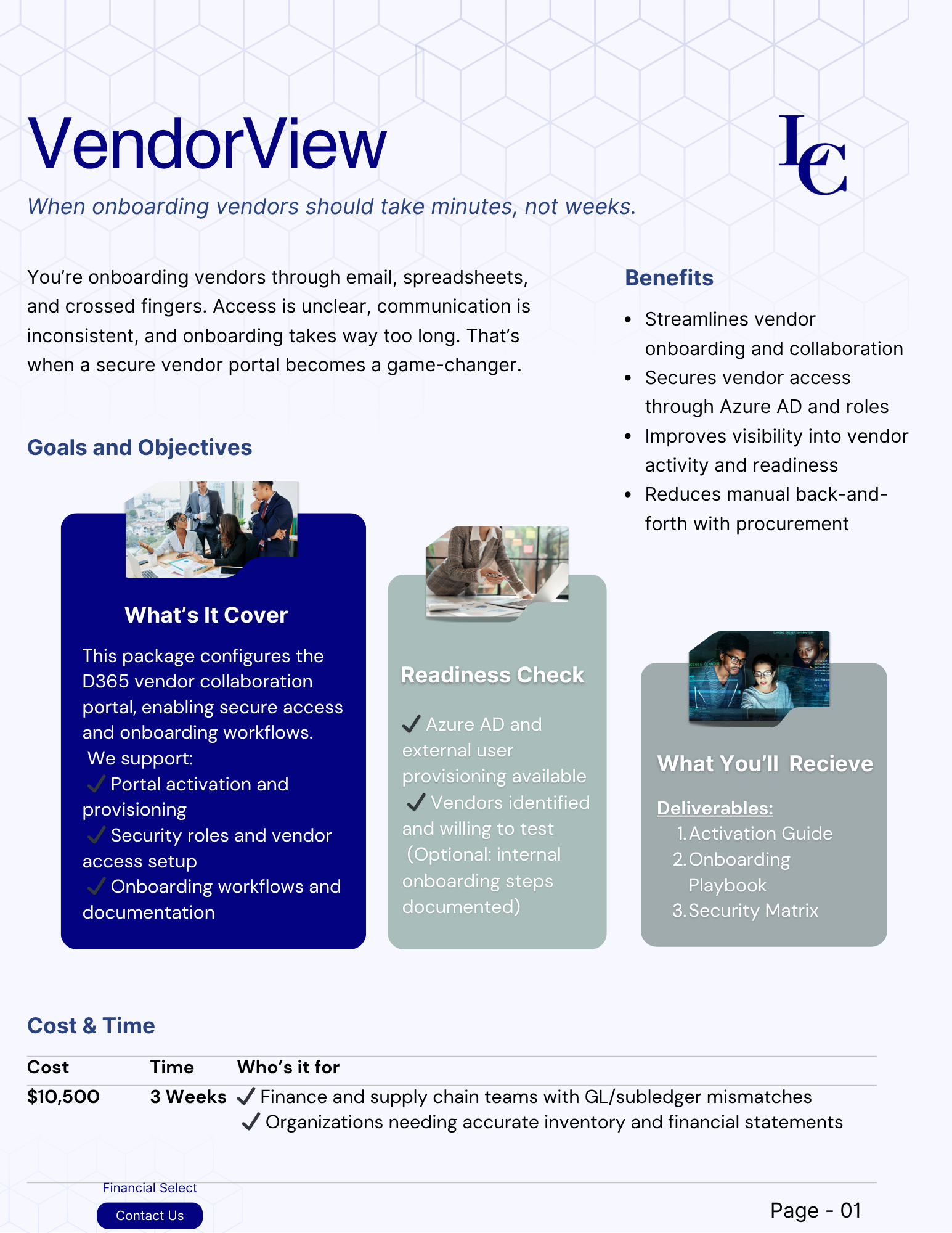


Reviews and corrects ledger-to-subledger alignment in D365 by fixing posting configurations, inventory profiles, reconciliation logic, GL mapping, and critical reporting procedures.
EDI Pitfalls
Posted on: October 13, 2024 | By: Guy Logan | QAD Business Process
The benefits of EDI are easily identifiable with enhanced efficiency, better data integrity and accuracy, as well as cost reduction on removal of excessive manual efforts. What is not discussed are the potential pitfalls or shortcomings of EDI and how to address them. Here we plan to dig in and bring some of that to light.

Cost
Cost of initial investment to setting up an EDI solution can have a significant impact on small to mid-sized businesses. The cost of hardware, software, resources, and training can make it difficult to justify the need.
- Implementation Cost: This is the initial upfront cost to setup and develop the required mapping and routings of all your trading partners transactions in/out of your application. There is typically a significant amount of effort required to coordinate the efforts with yours and your Trading Partners VAN for connectivity. Some may choose to go direct to keep that cost down, but the effort is still there for the initial connection.
- On-Going Maintenance Cost: EDI connectivity as well as hosted services especially in cloud-based solutions that are more common in today’s business world there are on-going costs based on annual subscription cost, transactional traffic, and number of trading partners can be some of the various areas where a company can incur on-going cost
Data
Data is the key component to every EDI solution, after all data is what is transmitted via each EDI document. There are many things that can occur in the transformation and ultimately has the potential of providing inconsistencies through formatting, errors, corruption, or even loss. These key items can greatly impact your business relationships with your trading partners.
- Security: Protecting your company’s, employees, and trading partners sensitive data is also a large concern within the EDI space. This can be of great concern as it relates to financial data especially any EFT transactions that might be transporting between you and your banking institution. Options for encryption and additional system security measure can come into play and often add an additional level of technical experience and cost.
- Integrity: Ensuring the accuracy or the integrity of the data as it transacts from one format to another till it reaches its destination can open a door for inconsistencies and data transformation that could alter the data from its original form. The inconsistent and invalid data can greatly impact your supply chain.
Complexity
Complexity of a solution will impact the setup and development of that solution which can also have a direct impact on the overall cost of the implementation.
- Integration: Integrating across multiple applications can be challenging based on how each application is designed and setup to send/receive EDI data. Whether that integration is API, ODBC, File Integration, etc. The platform that the application is installed on can also provide its own set of challenges especially when you’re working through a file integration solution. This complexity will often require additional resources skilled in the various areas to aid in the overall development of the solution.
- Interoperability: How a trading partner interprets the standards leveraged for EDI today, ANSI X12 or EDIFACT, can be inconsistent across your partners or even your partners separate divisions or businesses. These inconsistencies can lead to additional setups and or even development to accommodate them all individually. This too can require additional resources as well as time and money to implement each scenario.
Flexibility
Flexibility to market changes that impact your trading partners or potential trading partners business demands required being able to quickly move and get you EDI integrations updated or added to your current systems. An overly complex system can add delays to that process and limit your ability to be flexible enough to move to your trading partners demands.
Scalability
Scalability of an EDI solution to the potential future growth of an organization is often overlooked. Typically, the solution is designed and developed to the current needs, demand, and budget. As the business grows, and turnover of resources occurs the solution acquires many Band-Aids along the way and issues start to occur as it was not designed or maintained for scalability.
Interdependence of Trading Partners
This can greatly impact the success of EDI if you do not get the full cooperation of your trading partners. While you can manage and control your EDI solution you cannot control how your trading partners system responds or is managed. Effectively communicating changes to their transaction sets or requirements should come in a timely and documented fashion however it’s not always how they are received, and this can add a level of chaos to the demands on your EDI system. Not to mention any technical issues they might encounter resulting in down time or delay in receiving any transactions at all. In addition to this the financial stability of your trading partner can also impact their ability to keep their system running smoothly and prevent delays as well.
Conclusion to this is the benefits of EDI can far outweigh the pitfalls if evaluated and maintained correctly. The key is to evaluate your needs regarding your businesses must haves versus your nice to haves and keep looking to the future to allow the growth of your organization to be in sight for your EDI plan as well. After a proper evaluation you may even decide now is not the time to incur the costs as the volumes do not account for the benefit you are looking to gain and plan to revisit the discussion in the future.
Next Step
If you are interested in learning more about EDI Solution Providers, contact us here to find out how we can help you grow your business. You can also email us at info@loganconsulting.com or call (312) 345-8817.