








Reviews and corrects ledger-to-subledger alignment in D365 by fixing posting configurations, inventory profiles, reconciliation logic, GL mapping, and critical reporting procedures.
EDI Integration Types
Posted on: February 13, 2025 | By: Alexa Leitner | Uncategorized, EDI
While EDI is a standardized solution for data movement to and from business partners, there are different methods to integrating the solution into the back-end application (ERP, TMS, WMS, etc).
Integration allows businesses to replace tediously sending paper documents and manual data entry that often requires additional resources to keep up with the growing demands between businesses.
Integration allows for a cost reduction by reducing the number of resources required to perform simple tasks and allowing automation of these tasks to improve overall efficiency within current business processes.
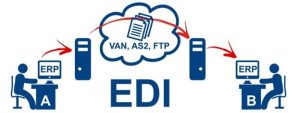
EDI Integration Types:
Direct EDI Integration – Direct is specifically “end to end” with your business partner. Often this is set up with an SFTP, OFTP, or AS2 connection and is used to share files that meet EDI protocols and standards. This can become complex over time but can typically provide a more inexpensive means of transmitting EDI.
Indirect EDI Integration – Indirect works through a VAN or third-party broker to share files that also meet EDI protocols and standards as well as other formats. This can be a much more simplistic approach and can provide peace of mind to know the connection between business partners is being managed by a team of experts. This approach can be more costly however as it typically requires setup fees, transactional fees, and maintenance fees that grow as your business needs grow.
Hybrid EDI Integration – This approach combines both direct and indirect to manage EDI business partners and can provide for the most flexibility in integration. For non-EDI business partners this solution can also include integration methods via Email, PDFs, Excel, flat files, etc for those without EDI capabilities. These solutions typically leverage solutions via web portals, OCR, etc to translate and communicate data between business partners.
Application Integration Types:
File Integration – This method involves routing files to and from your backend application via dedicated files specifications required for the application. These could be flat files, iDocs, XML, Jason, or other file types. Typically, the layout has a predefined layout specific to the given transaction type that integrates into the application directly.
API Integration – API or Application Programming Interfaces is an integration process that involves a set of protocols and standards that allow different software applications to communicate with each other.
Pre-Built Connectors – Connectors are tools EDI service providers have developed to provide direct connections into various ERP systems. This allows for EDI files to flow directly to and from the connection point, then to the ERP and back out again.
In summary, there are many different means of integrating your EDI solution that can fit your technical, functional, and budgetary needs. The benefits of integration are faster transactions, more streamlined processes, improved data accuracy, improved data visualization, and increased business partner satisfaction. These benefits can lead to the ability to be more flexible and scalable in adapting to future growth. This can also provide a more competitive advantage in the marketplace by allowing you to react quickly to your customers’ needs as well. With the more streamlined solutions in place, you can greatly reduce your overall cost as well by removing the need for manual intervention of simple but tedious tasks.
Next Steps
Contact us today at info@loganconsulting.com or call (312) 345-8817 to learn more about how we can support your team’s growth and development.