


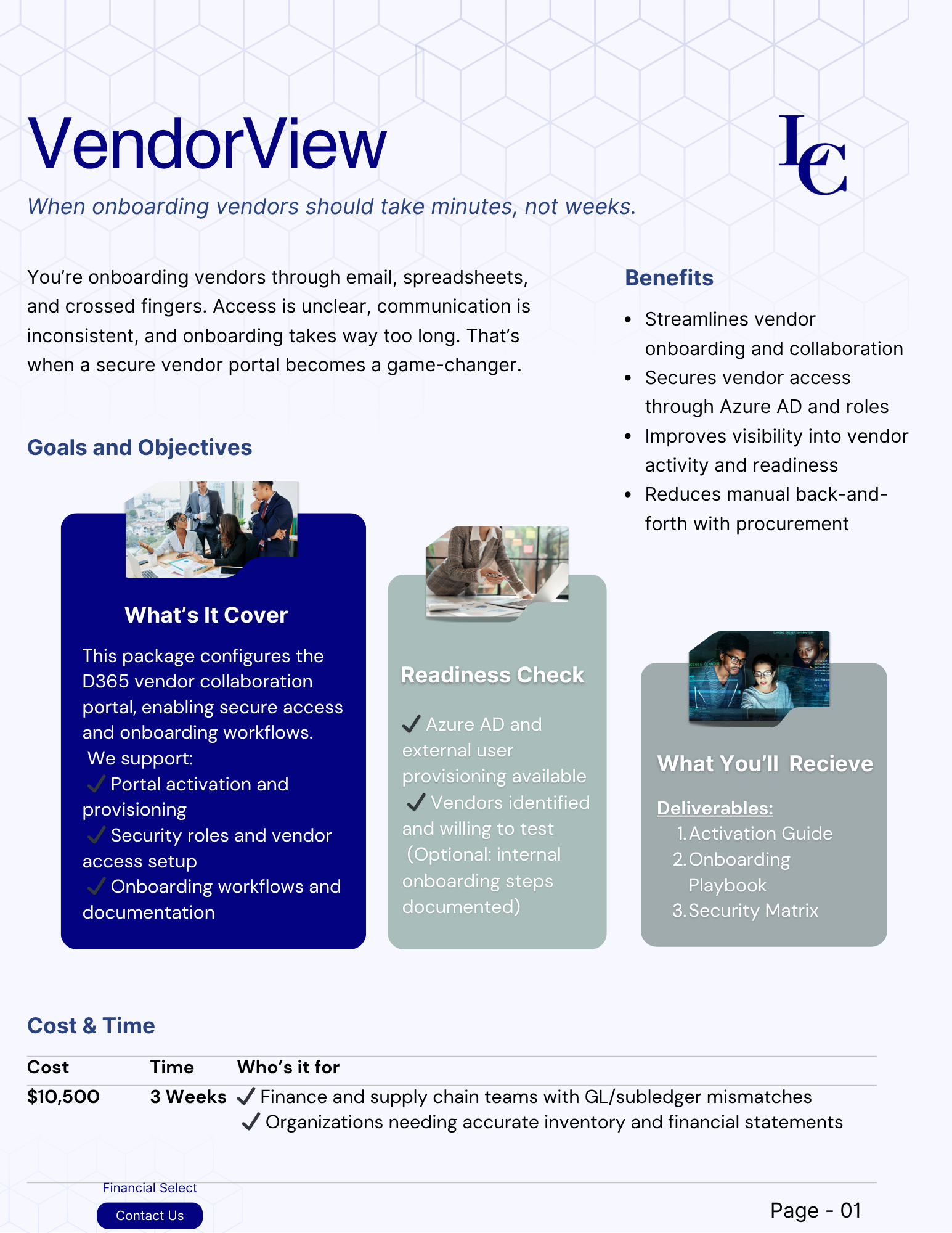


Reviews and corrects ledger-to-subledger alignment in D365 by fixing posting configurations, inventory profiles, reconciliation logic, GL mapping, and critical reporting procedures.
EDI & AI – The Future of EDI and Microsoft Dynamics 365 Supply Chain Management
Posted on: April 21, 2025 | By: Maya VanderWoude | EDI, Microsoft Dynamics AX/365, Microsoft Dynamics Manufacturing
As businesses embrace digital transformation, Microsoft Dynamics 365 Supply Chain Management (D365) has become a go-to platform for streamlining enterprise processes. One of the most impactful enhancements to D365 is the integration of Electronic Data Interchange (EDI) with Artificial Intelligence (AI). This powerful combination enables organizations to automate document exchange and supercharge their ERP operations with smart analytics and decision-making.
Let’s explore the key benefits and challenges of integrating AI-powered EDI within D365.

Pros of AI-Enhanced EDI in D365
- Seamless Document Automation
With EDI in D365, businesses can electronically exchange standard documents such as invoices, sales orders, and shipment notifications. When layered with AI, this process becomes intelligent—automatically validating formats, detecting discrepancies, and eliminating manual corrections.
- Real-Time Exception Handling
D365 users often face EDI exceptions due to data mismatches or missing fields. AI algorithms can proactively identify and suggest resolutions to these exceptions based on historical data. This reduces delays and boosts operational continuity across finance and supply chain modules.
- Smarter Supply Chain Forecasting
AI models within D365 can analyze EDI transaction patterns to predict trends such as demand spikes, supplier delays, or inventory shortages. This allows for smarter procurement decisions and optimized inventory planning, directly from your ERP dashboard.
- Improved Vendor and Customer Collaboration
Using AI-powered EDI workflows, vendors and customers connected to D365 can receive predictive alerts and updates in real-time. This enhances communication, reduces order cycle times, and builds stronger partnerships.
- Operational Cost Reduction
By eliminating manual data entry and accelerating transaction processing, AI-enhanced EDI reduces operational costs and frees up finance and operations teams to focus on strategic tasks. D365’s automation framework supports these efficiencies natively.
Cons and Considerations
- Initial Setup Complexity
Setting up EDI integrations in D365 —especially with AI—can be complex. It often requires coordination between IT, ERP consultants, and external EDI providers. Custom connectors or middleware solutions (e.g., Logic Apps, Azure Integration Services) may also be needed.
- Higher Upfront Investment
Licensing, custom development, and data modeling for AI features can significantly increase initial costs. Organizations must evaluate ROI and plan their digital transformation budgets accordingly.
- Data Quality Dependency
AI in D365 depends heavily on the quality of incoming and historical EDI data. Poor data hygiene can lead to inaccurate insights, flawed automation, and misleading forecasts.
- Security and Compliance Risks
As EDI and AI touch financial, supply chain, and customer data, ensuring compliance with regulations (like GDPR or SOX) is critical. AI models must be monitored for data privacy, bias, and auditability within the D365 ecosystem.
- Change Management
Adopting AI-enhanced EDI may require a cultural shift and upskilling. End users need to trust the AI recommendations embedded in D365 and understand how to interpret them correctly.
Final Thoughts
Integrating AI with EDI in Microsoft Dynamics 365 Supply Chain Management offers transformative benefits—from smarter forecasting and automation to improved business partner collaboration. While implementation requires careful planning, the long-term payoff in agility, accuracy, and cost savings is substantial. Organizations leveraging D365 should consider AI-powered EDI not just as a tool, but as a strategic enabler for intelligent operations.
Next Steps
For assistance in helping your business determine the best EDI solution to integrate with your D365 ecosystem contact us here to learn how we can help to assess your situation and guide you through a selection process. You can also email us at EDIInfo@loganconsulting.com or call (312) 345-8817.
Related Posts
-
AI That Actually Works: Where Copilot Fits Inside Dynamics 365 Operations
Posted on: April 13, 2026
AI in enterprise software has developed a familiar stage routine. The demo is slick. The summary sounds brilliant. The assistant...
-
DynamicsCon 2026 Logan Consulting Speakers and Sessions
Posted on: April 8, 2026
Logan Consulting is proud to have several team members presenting at DynamicsCon in Las Vegas. These speakers bring deep expertise...