

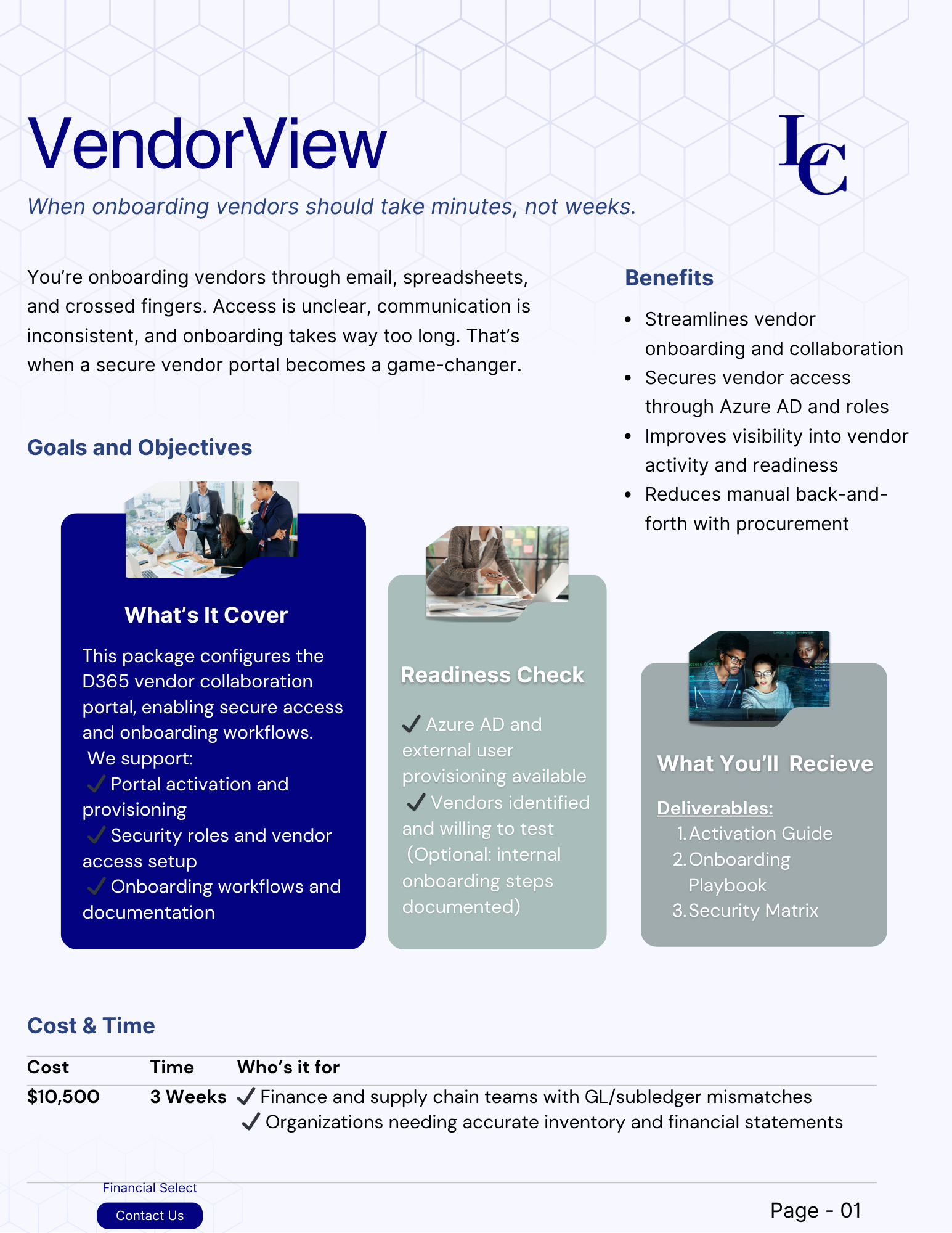


Reviews and corrects ledger-to-subledger alignment in D365 by fixing posting configurations, inventory profiles, reconciliation logic, GL mapping, and critical reporting procedures.
Driving Efficiency in the Electronics Industry with Demand Driven MRP in Microsoft Dynamics 365 Supply Chain Management
Posted on: March 10, 2025 | By: Maya VanderWoude | Microsoft Dynamics AX/365, Microsoft Dynamics Manufacturing
In today’s electronics industry, navigating volatile demand, complex global supply chains, and increasingly compressed product lifecycles demands more than just conventional planning tools. Manufacturers and distributors must evolve their supply chain strategies to remain agile, profitable, and resilient.
Microsoft Dynamics 365 Supply Chain Management offers a planning innovation that meets this challenge head-on: demand driven material requirements planning (DDMRP). This modern evolution of MRP combines decades of proven planning methodology with the flexibility and speed required for today’s electronics companies.

What is Demand Driven MRP?
Demand driven MRP (DDMRP) is a multi-echelon planning method that promotes and protects material flow by introducing strategically placed stock buffers. Unlike traditional MRP, which often relies on static forecasts and fixed lead times, DDMRP dynamically responds to real-time demand signals. It leverages concepts from lean manufacturing, theory of constraints, Six Sigma, and distribution requirements planning to streamline inventory and prioritize flow.
DDMRP focuses on decoupling inventory from the forecast and placing buffers where variability exists. In Microsoft Dynamics 365 Supply Chain Management, this feature is natively available—enabling electronics businesses to modernize their planning approach without the need for third-party integrations.
Why Demand Driven MRP Matters for the Electronics Industry
The electronics industry is uniquely positioned to benefit from DDMRP, given its constant product innovation, short product lifecycles, and high sensitivity to market demand. Traditional planning often leads to excess inventory of outdated components or shortages during peak demand cycles—both of which are costly.
By implementing DDMRP in Microsoft Dynamics 365 Supply Chain Management (, electronics companies can:
- Improve customer service levels, consistently achieving 97–100% on-time fulfillment even in high-variability environments
- Reduce lead times, compressing planning and response cycles by up to 80% in many cases
- Optimize inventory, unlocking 30–45% reductions without sacrificing availability
- Lower operational costs by eliminating the noise of false demand signals and reducing the need for expedited shipping, partial orders, and manual intervention
- Boost planner productivity through visual prioritization and real-time planning adjustments
Building a Predictive and Resilient Electronics Supply Chain
Electronics companies are under pressure to deliver products faster and with greater precision. Global disruptions and component shortages have highlighted the importance of building a resilient supply chain—one that can predict, adapt, and respond in near real time.
DDMRP in Microsoft Dynamics 365 Supply Chain Management supports this need by:
- Establishing decoupling points to protect against forecast volatility and supply delays
- Prioritizing orders based on urgency through priority-based planning, a capability enhanced by the Planning Optimization Add-in
- Offloading complex planning workloads to the cloud for faster performance, enabling multiple planning runs per day
These innovations are not theoretical. Electronics companies using Microsoft Dynamics 365 can now run their master planning in minutes instead of hours, respond to changes in demand throughout the day, and make more informed decisions—all without interrupting other system operations.
A Natural Evolution from Demand Planning
For a deeper dive into how AI enhances demand planning strategies within Microsoft Dynamics 365 Supply Chain Management, check out our previous blog on AI-Driven Precision in Demand Planning. Where demand planning focuses on accurate forecasting, DDMRP focuses on ensuring materials flow effectively through the supply chain, even as forecasts fluctuate.
By leveraging both tools together, electronics manufacturers gain a comprehensive planning framework: one that forecasts demand with precision and then orchestrates material movement to support it.
A Scalable Solution for Growth
No matter the type of electronics you specialize in, the ability to scale your planning approach as you grow is essential. DDMRP in Microsoft Dynamics 365 Supply Chain Management offers:
- Configurable planning buffers tailored to specific products, regions, or supply chain stages
- Microservices-based architecture, such as the Planning Optimization Add-in, to enhance performance and adaptability
- Integration with cloud-native tools, like Azure Data Explorer, for deeper analytics and improved visibility
As part of the broader composable business applications approach, you can implement DDMRP independently and expand to other capabilities—such as AI-powered demand forecasting, production scheduling, and supplier collaboration—as your needs evolve.
Conclusion
The electronics industry requires precise, agile, and resilient planning tools. With demand driven MRP in Microsoft Dynamics 365 Supply Chain Management, businesses can move beyond static planning models and embrace a flow-based, responsive approach.
This solution empowers planners to stay ahead of demand volatility, minimize waste, and fulfill more customer orders on time—while gaining the flexibility to scale across products and regions.
Interested in learning how DDMRP can support your electronics supply chain? Contact Logan Consulting today for an expert consultation.
Next Steps:
If you want to learn more about Demand Driven Requirements Planning in Microsoft Dynamics 365 Supply Chain Management, contact us here to learn how we can help you grow your business. You can also email us at info@loganconsulting.com or call (312) 345-8817.
Related Posts
-
AI That Actually Works: Where Copilot Fits Inside Dynamics 365 Operations
Posted on: April 13, 2026
AI in enterprise software has developed a familiar stage routine. The demo is slick. The summary sounds brilliant. The assistant...
-
DynamicsCon 2026 Logan Consulting Speakers and Sessions
Posted on: April 8, 2026
Logan Consulting is proud to have several team members presenting at DynamicsCon in Las Vegas. These speakers bring deep expertise...