



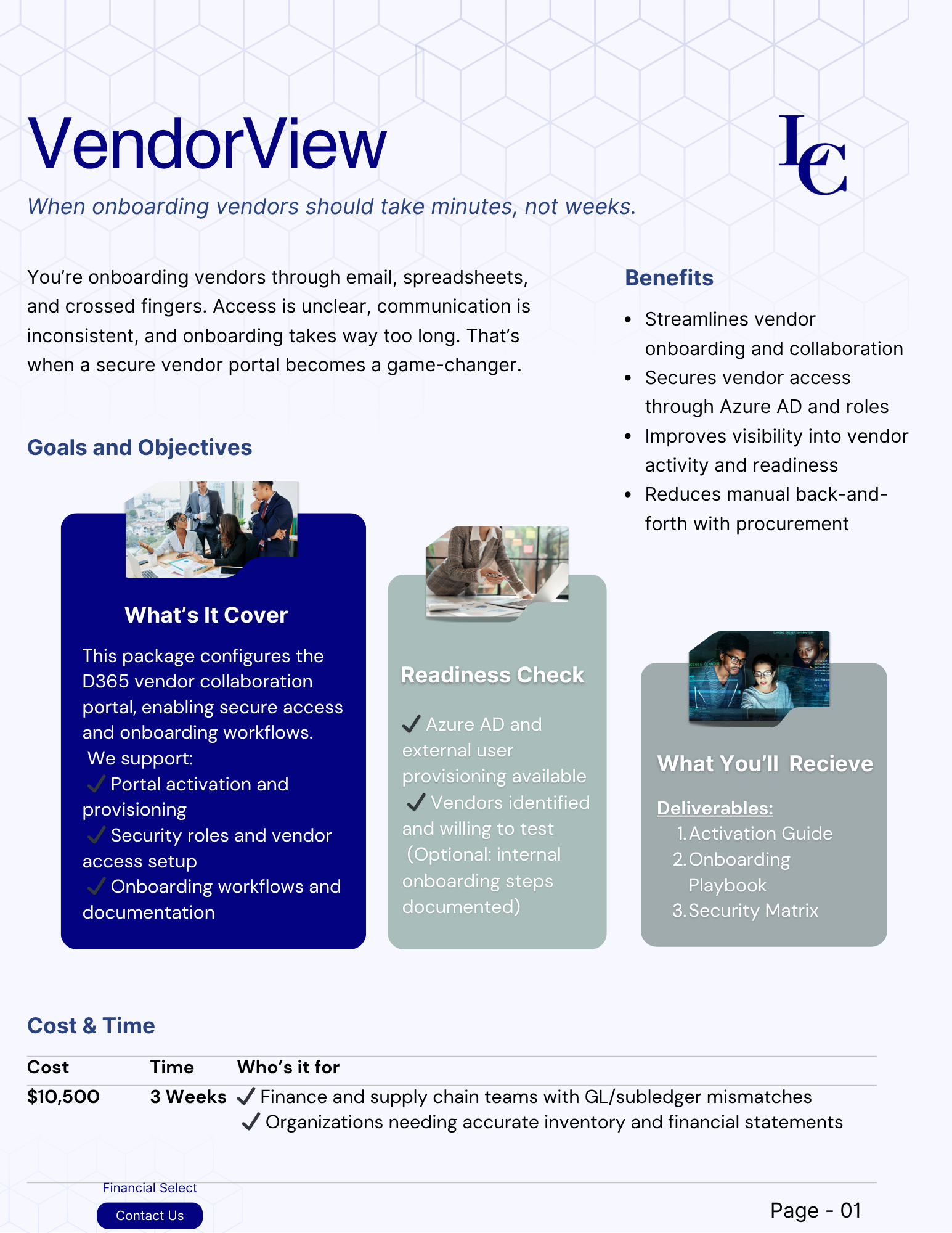


Reviews and corrects ledger-to-subledger alignment in D365 by fixing posting configurations, inventory profiles, reconciliation logic, GL mapping, and critical reporting procedures.
Creating Your First Power BI Report in Microsoft Dynamics Business Central
Posted on: October 3, 2024 | By: Page Wildridge | Microsoft Dynamics Business Central
Microsoft Power BI is an important tool for developing your data into interactive reports and dashboards. Power BI can be integrated directly with Business Central to create reports without leaving your ERP. In this blog, we will cover the two simple steps for generating a Power BI report by integrating your software with Business Central.

1. Building Power BI Reports to Display Dynamics 365 Business Central Data
To start building your reports, you’ll need to add Business Central as a data source in Power BI. Start by navigating to “Get Data” in the Power BI Desktop application. Next, choose “Online Services,” and select Business Central and “Connect.” Now, you will be able to utilize the information from within your ERP application to generate reports and display your data. To find out more, click here to read on Microsoft Learn.
2. Creating a Report For a List Page
After completing the steps from our first paragraph, you can now create reports from your data. First, set the report filter by navigating to “filters,” and choosing the primary key field for your list. Next, drag this field to the filters pane and drop it in the “Filters on all pages” box.

Set the Filter type to Basic filtering, and start designing your report layout. You can customize the report size and color by choosing the paint roller icon.
Next Steps
Logan Consulting is a proud Microsoft partner. We are dedicated to ensuring that our clients get the most out of their ERPs. Contact us today to learn more about Business Central and Power BI.