

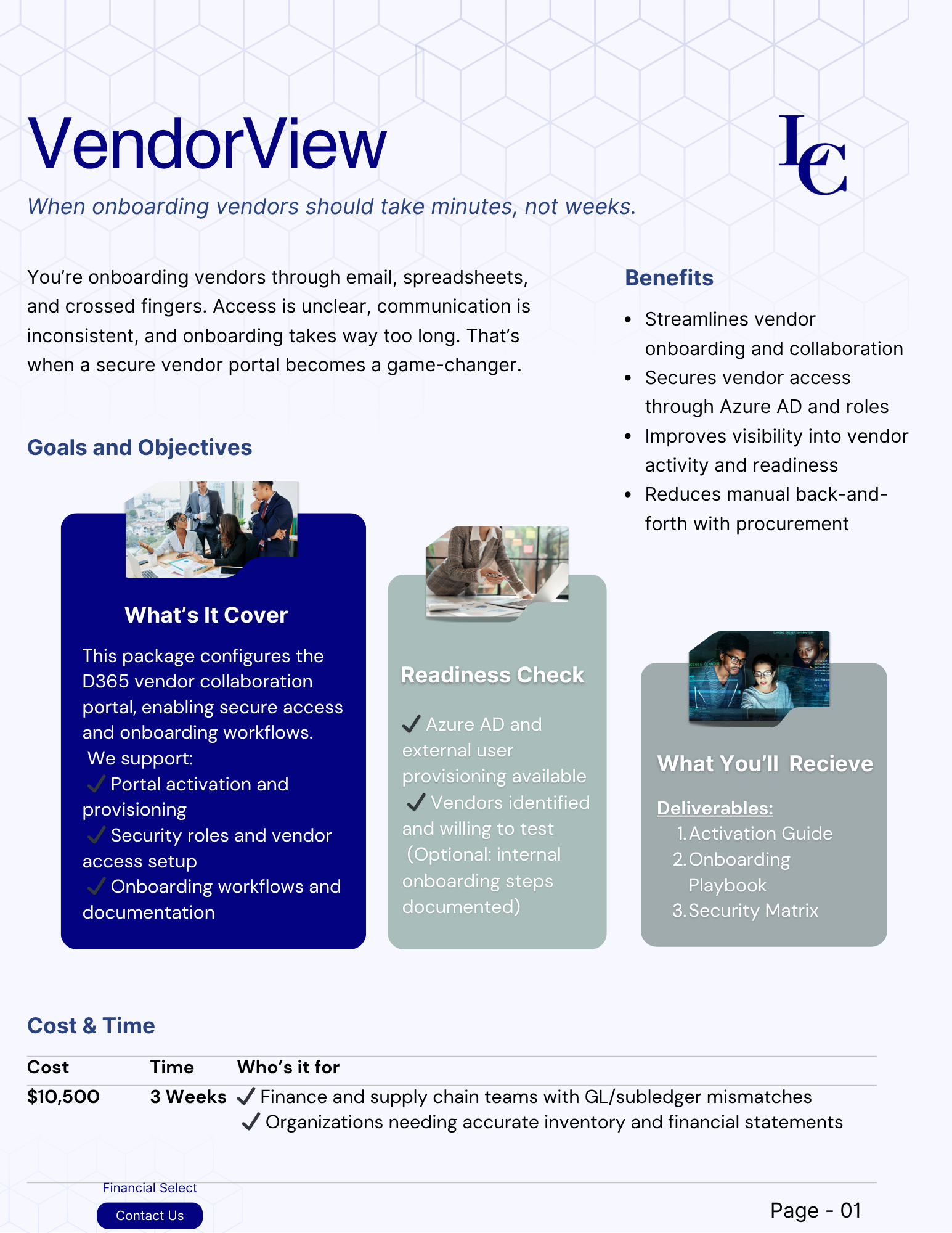


Reviews and corrects ledger-to-subledger alignment in D365 by fixing posting configurations, inventory profiles, reconciliation logic, GL mapping, and critical reporting procedures.
Cold Storage & Warehouse Controls in Microsoft D365 Supply Chain Management for Food Processors
Posted on: November 19, 2025 | By: Maya Ikenberry | Uncategorized, Microsoft Dynamics AX/365
Managing cold storage operations is one of the most challenging aspects of the food and beverage supply chain. From strict regulatory requirements to temperature-sensitive products, food processors must maintain full control of their inventory environment while keeping costs in check. Microsoft Dynamics 365 Supply Chain Management (D365 SCM) provides an integrated, data-driven approach that helps organizations streamline cold storage workflows, strengthen compliance, and ensure product quality from dock to door.

Why Cold Storage Requires Specialized Controls
Food processors often handle products with short shelf lives, strict temperature thresholds, and detailed traceability requirements. Even small operational gaps, like a missed temperature check or an inefficient warehouse layout, can translate into significant losses.
Cold storage environments demand:
-
Precise lot tracking and traceability
-
Accurate expiration and best-before management
-
Temperature monitoring and environmental controls
-
Efficient pick-paths to minimize time spent outside controlled areas
-
Regulatory compliance documentation
D365 SCM provides the tools to manage these needs within a single, end-to-end platform.
1. Advanced Warehouse Management for Temperature-Controlled Zones
D365 SCM allows food processors to define and manage temperature-controlled zones, such as frozen, refrigerated, and ambient storage. These zones can be configured within warehouse layouts to drive automated, rules-based processes.
With zone-specific controls, organizations can:
-
Assign items to their required temperature areas automatically
-
Optimize inventory placement based on FIFO/FEFO rules
-
Reduce handling time for sensitive products
-
Ensure pickers follow compliance-aligned processes during fulfillment
This ensures that products remain in the correct environment throughout their lifecycle.
2. FEFO Picking and Expiration Tracking
Expiration management is non-negotiable in food processing. D365 SCM supports First-Expired, First-Out (FEFO) allocation, ensuring products nearing expiration are prioritized in outbound orders.
Key capabilities include:
-
Automated FEFO replenishment and picking
-
Expiration date controls at the batch/lot level
-
Real-time visibility into aging inventory
-
Alerts for products nearing expiration windows
Food processors can reduce waste, improve product rotation, and guarantee freshness for customers.
3. End-to-End Traceability for Compliance
Regulations such as FSMA require processors to maintain granular traceability across production, storage, and distribution. In D365, every item, lot, and movement is recorded, enabling effortless forward and backward traceability.
Capabilities include:
-
Lot tracking at every stage
-
Electronic documentation for audits
-
Serialization for regulated product lines
-
Full visibility into product genealogy
D365 equips processors to quickly respond to recalls, investigations, or customer inquiries with confidence and accuracy.
4. Integrated Quality Management
Quality checks are essential for preventing unsafe products from moving through cold storage operations. D365’s Quality Management module allows organizations to automate tests and quarantine processes based on predefined triggers.
Common scenarios include:
-
Temperature deviations triggering automatic quality orders
-
Mandatory checks during receiving or before outbound shipments
-
Inspection results determining whether inventory is released or quarantined
These workflows ensure only compliant, safe products move through the supply chain.
5. IoT & Sensor Integration for Real-Time Temperature Monitoring
Using IoT integration, D365 SCM can connect to temperature sensors, scales, or environmental monitoring devices to capture real-time data. This creates a live feedback loop between warehouse activity and environmental conditions.
Benefits include:
-
Automatic alerts for temperature excursions
-
Logging data for regulatory compliance
-
Integrating sensor information into inventory decisions
-
Monitoring refrigeration performance to reduce spoilage risk
This transforms cold storage management from reactive to proactive.
6. Enhanced Efficiency Through Task Management and Mobile Devices
Cold environments demand speed and precision. D365’s mobile-enabled task management keeps workers efficient and compliant.
Using D365’s Warehouse Management mobile app, workers can:
-
Receive guided instructions for optimized pick paths
-
Scan barcodes to validate lot and location accuracy
-
Reduce time spent searching or handling products
-
Minimize exposure of temperature-sensitive items
Mobile tools help maintain safety, accuracy, and efficiency, critical in freezing or refrigerated areas.
Conclusion: A Modern Platform for a Complex Environment
Cold storage is a mission-critical function for food processors, and Microsoft Dynamics 365 Supply Chain Management provides the integrated controls necessary to protect product quality, maintain compliance, and optimize operations. From advanced warehouse zoning and FEFO picking to IoT temperature monitoring and real-time traceability, D365 SCM supports a modern, efficient, and resilient cold chain.
For food processors looking to strengthen supply chain performance, D365 offers a unified platform that not only keeps products safe, but keeps operations agile.
Next steps: