
Healthcare organizations face unique financial management challenges, from managing tight budgets and complex funding streams to maintaining compliance with strict regulations. To achieve financial transparency and operational efficiency, leaders in the healthcare sector are turning to Microsoft Dynamics 365 Finance.
D365 Finance provides powerful tools for budget control, grant management, and financial reporting, helping healthcare organizations optimize resources and meet their mission-driven goals.
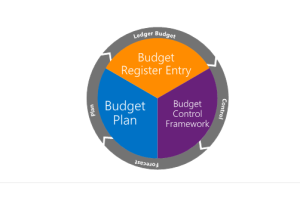
1. Strengthening Budget Control and Oversight
Budget control in healthcare is more than tracking expenses, it’s about ensuring that every dollar aligns with organizational goals and regulatory standards.
With D365 Finance, users can:
-
Establish budget thresholds and approval workflows to prevent overspending.
-
Use real-time budget tracking for each department or program.
-
Automate budget allocation adjustments based on funding changes or new grants.
-
Leverage budget control rules to restrict transactions that exceed approved amounts.
These capabilities ensure that hospitals, clinics, and nonprofit healthcare organizations maintain fiscal discipline while responding quickly to operational needs.
2. Managing Grants and Funding Sources
Many healthcare organizations rely on a combination of government grants, private funding, and donor contributions. D365 Finance streamlines grant tracking by allowing users to:
-
Create fund-specific ledgers and budgets for each grant.
-
Monitor fund utilization to ensure compliance with donor or agency requirements.
-
Automate grant reporting for auditors and funding bodies.
-
Integrate with project accounting to track expenses, deliverables, and timelines.
By centralizing grant data, D365 Finance minimizes manual reconciliation and ensures transparency in how funds are spent.
3. Enhancing Financial Reporting and Compliance
Accurate reporting is critical in the healthcare industry, where organizations must meet stringent regulatory and audit standards. D365 Finance simplifies this process through:
-
Real-time financial dashboards for leadership oversight.
-
Built-in regulatory compliance templates and reporting tools.
-
Audit trails and document management to ensure accountability.
-
Integration with Power BI for advanced analytics and visualizations.
These features empower finance teams to make informed decisions and demonstrate responsible stewardship of funds.
4. Supporting Long-Term Financial Sustainability
Beyond daily operations, healthcare organizations need tools that support strategic planning and growth. With D365 Finance, leaders can forecast revenue, model financial scenarios, and plan for capital investments, all within a unified system.
The result: improved financial agility, stronger governance, and the ability to sustain quality care even amid funding fluctuations.
Final Thoughts
In an environment where accountability and efficiency are paramount, Microsoft Dynamics 365 Finance provides healthcare organizations with the financial clarity and control they need. By unifying budgeting, grant management, and reporting in a single platform, D365 Finance helps healthcare leaders focus less on paperwork and more on what truly matters, delivering exceptional patient care.
Next Steps:


