





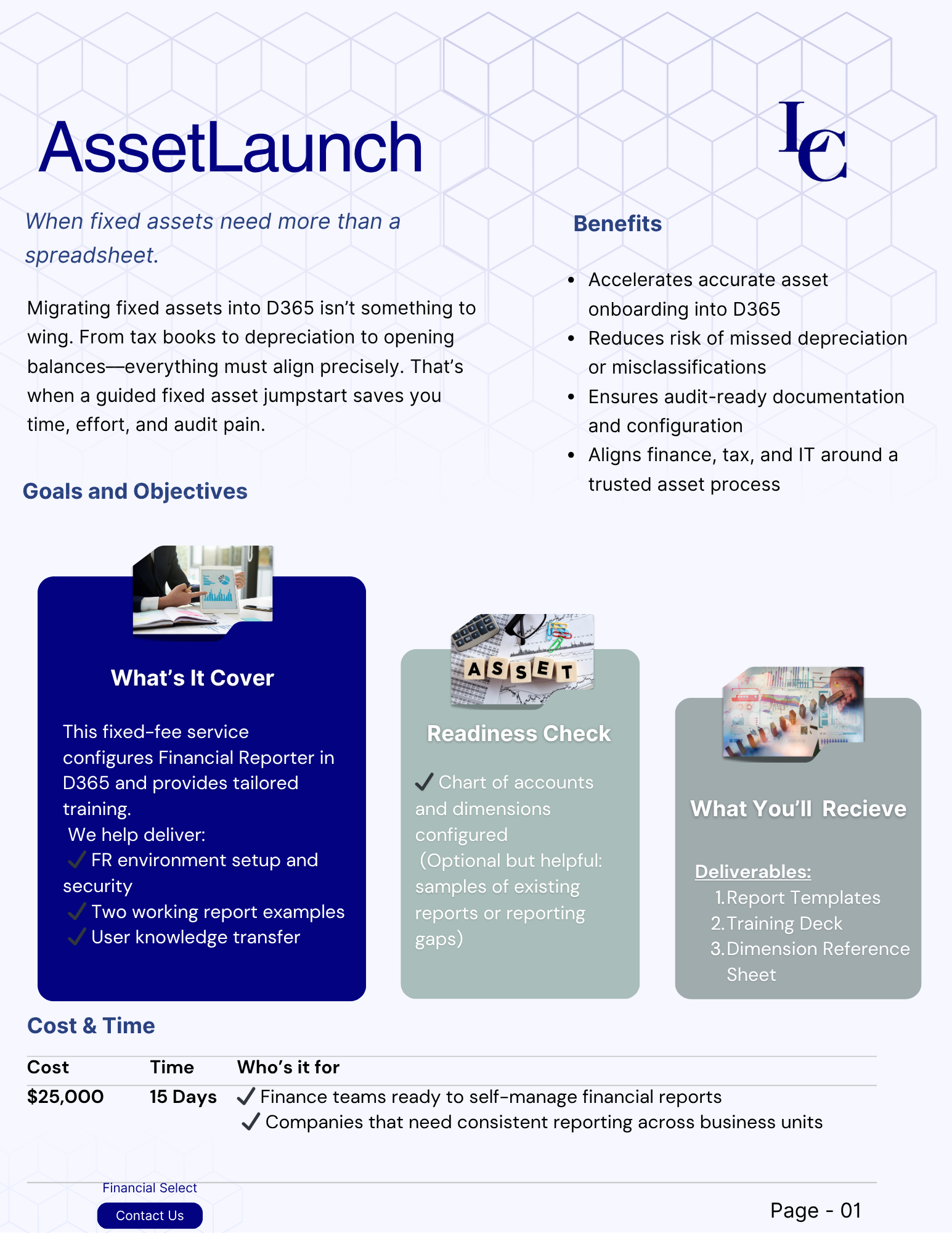
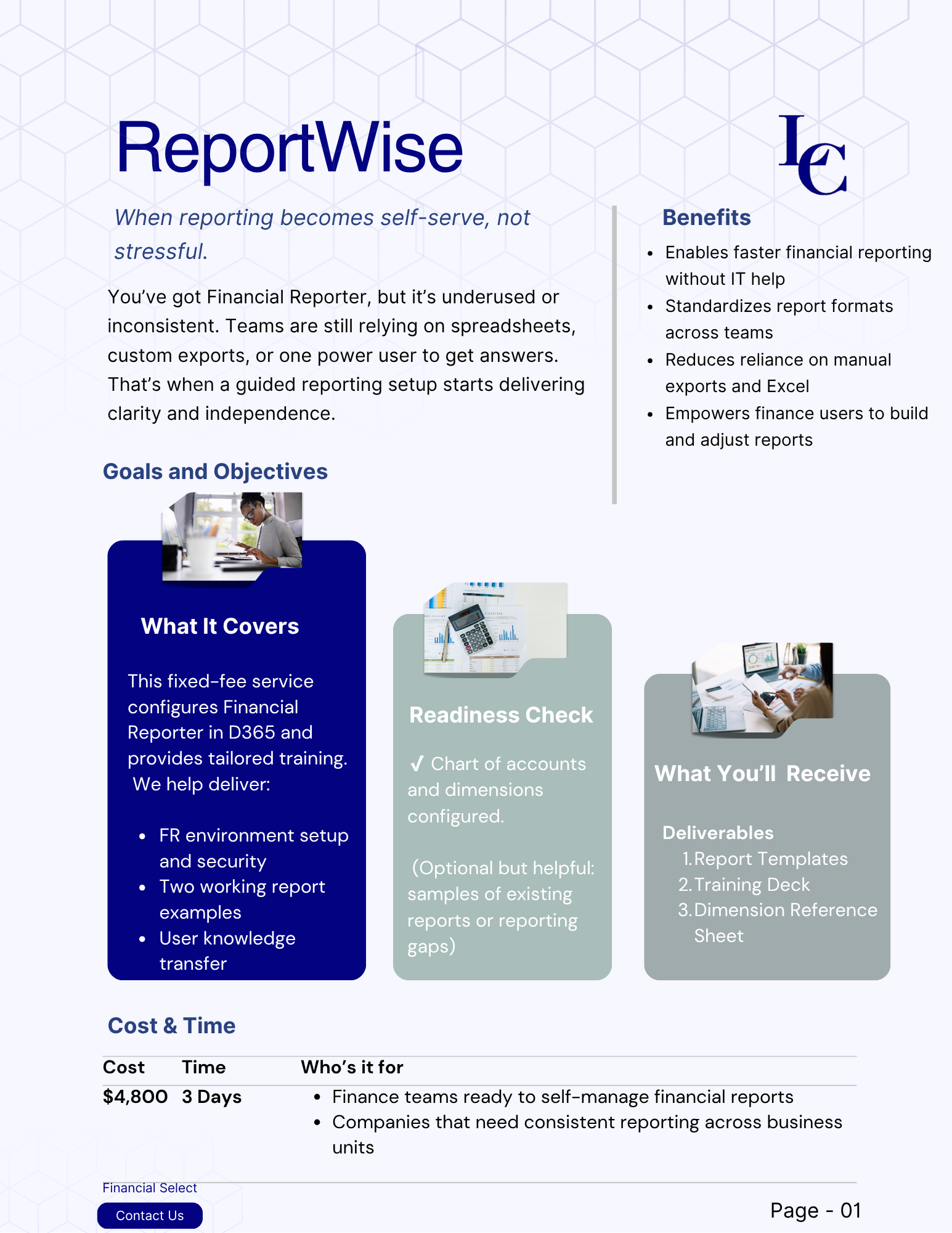
Reviews and corrects ledger-to-subledger alignment in D365 by fixing posting configurations, inventory profiles, reconciliation logic, GL mapping, and critical reporting procedures.
AI That Actually Works: Where Copilot Fits Inside Dynamics 365 Operations
Posted on: April 13, 2026 | By: Ashley Xue | Microsoft Dynamics AX/365
AI in enterprise software has developed a familiar stage routine.
The demo is slick. The summary sounds brilliant. The assistant appears to know everything.
Then Monday arrives.
And the organization discovers something mildly inconvenient: AI does not remove operational friction. It reveals exactly where it has been hiding.
That is why Copilot inside Dynamics 365 is most useful not as a digital mascot for “innovation,” but as a very practical accelerator for people already doing real work. Microsoft itself frames Copilot in finance and operations apps in three forms: sidecar support that sits alongside the application, embedded experiences that surface insight directly in the page, and outside agent-led experiences that can work across apps and tasks. That framing is helpful, because it keeps the conversation grounded. Copilot is not there to replace the ERP. It is there to shorten the distance between signal and action.
AI in ERP is not about automation. It is about timing.
Traditional ERP systems have always been good at recording the past. A transaction is posted, a report is generated, a team member notices something odd, and eventually someone decides what to do about it. Copilot changes that sequence by surfacing context while the work is happening. Microsoft’s own documentation describes features such as workflow history summaries, finance customer summaries, supply-chain AI summaries, and demand-plan analysis that all share the same basic purpose: reduce the time it takes a user to understand what matters on the page in front of them.
Logan POV: most organizations do not lose because the information was unavailable. They lose because the information arrived after the decision window had already packed up and gone home.
Where Copilot actually earns its keep
The most credible AI use cases in Dynamics 365 are not science-fiction scenarios. They are boring, valuable, operationally annoying scenarios—the kind people would happily stop doing manually tomorrow.
Finance: from investigation to explanation
In Dynamics 365 Finance, Copilot is currently strongest where finance users need quick situational understanding, not grand philosophical insight. The Collections coordinator summary generates an overview of overdue invoices, payment history, and remaining credit, and can also draft reminder emails for collections. The Customer page summary surfaces AI-generated summaries based on customer invoices, payments, sales orders, sales agreements, rebates, overdue invoices, delayed order lines, and related data. The Workflow history summary condenses submitter, submission date, current status, approvals, due dates, and comments so approvers do not have to scroll through the historical novel version of the record. That is a meaningful shift: finance stops spending its first ten minutes asking “What changed?” and starts closer to “Why did this change happen?”
Supply chain: exception management, not dashboard tourism
Supply chain teams rarely suffer from a shortage of data. They suffer from a surplus of exceptions. Dynamics 365 Supply Chain Management now includes AI summaries with Copilot on commonly used pages, including product, purchase order, sales order, and vendor pages. Microsoft says those summaries are personalized to the current user and can include details such as purchase-order line counts, item counts in a warehouse, or overdue vendor invoices. Demand planning adds another layer: Analyze demand plans with Copilot can answer predefined questions about shifts, trends, anomalies, and forecast accuracy using natural-language summaries and visuals. In the warehouse, Workload insights with Copilot highlights available work, receiving lines, pick lines, workforce capacity, and pending warehouse work so workers and supervisors can better plan the shift instead of just discovering its problems in real time.
Procurement: where AI meets consequences
Procurement is another place where Copilot starts looking less like “AI theater” and more like useful labor. The Confirmed purchase orders with changes workspace helps purchasers review previously confirmed POs that changed after confirmation and study their downstream impact on demand, including production work, service work orders, and sales orders. On top of that, the Supplier Communications Agent—which Microsoft labels as a production-ready preview—can automate follow-up emails to vendors, classify incoming vendor emails, match them to the correct purchase orders, and summarize requested changes such as quantity changes, date shifts, cancellations, or price updates. That is not automation for automation’s sake. It is a way to stop procurement teams from spending half the day translating vendor email into system action by hand.
The uncomfortable truth: Copilot depends on data discipline
This is the part vendors tend not to put in the headline. Copilot does not invent clean operations. It reads what the system knows.
Microsoft’s documentation repeatedly emphasizes context and security boundaries: AI summaries depend on the current page, the current user, and that user’s permissions. Finance summaries pull from data already in Finance. Demand-plan analysis operates on the demand-planning data model already in the system. That means Copilot inherits both the strengths and the weaknesses of the operational record beneath it. If master data is sloppy, workflow history is bypassed, purchase orders are changed informally, or transactions are posted late, Copilot will not perform a small miracle and correct the business from the side panel. It will simply become faster at describing the mess. That is not a flaw in the model. It is a brutally honest feature of ERP.
The model that actually works
The companies getting value from Copilot are not expecting AI to “run operations.” They are settling into a much more sensible three-layer model:
- ERP captures transactions and enforces controls.
- Copilot interprets patterns, summarizes context, and highlights risk.
- People apply judgment, policy, and business context.
Microsoft’s architecture and capability pages support exactly that view: Copilot can sit beside the application, work inside the page, or power agent-led experiences, but it still operates on top of business logic, data access, and user permissions already defined in the system. In other words, Copilot works best where governance already exists. Good process makes AI feel helpful. Bad process makes it feel overconfident.
Final thought
Copilot does not make Dynamics 365 intelligent by itself. It makes the organization more responsive—assuming the system already reflects how work actually happens.
That is the real dividing line. The companies seeing value are not chasing AI headlines or trying to automate judgment out of existence. They are tightening data discipline, clarifying ownership, and using Copilot to reduce the cognitive drag that used to slow down action. In ERP, competitive advantage rarely comes from knowing more than everyone else. More often, it comes from understanding sooner—and acting before the problem gets promoted from “exception” to “fire drill.”
Next Steps
If you want more information on navigating the changes and impacts of Microsoft Dynamics 365 Supply Chain Management, contact us here. You can also email us at info@loganconsulting.com or call (312) 345-8817.