

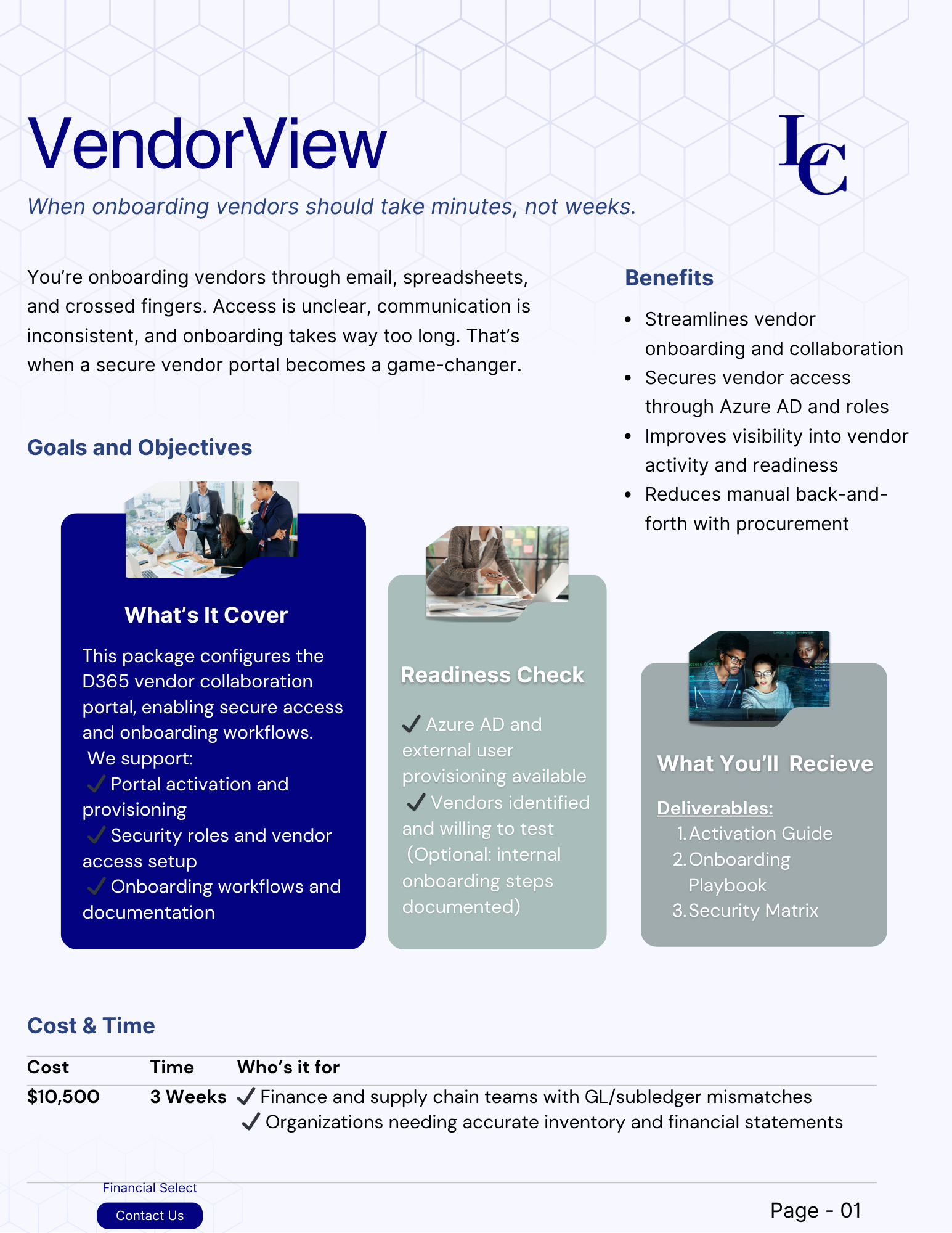


Reviews and corrects ledger-to-subledger alignment in D365 by fixing posting configurations, inventory profiles, reconciliation logic, GL mapping, and critical reporting procedures.
From Manual to Modern: How Microsoft D365 Finance Transforms Energy Accounting Operations
Posted on: October 30, 2025 | By: Maya Ikenberry | Uncategorized, Microsoft Dynamics AX/365
In the energy sector, accounting teams face increasing pressure to manage complex financial processes while ensuring accuracy, transparency, and compliance. From joint venture accounting to asset management and regulatory reporting, traditional manual systems often create bottlenecks that slow down operations and increase the risk of error. That’s where Microsoft Dynamics 365 Finance comes in, bringing automation, integration, and real-time insight to help energy companies modernize financial management from the ground up.

Streamlining Financial Processes Across Operations
Energy organizations deal with high volumes of transactions, multi-entity operations, and complex cost allocations. D365 Finance centralizes these processes in one unified platform, allowing finance teams to automate everything from invoice matching to revenue recognition. By eliminating repetitive manual work, accounting departments can focus on higher-value analysis and decision-making.
Through built-in workflows and AI-driven automation, teams can ensure accuracy and consistency across subsidiaries, projects, and regions, while maintaining visibility into the entire financial picture.
Enhancing Joint Venture and Project Accounting
Joint venture accounting is a cornerstone of the energy industry but can be time-consuming when managed through spreadsheets or legacy systems. D365 Finance simplifies this process by automating partner billing, expense allocation, and revenue distribution. Integration with Dynamics 365 Supply Chain Management ensures that costs tied to materials, equipment, and maintenance automatically flow into financial records, creating a seamless link between field operations and finance.
With real-time data and configurable dashboards, finance leaders can track cost recovery, manage approvals, and make strategic decisions based on current financial performance rather than outdated reports.
Improving Compliance and Audit Readiness
Energy companies operate under strict reporting standards and must comply with regulations that vary by region and asset type. D365 Finance provides built-in audit trails, configurable reporting templates, and role-based access controls to strengthen compliance. Automated workflows help ensure approvals and documentation are completed on time, reducing audit preparation from weeks to days.
Additionally, centralized financial data enables more transparent collaboration between finance, operations, and compliance teams, creating a single source of truth across the enterprise.
Driving Real-Time Decision-Making
The shift from manual to digital finance is not just about efficiency, it’s about insight. D365 Finance integrates with Power BI and other analytics tools to provide real-time reporting on cash flow, asset performance, and profitability. Finance teams can identify trends, flag anomalies, and model future scenarios to support agile decision-making.
For energy organizations navigating volatile markets, that kind of visibility can be the difference between reacting to change and anticipating it.
Conclusion
As the energy industry continues to modernize, financial transformation is no longer optional, it’s essential. Microsoft Dynamics 365 Finance enables energy accounting teams to replace manual processes with automated, intelligent systems that enhance accuracy, transparency, and strategic impact.
By connecting every aspect of financial management, from project accounting to compliance, D365 Finance helps energy companies move confidently into the future, powered by data-driven insight and operational efficiency.
Next steps: