

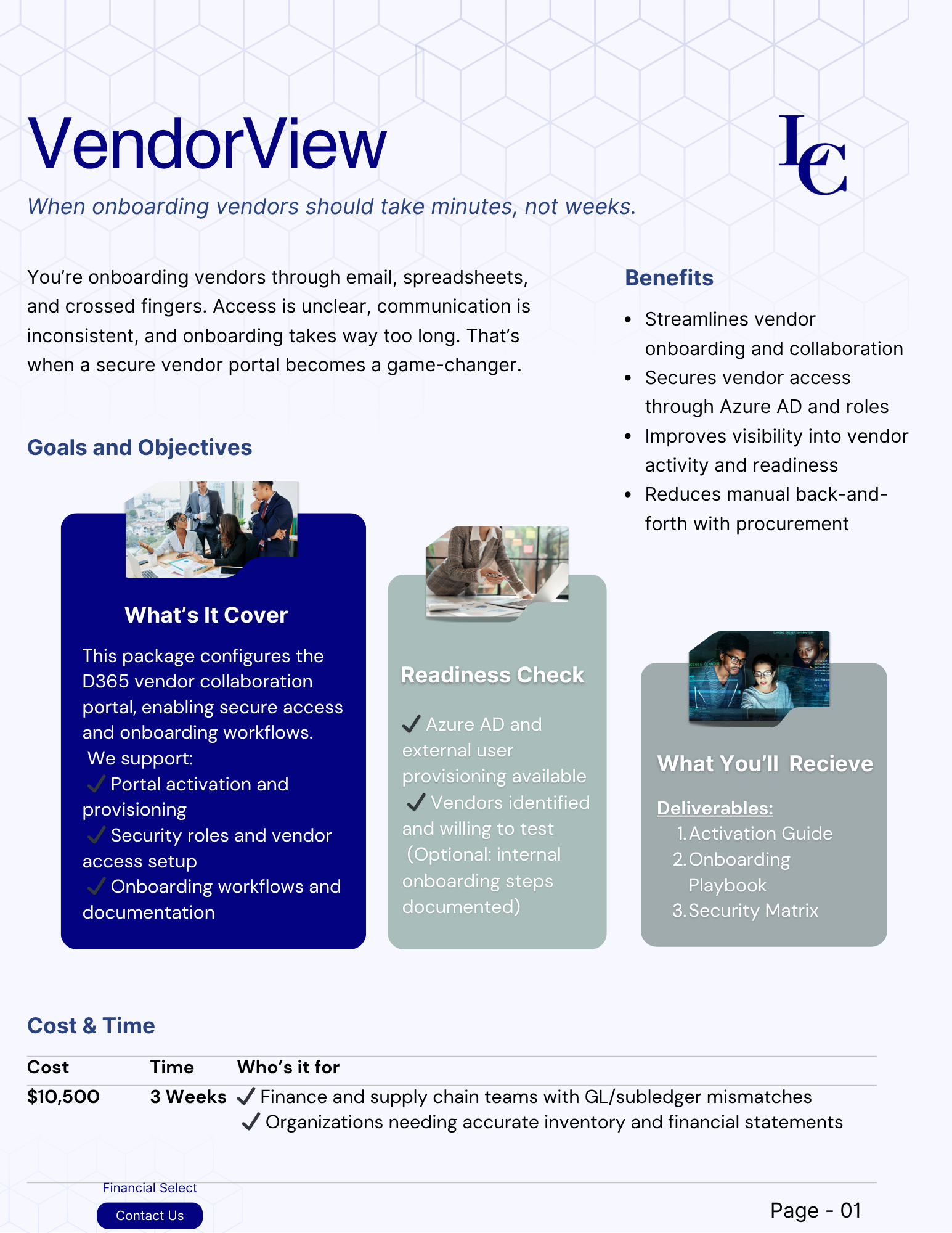


Reviews and corrects ledger-to-subledger alignment in D365 by fixing posting configurations, inventory profiles, reconciliation logic, GL mapping, and critical reporting procedures.
Forecast Data Management in Microsoft Dynamics 365 Supply Chain Management for the Food & Beverage Industry
Posted on: May 5, 2025 | By: Maya VanderWoude | Microsoft Dynamics AX/365, Microsoft Dynamics Manufacturing
In the food and beverage industry, precise demand management is a cornerstone of supply chain success. Whether it’s balancing perishability with production planning, managing seasonal peaks, or navigating volatile demand for packaged goods, manufacturers and distributors must rely on timely, accurate data to drive decisions.
Microsoft Dynamics 365 Supply Chain Management (D365) empowers food and beverage companies with powerful tools for exporting, managing, and integrating forecast data. These capabilities not only streamline collaboration between planning, procurement, and production teams—but also help mitigate waste, optimize shelf life, and improve service levels.
In this blog, we explore how D365 enables forecast data exports, external sharing, and long-term data management strategies tailored to the demands of food and beverage supply chains.

Exporting Forecasts to Dynamics 365 Supply Chain Management
Once a demand forecast has been reviewed and finalized—often in collaboration with sales, marketing, and operations—it needs to be pushed back into D365 to inform procurement and production planning.
Microsoft Dynamics 365 enables this through structured export profiles, which allow planners to send forecast data from demand planning directly into the ERP system, mapped to the correct forecast models and legal entities.
For food and beverage companies operating across multiple product families, brands, or facilities, these export profiles ensure:
-
Forecasts are aligned to the correct distribution center or production site.
-
Time series data is connected to ingredient-level BOMs or finished goods.
-
Planning decisions reflect the latest inputs from forecasting and S&OP meetings.
Once a profile is created by a system admin, it can be scheduled for regular use or run on demand—ensuring fresh forecasts always flow into D365 when needed.
Downloading Forecast Data to CSV for External Analysis
While D365 provides robust internal tools, food and beverage businesses often need to share forecast data with co-manufacturers, suppliers, or partners. Whether it’s raw material vendors, packaging suppliers, or 3PL providers, external stakeholders rely on timely forecast data to ensure availability and responsiveness.
D365 makes this simple with CSV download capabilities that enable users to:
-
Extract time series data by item, region, or brand.
-
Share snapshots with suppliers for collaborative forecasting.
-
Conduct detailed scenario planning in Excel.
Forecasts can be exported in either a grid layout or row-based format—depending on how stakeholders prefer to consume the data. This is especially helpful for small suppliers or legacy systems where integration may not be available.
Creating and Managing Forecast Export Profiles
Each time a new export format is needed—whether it’s for a new brand rollout, SKU category, or external partner—a new export profile can be created using D365’s guided setup wizard.
Profile creation includes:
-
Selecting the export type (D365 vs. CSV).
-
Defining time series to include, and filtering dimensions (e.g., warehouse, product group).
-
Mapping fields between the forecast and target system.
-
Setting the export destination, including forecast model IDs per business unit or SKU family.
-
Scheduling the profile to run weekly, monthly, or ad hoc.
Once in place, profiles reduce manual overhead, enforce consistency, and support planning cadences in fast-moving categories like dairy, beverage, or fresh produce.
Performance Considerations and Data Hygiene
As food and beverage supply chains generate increasingly large volumes of forecast and transaction data, system performance and data storage must be proactively managed. Unused forecast data or outdated staging records can accumulate over time and strain system resources.
To mitigate this, D365 allows users to:
-
Clear staging data from the Forecast Sales Import Entity either manually or on a schedule.
-
Regularly review unused export profiles and delete those no longer in use.
-
Monitor storage capacity to stay within license thresholds—especially critical in regulated environments where audit trails and historical forecasts must be preserved.
These best practices align with broader data hygiene strategies. For a deeper dive into maintaining optimal data health across Microsoft Dynamics 365 environments, refer to our post on Effective Data Maintenance in Microsoft Dynamics 365 Finance.
Meeting Regulatory and Tariff Reporting Requirements
In a global food supply chain, tariffs, trade agreements, and import regulations can significantly impact ingredient sourcing and landed costs. Maintaining accurate, up-to-date demand forecasts—and exporting them to internal and external systems—is essential for:
-
Complying with country-of-origin and trade documentation requirements.
-
Justifying long-term forecasts used in tariff planning and customs valuation.
-
Coordinating with logistics providers and customs brokers to smooth border entry and avoid costly delays.
D365’s data export capabilities help businesses maintain the audit-ready, detail-rich records needed to navigate these requirements with confidence.
Conclusion
Forecast precision is critical in the food and beverage industry, where demand is dynamic and shelf life is limited. Microsoft Dynamics 365 Supply Chain Management enables food and beverage companies to seamlessly export demand data, share insights across the supply chain, and maintain strong data discipline as forecasts evolve.
By embedding export automation and data hygiene into forecasting workflows, organizations can increase agility, reduce waste, and align inventory strategies with real-time demand—all while ensuring their systems remain efficient and audit-compliant.
Next Steps
If you want to learn more about data management in Microsoft Dynamics 365 Supply Chain Management, contact us here to learn how we can help you grow your business. You can also email us at info@loganconsulting.com or call (312) 345-8817.
Related Posts
-
What Your DynamicsCon 2026 Schedule Could Look Like
Posted on: April 15, 2026
DynamicsCon has become one of the most practical, content-driven events in the Microsoft ecosystem. It’s not just about product updates,...
-
AI That Actually Works: Where Copilot Fits Inside Dynamics 365 Operations
Posted on: April 13, 2026
AI in enterprise software has developed a familiar stage routine. The demo is slick. The summary sounds brilliant. The assistant...