



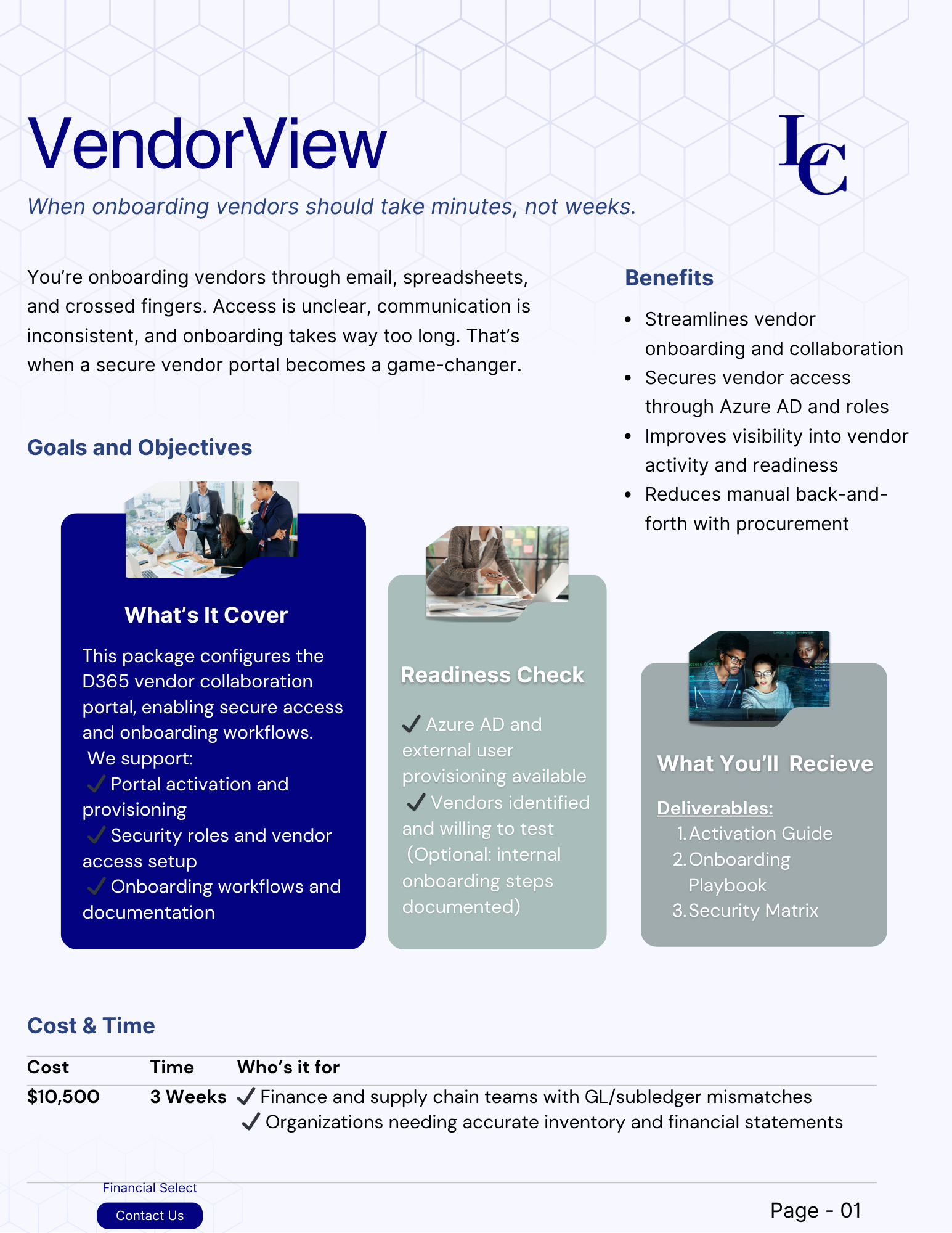


Reviews and corrects ledger-to-subledger alignment in D365 by fixing posting configurations, inventory profiles, reconciliation logic, GL mapping, and critical reporting procedures.
Unlocking the Power of Financial Dimensions in Microsoft Dynamics 365
Posted on: August 29, 2024 | By: Page Wildridge | Microsoft Dynamics Business Central
In the complex world of financial management, organizations need tools that offer both flexibility and precision to track and analyze financial data. Microsoft Dynamics 365 (D365) delivers on this need with its robust Financial Dimensions feature. This tool allows businesses to customize their financial reporting structures, enabling a more granular and insightful analysis of financial data.
In this blog post, we’ll dive into what financial dimensions are, their benefits, and how they can transform your financial management processes in D365.

What Are Financial Dimensions in D365?
Financial dimensions in D365 are customizable data fields that you can use to categorize and analyze financial transactions. These dimensions allow you to slice and dice your financial data in various ways, providing a multi-dimensional view of your business’s financial performance.
For example, you might create financial dimensions to track transactions by department, cost center, project, or geographical location. These dimensions are then applied to financial transactions, allowing for detailed and tailored financial reporting.
The Benefits of Using Financial Dimensions
- Enhanced Financial Reporting: Financial dimensions enable you to generate highly detailed reports that can provide insights into specific areas of your business. Whether you need to analyze expenses by department or track revenue by product line, financial dimensions make it possible.
- Increased Flexibility: Unlike traditional account structures, financial dimensions in D365 are highly customizable. You can create dimensions that align with your business’s unique needs, without the need to overhaul your existing chart of accounts.
- Improved Data Accuracy: By using financial dimensions, you can reduce the likelihood of errors in financial reporting. Dimensions help ensure that transactions are consistently categorized, making it easier to maintain accurate financial records.
- Better Decision-Making: The detailed insights provided by financial dimensions allow business leaders to make more informed decisions. Whether you’re analyzing the profitability of a specific project or identifying cost-saving opportunities, financial dimensions provide the data you need.
Best Practices for Managing Financial Dimensions
- Plan Before You Implement: Clearly define the dimensions that will provide the most value to your organization before implementing them. Over-complicating your dimensions can lead to unnecessary complexity.
- Keep It Consistent: Ensure consistent application of dimensions across all transactions. This consistency is key to maintaining accurate and reliable financial data.
- Regularly Review Dimensions: Periodically review and update your financial dimensions to ensure they continue to meet your business needs. Retire or consolidate dimensions that are no longer relevant.
- Train Your Team: Educate your finance team on the importance of correctly using financial dimensions. Proper training ensures consistent and accurate data entry.
Financial dimensions in Microsoft Dynamics 365 are a powerful tool for any organization looking to enhance its financial reporting and analysis capabilities. By offering flexibility, precision, and insightful data, financial dimensions help businesses make better decisions, improve financial accuracy, and drive strategic growth.
Incorporating financial dimensions into your D365 environment will empower your organization to gain a more nuanced understanding of its financial performance, ensuring you stay ahead in a competitive business landscape.
Next Steps
Logan Consulting is a proud Microsoft partner. We are committed to ensuring your business gets the most out of your ERP. Contact us today to speak to an expert.