


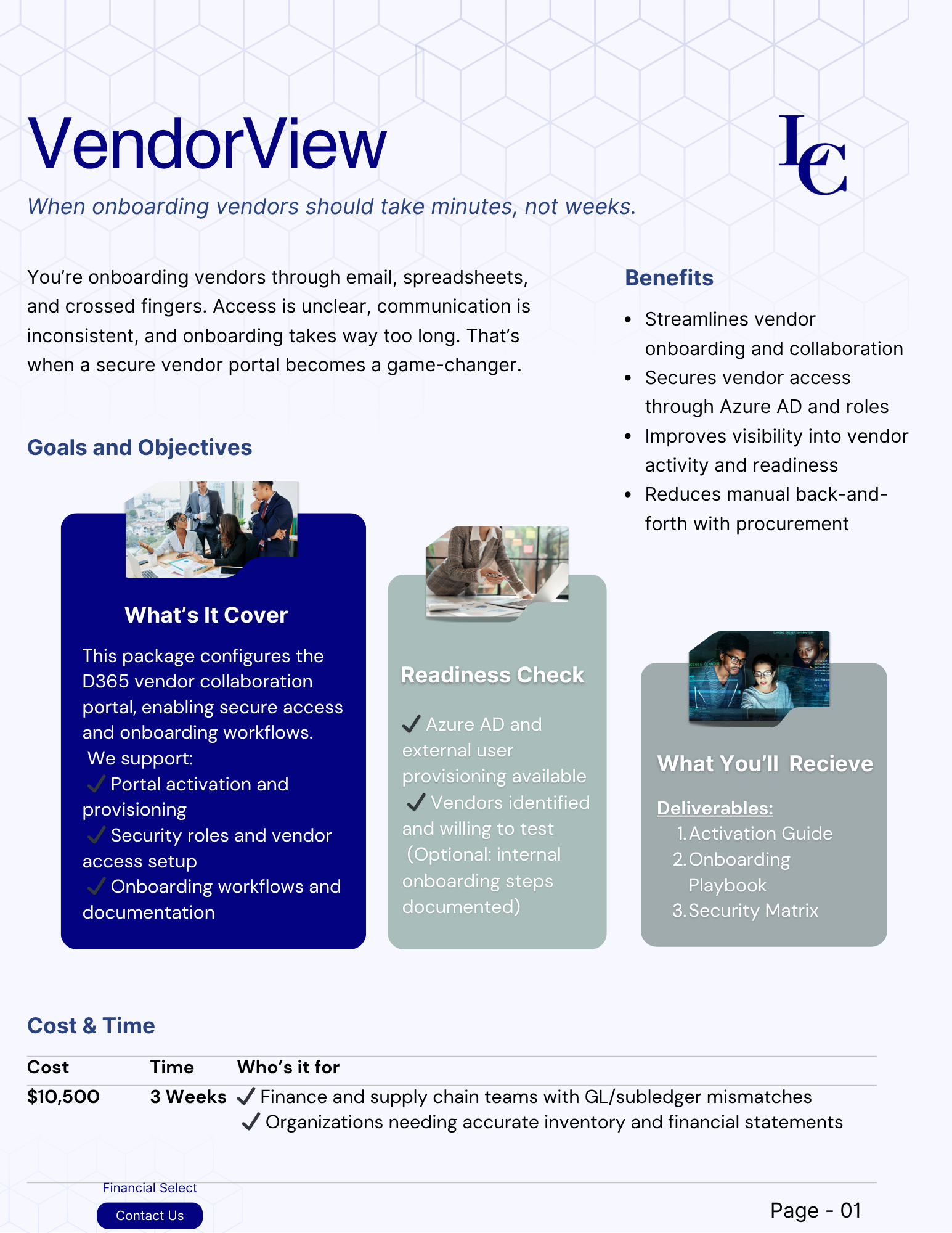


Reviews and corrects ledger-to-subledger alignment in D365 by fixing posting configurations, inventory profiles, reconciliation logic, GL mapping, and critical reporting procedures.
Optimizing Inventory Accounting in Microsoft Dynamics 365 Finance and Supply Chain Management
Posted on: May 20, 2024 | By: Jarrod Kraemer | Microsoft Dynamics AX/365, Microsoft Dynamics Manufacturing
In the ever-evolving world of business technology, understanding the intricacies of inventory accounting within Microsoft Dynamics 365 Supply Chain Management is crucial for improving operational efficiency and financial accuracy. Inventory accounting goes beyond simple stock monitoring—it’s integral to maintaining the financial health and operational effectiveness of any company. Mastery over inventory management directly influences cost containment, pricing strategies, compliance, and reporting.

The Importance of Inventory Accounting
Inventory accounting is more than a means to monitor stock. It’s a vital aspect of maintaining your business’s financial stability and operational prowess. Effective inventory management impacts a broad spectrum of business operations including cost management, pricing strategy, compliance, and reporting.
Setting Up
Inventory accounting helps focus on empowering businesses with the knowledge to effectively configure inventory accounting within Dynamics 365. Key considerations include:
- Item Model Groups: These groups are essential as they govern how inventory is managed and accounted for, influencing cost calculations and financial reporting impacts. They determine whether items are stocked or non-stocked and establish the costing methodology, such as FIFO (First In, First Out) or LIFO (Last In, First Out).
- Dimension Groups: Crucial for detailed tracking of inventory, these groups might cover product dimensions (like color and size), storage dimensions (like site and warehouse), and tracking dimensions (like batch numbers and serial numbers). These configurations are critical for both physical and financial tracking of inventory in financial statements.
- Inventory Transactions: Understanding the flow of inventory transactions—from purchase orders to sales—is critical. These transactions are divided into issues and receipts and are updated through physical and financial postings.
Best Practices and Configurations
Here are some several best practices and essential configurations for optimal inventory management:
- Accurate Setup of Dimension Groups: Proper configuration that reflects your business operations is key to accurate inventory tracking and costing.
- Handling Negative Inventory: Dynamics 365 facilitates configurations to manage negative inventory situations, which are beneficial in certain business scenarios but must be managed carefully to prevent reporting and operational discrepancies.
- Costing Methodologies: Selecting the appropriate costing methodology is vital as it affects pricing strategies and financial reporting. Each method has implications on inventory cost calculations and reporting.
Leveraging Dynamics 365 Features
Specific features within Dynamics 365 enhance inventory accounting:
- Fixed Receipt Price: This feature manages standard costs in fluctuating pricing environments, maintaining cost consistency across inventory receipts.
- Inventory Close: We recommend regular execution of inventory close processes to finalize transactions and ensure financial accuracy, especially when employing periodic costing methods.
Properly setting up and managing inventory accounting in Dynamics 365 Supply Chain Management can revolutionize your supply chain operations. The insights provided equip businesses with the tools to effectively configure their systems, ensuring efficient and compliant inventory accounting processes.
By implementing these best practices and configurations, businesses can develop a more precise and dependable inventory accounting system, enhancing decision-making, financial reporting, and ultimately leading to better operational efficiencies and profitability.
Next Steps:
If you want to learn more about inventory accounting in Microsoft Dynamics 365 Finance and Supply Chain Management, contact us here to learn how we can help you grow your business. You can also email us at info@loganconsulting.com or call (312) 345-8817.